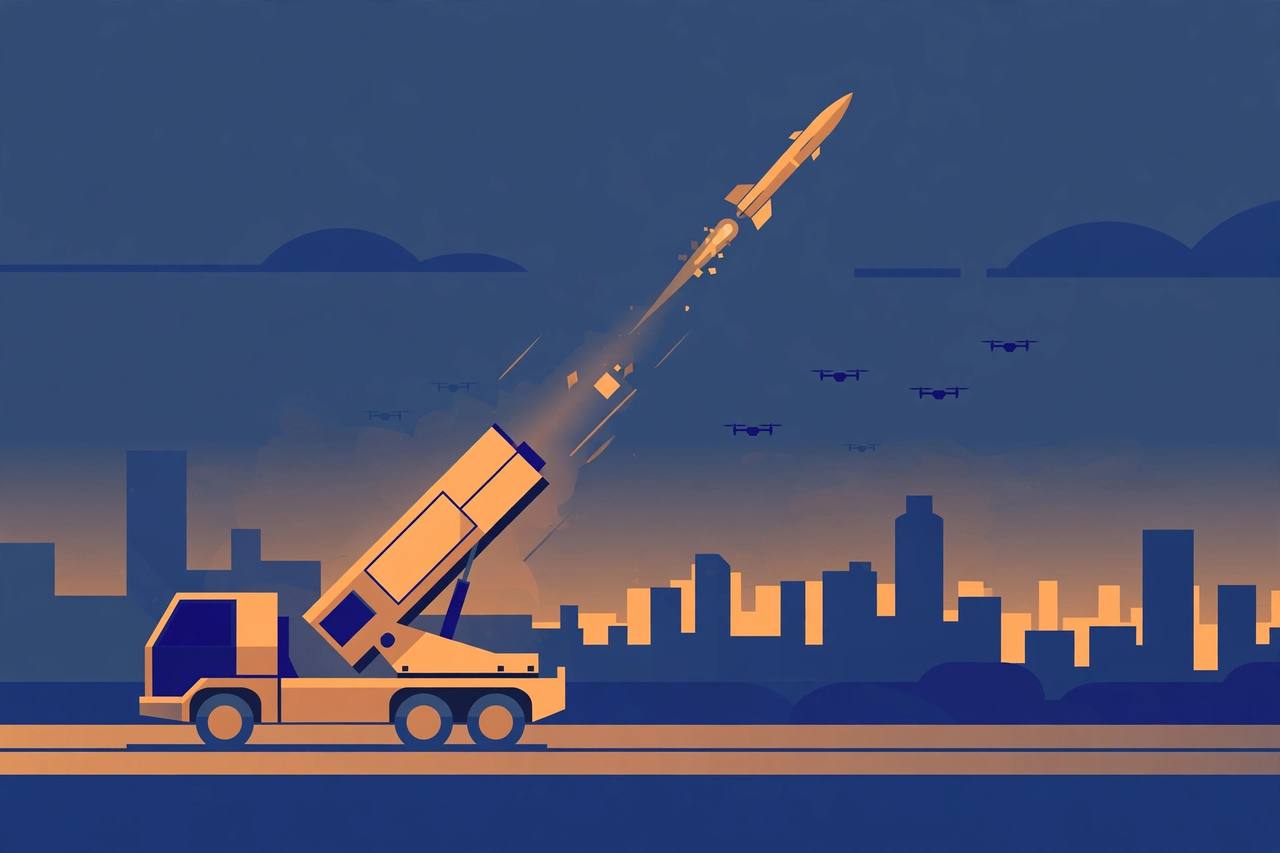
Ukraine and Norway on Tuesday unveiled DESNA, a new jointly developed air-defence system built to shoot down Russian drones cheaply, with several of the systems already in combat in Ukraine.
DESNA pairs Ukrainian missiles and launchers with Norwegian fire-control technology. The missiles are the Ukrainian RK-2PZ, made by the Luch Design Bureau, and the fire-control systems come from Norway's Kongsberg, the company behind the NASAMS air-defence system already used in Ukraine.
Several DESNA complexes have already been delivered to Ukraine in recent months and are on combat duty, and Ukrainian officials say they are already intercepting drones, including jet-powered ones. Norway's government is now working to expand production so the system can cover more Ukrainian territory.
Norwegian Defence Minister Tore Sandvik said Oslo wants to broaden the project to shield a larger part of Ukraine. Ukrainian Defence Minister Yevhenii Khmara discussed the scale-up with the Norwegian side in meetings in Oslo.
Why cheap interceptors matter
Russia fires drones at Ukrainian cities and energy infrastructure almost every night, and the cost of shooting them down has become a war in itself. Overnight into Tuesday alone, Ukrainian officials reported 96 drones fired and 73 downed, with two people killed in Zaporizhzhia. Expensive Western interceptors were never designed to be spent on cheap one-way drones.
DESNA is built around that arithmetic: its Ukrainian missiles are far cheaper than a Patriot or NASAMS interceptor and can be produced in large numbers, so commanders can afford to fire at every drone instead of choosing which ones to let through. It is meant to complement NASAMS, not replace it.
Norway is one of Ukraine's biggest backers. Its military aid totalled $0.6 billion in 2022, $0.8 billion in 2023 and $1.3 billion in 2024, before jumping to $7 billion a year for 2025 to 2027, according to figures published by Ukraine's Ministry of Defence.
The two sides also signed a memorandum under which Norwegian military personnel will test Ukraine's DELTA digital battlefield platform, which builds live maps from front-line data. Germany signed a similar DELTA agreement with Kyiv in Berlin on Monday.
What happens next
No exact number of additional DESNA systems and no delivery timetable has been announced. What Oslo and Kyiv have said is that production will grow and coverage will widen — and that, for now, the systems already delivered are in the fight.
What is solid
- Ukraine and Norway jointly developed DESNA and announced it on 24 November 2026.
- The system combines Ukrainian RK-2PZ missiles and launchers with Kongsberg fire-control systems.
- Several DESNA complexes are already delivered and on combat duty in Ukraine.
- Norway plans to expand production and widen coverage; a DELTA testing memorandum was also signed.
What is only claimed
- The exact number of DESNA systems delivered and the timetable for more have not been announced.
- Claims about DESNA's interception record rest on Ukrainian and Norwegian official statements; no independent combat data has been published.
Reporting: h.ua, Aftenposten and Reuters, with statements from the defence ministries of Ukraine and Norway.
Source: h.ua