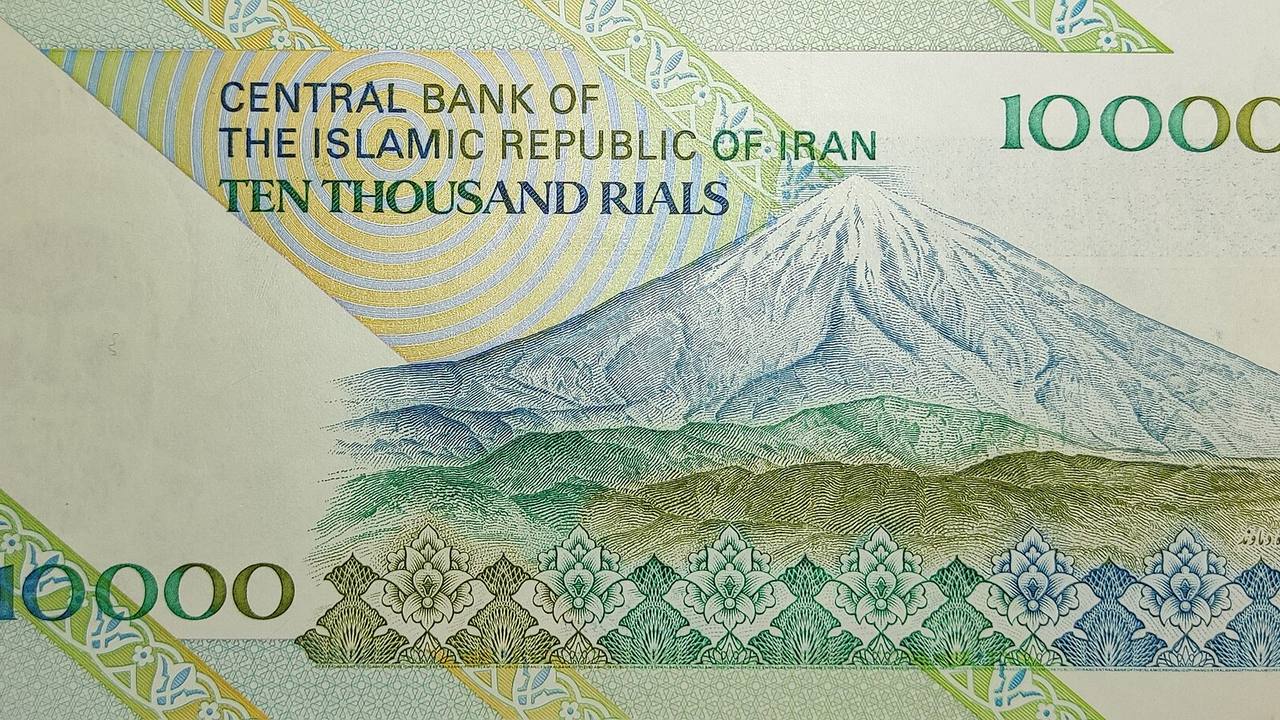
Iran's currency, the rial, fell to a record low against the US dollar on Tuesday, sliding about 5% on the black market in a single day, a day after Washington announced fresh sanctions targeting the financial networks Tehran uses to move money abroad.
By Tuesday afternoon, the dollar was trading at about 2.82 million rials on the black market, up from around 2.68 million rials on Monday, according to websites tracking unofficial rates cited by Reuters and AFP. Some trackers put the rate higher still — currency tracker AlanChand quoted 2.856 million rials, or 285,600 tomans, per dollar. The euro also rose to about 3.07 million rials, from 2.94 million a day earlier. Yaani — one dollar now costs about 1.4 lakh rials more than it did on Monday morning.
The trigger was a new round of US sanctions announced on Monday by the Treasury Department. More than two dozen Iranian exchange houses, alleged front companies and individuals were blacklisted for what Washington calls Iran's 'shadow banking' network, which the Treasury says is overseen by the country's central bank. The measures are part of a campaign the Treasury calls Operation Economic Outcast.
The Treasury's Financial Crimes Enforcement Network said it had identified about $14.7 billion in financial activity between January 2025 and August 2026 potentially linked to Iranian shadow banking — yaani 1,470 crore dollars of transactions that Washington says helped Tehran move money despite sanctions.
Among the targets is the Iran Currency and Gold Exchange Centre. The Treasury's Office of Foreign Assets Control said the centre connects exporters who earn foreign currency from overseas sales with importers who need it to buy goods, and facilitates tens of billions of dollars in trade every year. 'While Iran's shadow banking system moves the funds generated by Iran's international trade, the Iran Center for Exchange plays matchmaker and guides these funds to their ultimate destination inside Iran,' the office said.
Iran's central bank governor, Abdolnaser Hemmati, dismissed the sanctions. He said Washington appeared to have 'run out of targets' and was now targeting a legitimate platform. The exchange centre 'is merely a platform for registering transactions' and 'is there for everyone to see,' he said, according to the Tasnim news agency.
The US Treasury has vowed to keep up the pressure. Treasury Secretary Scott Bessent said on Monday that the United States will 'continue dismantling' Iran's 'illicit networks', as Washington's economic campaign against Tehran intensifies.
Nine months of war, and an economy under siege
The sanctions come nearly nine months into the Middle East war, which began on February 28, when US and Israeli strikes killed Iran's Supreme Leader, Ayatollah Ali Khamenei. Iran retaliated with missile and drone attacks across the region, and armed groups backed by Tehran in Lebanon, Yemen and Iraq also joined the conflict.
Since August, Washington has stepped up sanctions as part of what it calls an 'economic asphyxiation' campaign against Iran, and has kept a naval blockade on Iranian ports to choke off the country's oil revenue. The move is a response to Iran's effective blockade of the Strait of Hormuz, the narrow waterway through which a large share of the world's oil passes. Iranian forces have claimed in recent days that tankers striking naval mines in the strait caught fire, claims that have not been independently confirmed.
Diplomacy has not stopped. Iran's chief negotiator and parliament speaker, Mohammad Bagher Qalibaf, has said Tehran will not enter talks with the United States until seven conditions set by Iran are met, while Qatar is working with both sides to revive negotiations. US Vice President JD Vance met Qatar's prime minister in Washington on Monday to discuss the talks, and President Donald Trump has said he is giving diplomacy more time — while warning that military strikes could resume next year if the talks fail.
For ordinary Iranians, a weaker rial means costlier imports and more pressure on household budgets, as most people rely on black-market rates because the central bank's official rate is usually much lower. For the lakhs of Indian and Punjabi workers in the Gulf, the war economy and the shipping risks in the Strait of Hormuz remain the live worry — even as sliding oil prices, with Brent crude near a three-month low, ease fuel costs for now.
What happens next turns on two dates: the OPEC+ ministers' meeting on Sunday, November 29, which will set oil output policy for 2027, and whether the US-Iran talks track produces any opening. If diplomacy stalls, Washington has signalled that both sanctions and the threat of strikes will keep escalating — and the rial, already at its weakest ever, would likely slide further.
On Monday, the US Treasury blacklisted more than two dozen exchange houses, front companies and individuals in Iran's shadow-banking network under Operation Economic Outcast. Read the earlier story