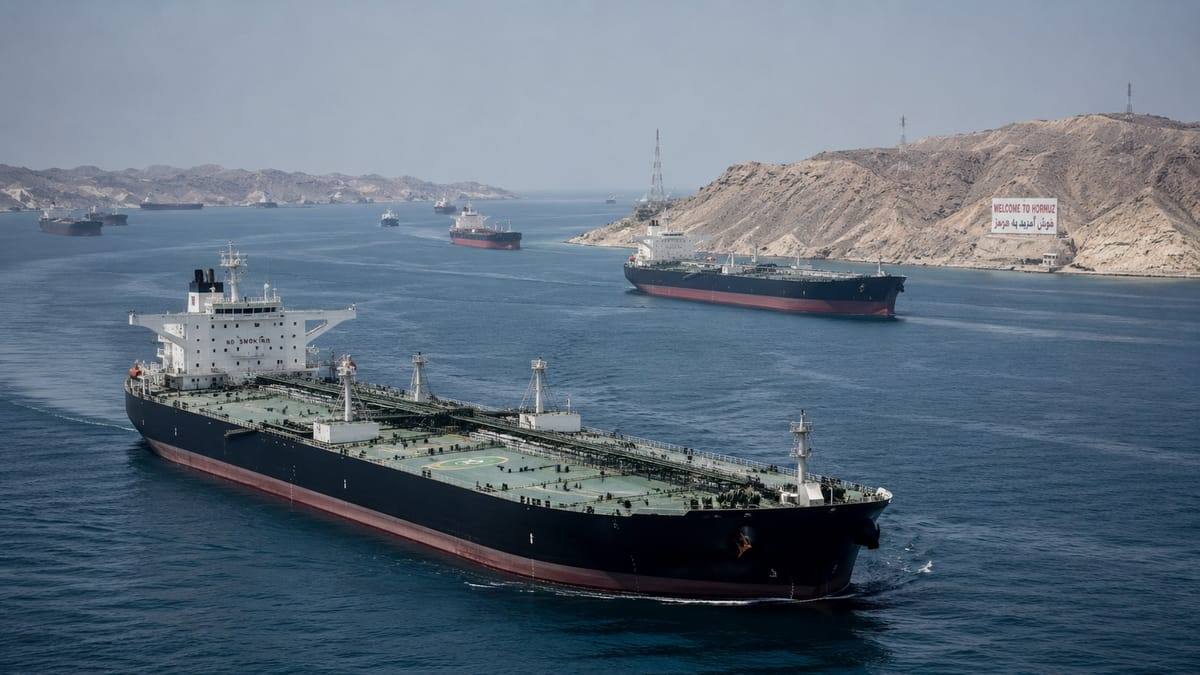
Iran's army commander-in-chief has ordered the navy to close the Strait of Hormuz “further day by day” until the United States meets Tehran's seven conditions, escalating pressure around the world's most important oil-shipping waterway.
Source: Euronews
“Until the seven conditions of the Islamic Republic of Iran are fulfilled, not only will the Strait of Hormuz not be opened, it must be closed further day by day, conditions for the enemy must become more difficult, and stronger control will be exercised over it,” Major General Amir Hatami said, addressing senior commanders of Iran's armed forces at the Army Command and Staff University in remarks broadcast by state television.
Hatami warned that if the US “commits a new folly and starts another war, in the new phase the blows will be more severe, more crushing and without geographical limitation”, citing orders from Ayatollah Mojtaba Khamenei. Iran's state news agency IRNA carried the remarks, which were also reported by Al Jazeera.
Source: Al Jazeera
Iran's chief negotiator set out the same seven conditions a day earlier and ruled out talks with Washington until they are met — read that report here. Read the earlier report
What Tehran is demanding
The seven conditions include an end to the conflict on all fronts, including Lebanon, the release of Iranian assets frozen in third countries, recognition of Tehran's and Muscat's control of the Strait of Hormuz, and the lifting of oil sanctions, according to Iranian reports. IRNA said the conditions are tied to ending hostilities, lifting sanctions and resolving the current state of neither war nor peace. Iranian reports have also cited compensation for war damage and guarantees against renewed attacks among the demands.
Mohammad Bagher Ghalibaf, the speaker of parliament and Iran's chief negotiator, had already ruled out negotiating with the United States until the seven conditions are met. Foreign Ministry spokesman Esmaeil Baghaei called the US naval blockade of Iranian ports military aggression and said Tehran would use “all available means” to counter it, invoking Article 51 of the UN Charter. Baghaei said the strait could reopen within two days if Washington lifts the blockade and sanctions, according to Al Jazeera.
Tankers on fire — claims not independently verified
The IRGC Navy said three oil tankers suffered “severe explosions and fires” after striking naval mines while using routes it described as “unauthorised”. Iranian state media reported on Tuesday that a fourth tanker caught fire at dawn after striking a mine east of the strait. These claims have not been independently verified: Reuters and the United Kingdom Maritime Trade Operations (UKMTO) have not confirmed them, and Iranian statements have given differing numbers of vessels — two, one and three.
Source: GlobalSecurity
The Joint Maritime Information Center (JMIC) has kept the threat level in the Strait of Hormuz at “severe”, warning that further attacks are “highly likely”. It recorded seven tanker attacks in the strait between November 16 and 21, and 18 confirmed attacks between October 6 and November 1. As of November 8 it had recorded 177 maritime security incidents across the wider region since March 1. Vessel traffic through the strait remains 65 per cent below pre-war levels, with around 28 US-facilitated transits a day and 227 vessels stationary at anchorages east of the strait.
Source: Dubai Standard / JMIC
According to UKMTO, there were at least 30 incidents in October, the highest number since the war began in February, and attacks are now almost daily in November. In a delayed report on Tuesday, UKMTO said a bulk carrier at the Dibba anchorage off the UAE was hit by an unknown projectile on November 22, starting a fire with no casualties.
Cyberattacks on tankers under investigation
The Wall Street Journal reported on Monday that US authorities are investigating possible Iranian involvement in cyberattacks and bomb threats against as many as 50 energy tankers and commercial vessels worldwide. Russia is also under consideration, and a Trump administration official said no conclusive link to Iran has been established.
Qatar tries to revive talks
Qatar's Prime Minister Mohammed bin Abdulrahman Al Thani visited Washington on Monday and met US Secretary of State Marco Rubio and Vice President JD Vance to discuss efforts to restart negotiations between Tehran and Washington. The Rubio meeting was the eighth US-Qatar Strategic Dialogue. Al Thani said the region “cannot bear a renewed escalation” and that Doha is working to bring both sides back to the table. The talks come as Trump says strikes on Iran could resume after the new year.
Oil falls despite the closure
Brent crude traded near three-month lows around $88 to $89 a barrel on Tuesday morning, down about 0.8 percent on the session and more than 20 percent below late-October peaks, as rising Middle East export volumes and surplus expectations outweighed the strait closure. WTI slipped to around $79. According to Kpler data cited by Reuters, only five cargo ships passed through the strait on November 22, down sharply from 31 ships the previous weekend, and no vessels were recorded passing through on November 23, although some may have switched off their tracking systems.
Ship-tracking data showed 28 ships crossed the strait in the past 24 hours — 12 into the Gulf and 16 out of it — carrying an estimated 4.18 million barrels of oil. Between November 1 and 7, 226 vessels entered or exited the Gulf; between November 17 and 23, only 125 crossed — a drop of more than 40 percent.
Iran demands $290 billion
On November 23, lawyer Hassan Abdolianpour, head of the Center for Lawyers under Iran's Ministry of Justice, said the country's courts had ruled that the US must pay $290 billion in compensation for damage caused by the conflict — yaani lagbhag 29,000 crore dollar. Tehran has also filed lawsuits against several Arab Gulf states for allowing the US military to use their territory to launch attacks on Iran.
What it means for Gulf workers
Lakhs of Punjabi and Indian workers live and work in the Gulf, and a choked Strait of Hormuz touches them directly — through shipping jobs, fuel prices, flights and remittances. The International Maritime Organization said earlier this month that at least 25 seafarers have been killed in the strait since the US-Iran war began in February, 16 of them Indian. India has stepped up watch on ships near the strait as seafarer safety stays in focus.
What is solid
- Army chief Amir Hatami ordered the navy to tighten control over Hormuz “day by day” until Iran's seven conditions are met.
- Qatar's prime minister met Secretary of State Rubio and Vice President Vance in Washington on Monday to discuss reviving talks.
- Brent crude traded around $88.71 a barrel on Tuesday, near three-month lows.
What is only claimed
- Iran's claims that tankers struck naval mines have not been independently verified, and Iranian statements gave differing numbers of vessels.
- No conclusive link has been established between Iran and the reported cyberattacks and bomb threats against tankers, US officials say.
What happens next is being watched on both shores of the Gulf: whether Iranian tankers at Kharg Island try to force the US blockade, whether CENTCOM and partner navies can stop further mining or convoy runs without a major escalation, and whether Qatar's mediation can bring two sides that both say they want no new war back to the table before Trump's January warning hardens into action.