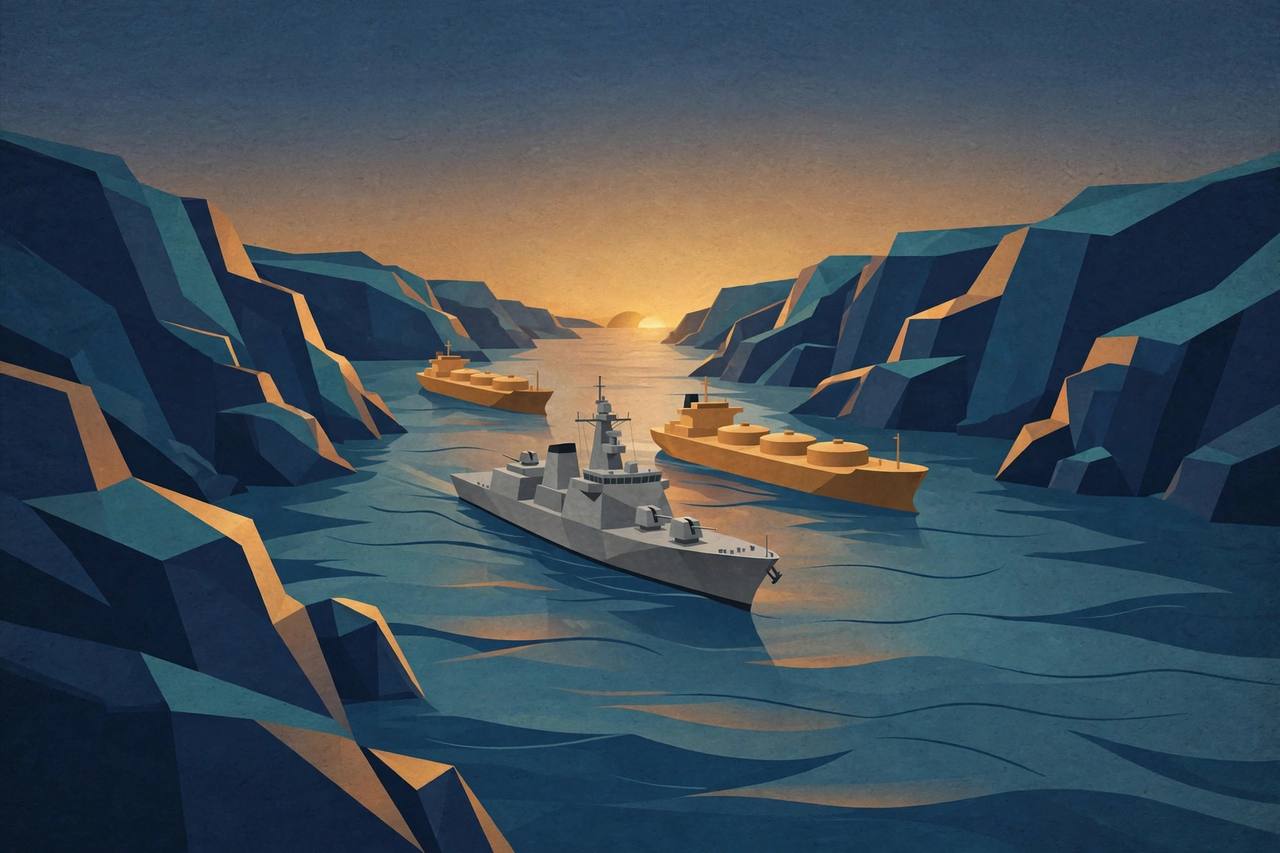
At the White House turkey pardon ceremony on Tuesday, US President Donald Trump said Iran has “little capacity” to fire missiles and called the American naval blockade of Iran “the greatest naval blockade in history”, insisting that not a single Iranian ship had broken through it.
“We had a little moratorium, and we learned that you can’t trust them,” Trump said, according to video of the outdoor ceremony. “But not one ship from Iran has gotten through our naval blockade.” He added that more oil was now moving through the Strait of Hormuz than before the war.
The remarks, reported by Al Arabiya English and the Jerusalem Post, are Trump’s latest public assessment of a war that began on February 28, when the United States and Israel launched nearly 900 strikes on Iran in the first hours of Operation Epic Fury.
A blockade under pressure
The blockade has been tested repeatedly in recent days. On November 23, Iran’s Revolutionary Guards said three oil tankers caught fire after hitting naval mines east of the Strait of Hormuz — an incident maritime monitors later recorded as three separate attacks. Tehran has said it will use all available means to break the blockade, and its parliament speaker, Mohammad Bagher Ghalibaf, said on Tuesday that Iran would break it “by military means”.
Iran has also set conditions for any return to talks. Ghalibaf has put forward seven conditions — including lifting sanctions and ending hostilities on all fronts — before Tehran will reopen the strait or return to negotiations with Washington.
On the American side, NBC reported on Tuesday that Trump administration officials are debating whether to target senior Iranian leaders, with no decision made. And on November 22, Trump said he was inclined to resume strikes on Iran after January 1 if talks fail — a position he repeated in substance on Tuesday by calling Iran’s negotiators untrustworthy.
On November 22, Trump said he may resume strikes on Iran after the new year if talks fail. Read the earlier story
Oil and the cost of the blockade
Oil markets have eased even as the standoff continues. Brent crude fell to a three-month low of about $88.71 a barrel on November 24, market reports said — far below the roughly $126 peak reached in late April, when Hormuz traffic had collapsed from about 130 ships a day to fewer than 13.
The blockade is also expensive to enforce. At a US Senate hearing on Tuesday, Senator Elizabeth Warren cited an independent estimate that keeping carriers, destroyers and thousands of sailors on station in the Strait costs about $32.5 million a day — nearly $1 billion a month — while the acting Navy secretary put the figure at roughly $30 million a day.
For the lakhs of Punjabi and Indian workers in the Gulf, the stakes are direct: shipping disruption, flight uncertainty and oil-price swings feed through to jobs, remittances and the cost of living back home. Gulf states have pressed for calm — Qatar’s prime minister appealed for restraint in Washington this week — while talks continue indirectly through Qatar.
What is solid
- Trump made the remarks at the White House turkey pardon ceremony on November 24 — reported by Al Arabiya English, the Jerusalem Post and Al-Qahera News, with video of the ceremony.
- Iran’s Revolutionary Guards said three tankers hit mines east of Hormuz on November 23.
- Ghalibaf has set seven conditions for talks, including lifting sanctions.
What is only claimed
- Whether Iran’s missile capacity is as degraded as Trump claims — US intelligence estimates cited in reporting put Iran’s remaining ballistic missile stockpile at 1,500–2,500, with factories rebuilding.
- Whether ‘not one ship’ has breached the blockade — Iran says its tankers are moving and traffic data is disputed.
- Iran’s claim that its air defences hit a US F-16, which US Central Command rejected as fake.
What happens next
The immediate question is whether the indirect talks through Qatar produce a deal before Trump’s January 1 marker — or whether the tanker attacks and the blockade test push the two sides back to strikes. Iran says the strait stays restricted until its conditions are met; Washington says the blockade stays until Iran deals. For now, the war of words is running ahead of any new shooting — but the mines in the water east of Hormuz show how thin the margin is.