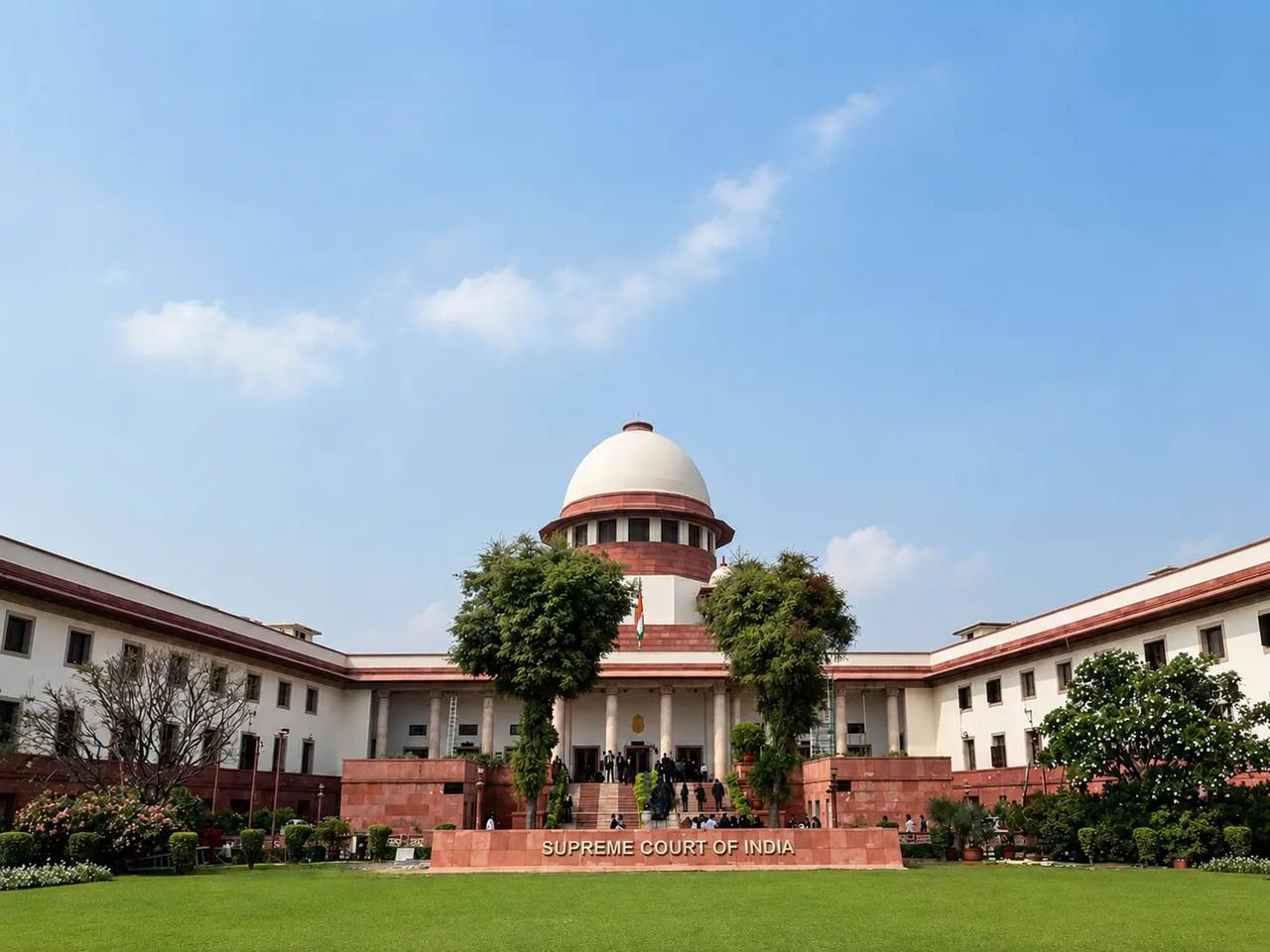
The Supreme Court on Monday issued notice on a public interest plea seeking safeguards against MPs and MLAs using strategically timed resignations to escape disqualification proceedings under the anti-defection law.
Source: LiveLaw
A three-judge bench headed by Chief Justice of India Surya Kant, with Justice Joymalya Bagchi and Justice V. Mohana, sought responses from the Union government, the Election Commission of India and the Law Commission of India. The case is A Sethu v. Union of India & Ors., W.P.(C) No. 001459/2026. Senior Advocate A. Sirajudeen appeared for the petitioner, A Sethu.
What the plea asks for
The petition says a resignation tendered while disqualification proceedings are pending — or reasonably imminent — should not by itself bring those proceedings to an end or render them infructuous. In other words, stepping down should not be a way to wipe the slate clean.
It asks the court to direct the Union government to consider prescribing a statutory outer time limit — ordinarily not exceeding three months — for deciding disqualification petitions under the Tenth Schedule, with only very limited exceptions backed by recorded reasons. The plea points to the three-month period indicated by the court in Keisham Meghachandra Singh.
The plea further asks the Union government and the Law Commission to examine whether an independent, permanent tribunal should decide disqualification proceedings, and seeks timely public disclosure of resignation letters, notices, replies, hearing dates and orders under the Tenth Schedule.
It also seeks a declaration that a member who resigns while disqualification proceedings are pending should not be appointed as a minister or to any other remunerative political post under Articles 75(1B), 164(1B) and 361B of the Constitution until the question is resolved in the member's favour or the member is duly re-elected.
A final prayer concerns hung Assemblies: the plea says a majority in a hung Legislative Assembly can be demonstrated only on the floor of the House, after the returned members have been sworn in under Article 188.
The petition argues that a resignation process which can postpone — and then avoid — the consequences of defection, combined with no enforced deadline for deciding disqualification petitions, damages the integrity of the electoral mandate.
The plea relies on the court's earlier rulings in Kihoto Hollohan, Shrimanth Balasaheb Patil, Keisham Meghachandra Singh, Subhash Desai and Padi Kaushik Reddy. The court has tagged the matter with K Suthan v. Union of India, a separate plea concerning recovery of election expenditure from a candidate who resigns to recontest from another party.
The respondents will now file their responses, after which the court will take up the matter further.
The anti-defection law, in the Tenth Schedule of the Constitution, disqualifies legislators who voluntarily give up their party membership or vote against the party whip. The plea's case is that without a time-bound decision and without closing the resignation route, the law can be sidestepped — the very mischief it was written to prevent.