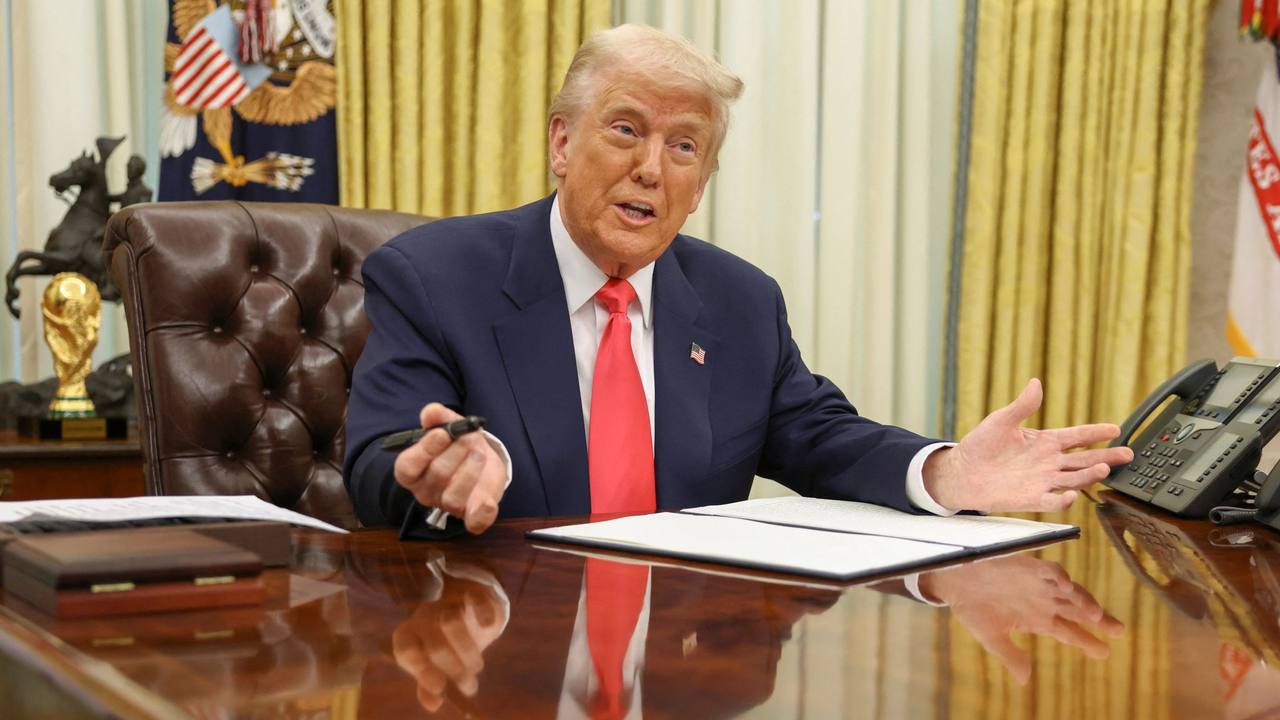
US President Donald Trump told the New York Post in an exclusive Oval Office interview, published on Tuesday evening, that the American war effort against Iran is funded through the end of January. "Yeah, but up until really the end of January, pretty much, you know, we're funded," he said. He named no dollar amount, appropriation or funding mechanism in the interview.
The remark lands as Democrats prepare to take control of Congress in January, which could constrain Trump's military options. Trump said he hoped they would not end the conflict prematurely, warning they would turn a win into a loss, and added: "We can put that war to bed anytime we want."
Regime change 'probably doable', but not his goal
Trump also addressed Israel's war aim directly. Israel favours a complete regime change to end the war, and Trump said Israel's goal of ending the Islamic Republic is "probably doable" — but it is not his goal. "I just don't want them to have a nuclear weapon," he said, adding that he was never for or against regime change and it was never a criteria for him.
Last week Trump said he was seeking a 'permanent' nuclear deal with Iran and that regime change had never been the goal — a position he repeated in the new interview. Read the earlier story
The funding fight in Congress
The funding question is already live in Congress, where Senate Republicans have signalled openness to cutting the Iran war's funding as the new Democratic majority prepares to take over in January.
The US war bill has already passed $47 billion. Read more on the war's cost
Iran's compensation claim — and Trump's reply
Iran announced this week that it will sue the United States for compensation, saying an airstrike on a school killed dozens of pupils and teachers. Trump replied that he wants compensation for the people Iran has killed, claiming Iran killed 75,000 protesters in the last seven months, and citing the attack on the USS Cole. He said that if Tehran wants to play what he called the compensation game, the United States would win.
Trump added that the war began in 1979, that he did not start it, but that he was the only president willing to act on it.
What happens next
January is now the pivot point. Trump has said he is inclined to resume major strikes after the New Year if Tehran agrees to no deal, and he said this month that the war was already effectively over militarily — while still intending to keep the embargo on Iranian ports in place to force a nuclear deal. The war began on February 28, when the United States and Israel launched Operation Epic Fury, and the US has enforced a naval blockade of Iranian ports since April 13.
Trump has said he is inclined to resume major US strikes on Iran after the New Year if Tehran does not agree to a deal. Read the earlier story
The Strait of Hormuz carries roughly a fifth of the world's oil consumption, so any change in the war's course matters for energy markets and for the large numbers of Punjabi and Indian workers living in the Gulf states, who watch the fighting and the shipping lanes closely.
In the same interview, Trump also spoke about North Korea's Kim Jong Un, saying his first-term letters to Kim could start up right away, and he laughed off a claim that US negotiators want a Russia-Ukraine peace deal by January, saying he was not under a timeline and just wanted to see it end.
What is solid
- Trump told the New York Post in an Oval Office interview published on Tuesday evening that the Iran war effort is funded through the end of January.
- Trump said Israel's goal of ending the Islamic Republic is 'probably doable' but is not his goal — he wants Iran without a nuclear weapon.
- Democrats take control of Congress in January.
What is only claimed
- Trump's claim that Iran killed 75,000 protesters in the last seven months.
- Iran's claim about the toll of the school airstrike it cites in its compensation suit.