On Friday, Trump said Iran wants a deal but not one he is willing to accept — 'a real deal, not a fake deal'. This interview is the follow-up to those remarks. Read the earlier story
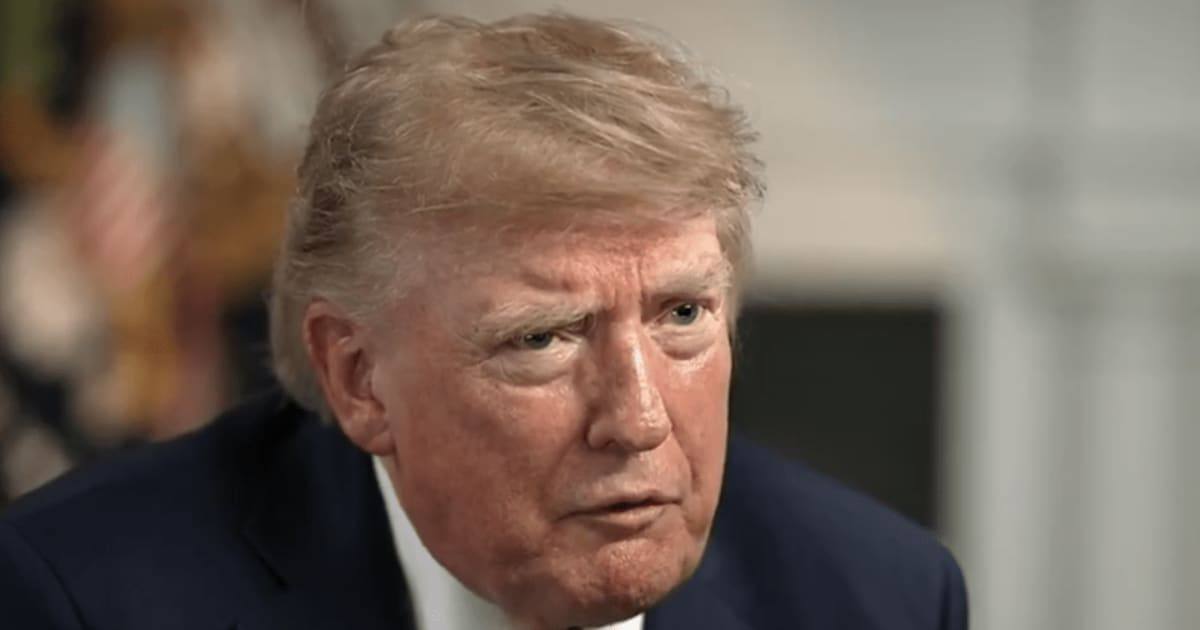
US President Donald Trump said on Saturday that any agreement with Iran must be 'permanent' — a deal that stops Tehran from ever acquiring a nuclear weapon and stays in force no matter who sits in the White House after him.
Source: ANI
"I'm going to make a deal that is going to be permanent. I'm not going to let somebody allow them to have a nuclear weapon," Trump said in an interview with Fox News, adding that he wanted the agreement built so that 'if we have an incompetent president in four years or 15 years or 20 years' it would still hold.
Source: Fact.net.in
Regime change 'never' the goal, Trump says
Trump also played down regime change in Tehran, saying it was never a key objective for Washington. "Well, I never cared too much about the regime. You know, some people said regime change, but you know, explain what that means," he said.
Source: Fact.net.in
At the same time, he claimed US and Israeli military operations had already removed two groups of Iranian leaders and that Washington was now dealing with a third. "I've taken out two regimes already. I've taken out the first group, the second group, we're dealing with the third group. So you could call that the ultimate regime change," he said.
Source: Fact.net.in
The February 28 strikes killed several senior Iranian figures, including Supreme Leader Ayatollah Ali Khamenei, IRGC chief Mohammad Pakpour and defence minister Aziz Nasirzadeh, and a second wave in March killed other senior officials, as reported. The current leadership under Mojtaba Khamenei, who succeeded his father as Supreme Leader, is the 'third group' Trump referred to.
Source: Fact.net.in
Trump described the current Iranian leadership as possibly 'more reasonable' than its predecessors — but very hard to negotiate with. "The attitude isn't much different. Probably these people are more reasonable and they're very, very difficult. I mean, we make a deal and then they break the deal the next day," he said.
Source: Fact.net.in
Iran: open to diplomacy, but uranium stays
Iranian Foreign Minister Abbas Araghchi said on Friday that Tehran remains willing to negotiate, provided any agreement comes with guarantees against another conflict. "Iran is seeking an agreement that would ensure there was no further war," he told the state-owned Iran newspaper, adding that he believed 'a fair solution can be reached'.
Source: Fact.net.in
But Araghchi held firm on one point: Iran will not transfer its enriched uranium stockpile outside the country, describing the issue as a red line. He also criticised Trump's shifting positions, saying it was 'not surprising that Trump takes a new position every day'.
Source: Fact.net.in
Friday: 'a real deal, not a fake deal'
The interview followed Trump's remarks at a White House press conference on Friday, after his visit to China, where he said Tehran wanted a deal but had not offered terms he could accept — and tied the outcome to the price Americans pay for fuel. "The prices of gasoline now, that also depends on how we settle up with Iran," he said. "We want to make a real deal, not a fake deal that they've been doing for 51 years."
Source: ANI
Trump also indicated this week that a decision on fresh major strikes against Iran could wait until next year. In a Reuters interview on Thursday, he said: "Well, I'll talk to you about it after the beginning of the year. We've got time."
Source: Fact.net.in
Trump told reporters on Saturday that he had spoken with Israeli Prime Minister Benjamin Netanyahu and had a 'very good talk' with him, discussing the war in Iran. Netanyahu has reportedly urged the US administration to consider renewed military action against Tehran.
Source: Associated Press
The wider picture
The war, which began on February 28 with US and Israeli strikes on Iran, is now in its ninth month. Washington and Tehran signed a framework agreement in June and opened negotiations, but talks have stalled over guarantees for safe passage through the Strait of Hormuz, where the US maintains a naval blockade and Iran has repeatedly targeted shipping. For the lakhs of Indian and Punjabi workers living and working in the Gulf, a lasting deal would lift the war risk that has hung over jobs, flights and remittances for months.
What happens next: Qatari mediators are continuing efforts to keep the two sides talking, and Araghchi has said Iranian negotiators are engaged with mediators on a proposal. But with Tehran refusing to move its uranium abroad and Trump insisting he will accept nothing short of a permanent bar on a nuclear weapon, no breakthrough has been reported — and the standoff continues.