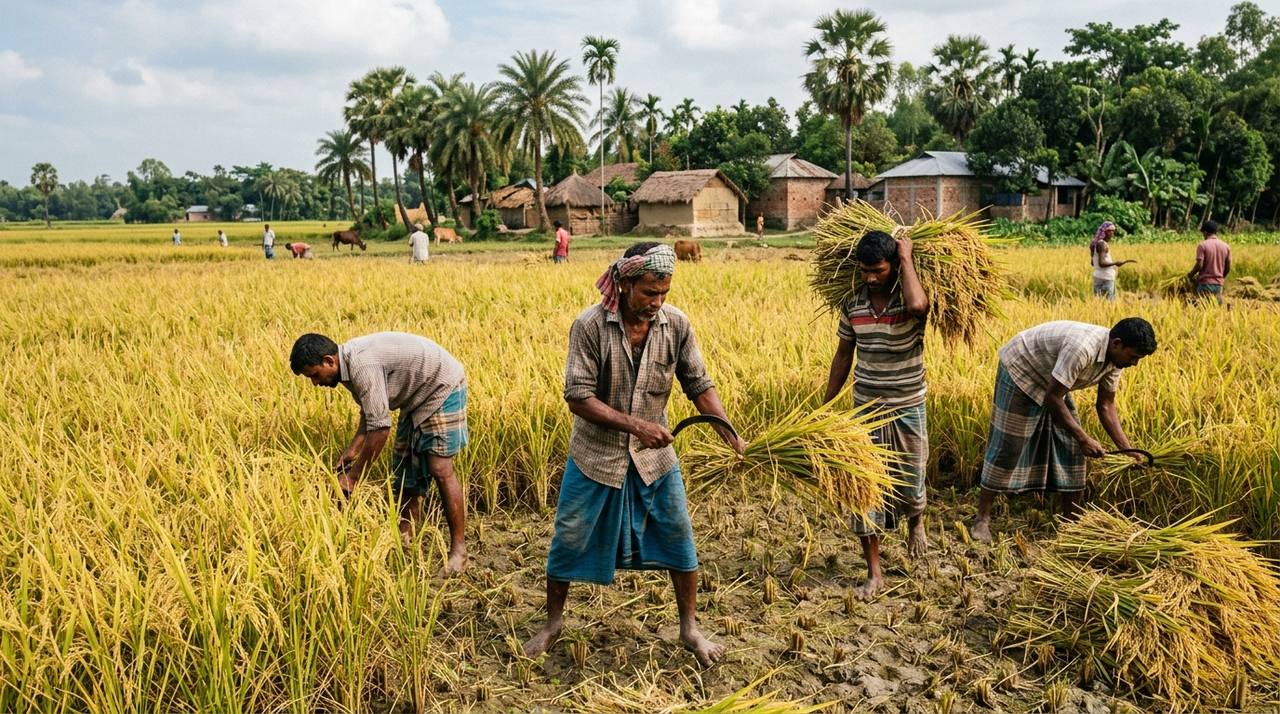
India's kharif foodgrain production for the 2026-27 season is estimated at 167.14 million tonnes, down 5.1 per cent from 176.04 million tonnes a year ago, the government said while releasing the first advance estimates on Thursday.
Source: The Hindu BusinessLine
Union Agriculture Minister Shivraj Singh Chouhan, who released the figures at a press conference in New Delhi, said farmers had produced more than the average of the last five years despite a delayed and deficient monsoon and El Niño conditions.
What the first estimates show
The damage was sharper in other crops. Maize is estimated down about 14.5 per cent at 26.06 million tonnes, and oilseeds down 10.2 per cent at 23.95 million tonnes. Within oilseeds, soybean is projected at 10.24 million tonnes, down from 12.59 million tonnes last season. Kharif nutri-cereals, or millets, are estimated at 38.11 million tonnes.
Source: AgriInsite
The Agriculture Ministry said delayed monsoon rainfall in June, rainfall 35 to 40 per cent below normal in some areas, and low soil moisture affected sowing in Maharashtra, Karnataka, Telangana and Andhra Pradesh.
Still above the five-year average
Despite the year-on-year fall, the estimate is 9.77 million tonnes above the average kharif production of the previous five years. The government had set a kharif target of 196.21 million tonnes, and in September it cut the full-year foodgrain goal for 2026-27 to 373.93 million tonnes, citing El Niño.
Alongside the kharif forecast, Chouhan released the final estimates for the 2025-26 crop year, putting total foodgrain production at a record 378.54 million tonnes, up about 5.8 per cent — including rice at 155.15 million tonnes and wheat at 122.06 million tonnes.
Source: The Hindu BusinessLine
Kharif is India's main crop season, and the first advance estimates are the earliest official signal for food supply and prices. The figures are preliminary and will be revised as crop-cutting data comes in — but a weaker harvest keeps attention on food inflation in the months ahead.
First advance estimates are typically revised in the second and final estimates once actual yield data from crop-cutting experiments becomes available.