Latest News — Punjab, India, USA and the World
Awaaz Punjab is an independent digital news platform publishing original, source-verified reporting in English, Punjabi and Hindi. Every story below is published with its sources named and dated, and every article is available in all three languages. Our newsroom covers Punjab first — its politics, districts and the road to the 2027 assembly election — along with India, the Punjabi diaspora in the USA and Canada, and world affairs that touch Punjab's people, from the Gulf to North America.
Republican Rep. Thomas Massie of Kentucky on Monday, November 9 reintroduced eight articles of impeachment against Defense Secretary Pete Hegseth and filed them as a privileged resolution, which forces the House of Representatives to act within two legislative days — a vote could come as early as Wednesday. The 34-page resolution accuses Hegseth of high crimes and misdemeanors, centred on waging the war against Iran without congressional authorization. President Donald Trump stood by Hegseth at a White House briefing on Monday, and Hegseth has dismissed the articles as a sham. The charges are allegations in a political charging document; they have not been adopted by the House or tested in any court.
Published 2026-11-09 · Awaaz Punjab
Simardeep Singh died on the spot after allegedly being shot twice — in the head and the right side of the chest — by his elder brother, an AAP block samiti member, during an argument over the division of family land in Pandori Waraich village on the Majitha Road in Amritsar's Attari area on Tuesday morning, police said. The accused fled and police teams are raiding to arrest him, DSP Yadvinder Singh said.
Published 2026-11-10 · Awaaz Punjab
Singapore court records list the Odyssey under arrest at Changi anchorage since the morning of November 8 — the ship that put about 200 residents ashore in Cambodia cannot sail until the creditors' dispute is resolved or security is posted.
Published 2026-11-10 · Awaaz Punjab
The Registrar General of India has digitally mapped 24.25 lakh Houselisting Blocks — micro-units of up to about 800 people — for Census 2027, and the houselisting operation, the census's first phase, is complete in every state and Union Territory except Manipur, PTI reported. Each block will normally serve as an enumeration block for the population count.
Published 2026-11-10 · Awaaz Punjab
Faith in Action Bay Area, the county's official rapid response network, confirmed seven targeted ICE detentions between Friday, November 6 and Monday, November 9 — outside Maguire Correctional Facility in Redwood City during the Día de los Muertos celebration, at Hopkins and El Camino Real a block from Sequoia High School, and in Montara, Half Moon Bay, San Mateo and Burlingame. A student walkout is planned for Tuesday at 10:30 a.m.
Published 2026-11-10 · Awaaz Punjab
India's Treesa Jolly and Gayatri Gopichand beat Japan's 13th-ranked Hinata Suzuki and Nao Yamakita in straight games in 42 minutes at the Kumamoto Masters on Tuesday. They next face third seeds Rin Iwanaga and Kie Nakanishi in the round of 16.
Published 2026-11-10 · Awaaz Punjab
Three bills — the AI Overwatch Act, the Chip Security Act and the Match Act — are in play for the fiscal 2027 defence bill, as Jeffries joins Warren and Banks in citing Jensen Huang's confirmed relationship with a suspected Chinese intelligence operative.
Published 2026-11-10 · Awaaz Punjab
A day after the ministry announced the plan, Delhi's first recreational Yamuna cruise was launched on Tuesday as the 'Namo Yamuna Cruise Safari' — an electric boat of about 40 passengers making a roughly 30-minute, 6-km round trip between Sonia Vihar and Jagatpur, with an evening musical fountain show at the site.
Published 2026-11-10 · Awaaz Punjab
Hockey India on Tuesday named a 20-member squad for the Women's Asian Champions Trophy in Bhopal from November 19 to 28, with Salima Tete continuing as captain and Asian Games-winning goalkeeper Savita Punia rested. Defending champions India open against Malaysia on November 19.
Published 2026-11-10 · Awaaz Punjab
Amritsar Commissionerate Police have busted two illegal arms supply networks, apprehended six accused and recovered 14 sophisticated pistols, DGP Punjab announced on Tuesday. Police allege the accused were in contact with foreign-based handlers through social media and received weapons through drone consignments; two FIRs have been registered at the Chheharta and Civil Lines police stations in Amritsar.
Published 2026-11-10 · Awaaz Punjab
Nicholas Jones, 19, of Holly Springs was shot on Harris Cove on October 31. An 18-year-old from Collierville was arrested November 2, and Antoine Cunningham, 21, of Memphis surrendered to a U.S. Marshals task force on November 5 after a two-day search — both are held on $500,000 bonds.
Published 2026-11-10 · Awaaz Punjab
False claims began within minutes of the November 7 Krakow square shooting, officials say: bots posted in four languages, an AI-altered photo spread, and a fake 'Ukrainian soldier' story reached nearly 18 million people before platforms acted.
Published 2026-11-10 · Awaaz Punjab
Brent crude fell 1% to $91.56 a barrel on Tuesday, its lowest since early September, after President Trump said he plans to hold off on new military strikes against Iran, Reuters reported. South Korea's KOSPI rose over 5%, Japan's Nikkei about 3% and MSCI Asia-Pacific 1.5%, extending Monday's Wall Street jump, as the cheaper oil eased the inflation fears the Iran war has driven since February.
Published 2026-11-10 · Awaaz Punjab
The Saudi-led coalition said early on Tuesday it intercepted a ballistic missile and a cruise missile over Riyadh and a second ballistic missile over the south, blaming the Houthis, and Reuters reported a drone was also downed over the Eastern Province. The Houthi-run Saba agency reported Saudi strikes on a gas station and a state oil company building in Sanaa. The night followed Monday's attack on the East-West pipeline and Monday's coalition strikes on three Houthi missile facilities in Yemen.
Published 2026-11-10 · Awaaz Punjab
A two-storey kutcha house caved in on a sleeping family in Barahpan village under the Kotwali police station area of Madhya Pradesh's Singrauli district on Monday night, killing three people, including a two-year-old child, and injuring five others, police said. Rescue teams recovered the dead and injured by around 1 a.m., and police are investigating why the mud structure, whose wall had already developed a crack, came down.
Published 2026-11-10 · Awaaz Punjab
Sanjit 'Bunker' Roy passed away peacefully at 6.15 am on Tuesday at his home in Tilonia, Rajasthan, with his wife Aruna Roy beside him, Barefoot College said. The institution he founded in 1972 trained rural women across more than 90 countries as solar engineers.
Published 2026-11-10 · Awaaz Punjab
A 27-year-old local wrestler, Mani, was shot dead while bursting firecrackers outside his home in Mohalla Mehtabgarh, Kapurthala, on Monday night, Punjab E News reported. DSP Sheetal Singh said a case has been registered on his family's complaint, police teams are raiding to arrest the accused, and Mani — who had no known dispute with them — was allegedly hit by a bullet that had been fired at someone else.
Published 2026-11-10 · Awaaz Punjab
A 45-year-old PMK worker, Gnanavel, was shot dead near the Sengundram bus stand in Vellore district on Sunday evening in an attack police attribute to previous enmity. Police said on Tuesday that the arrested accused, Poovarasan, was shot in the leg after he allegedly attacked a sub-inspector and tried to escape during a weapon-recovery operation.
Published 2026-11-10 · Awaaz Punjab
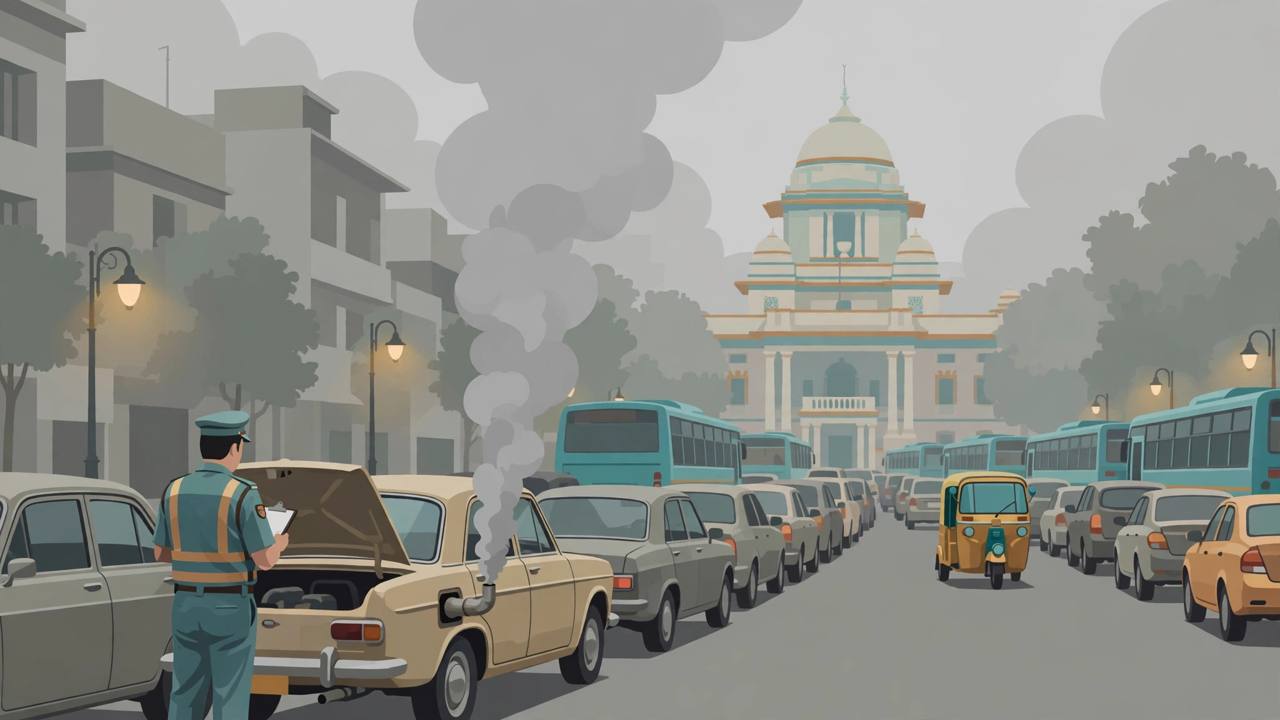
A day after the capital's post-Diwali air touched the 'severe' band at ITO, Delhi's overall AQI improved marginally to 307 at 7 a.m. on Tuesday, CPCB data reported by ANI showed — still firmly 'very poor', with no rain forecast until November 15 and GRAP Stage III curbs continuing.
Published 2026-11-10 · Awaaz Punjab
More than 360 people were treated for firecracker-related injuries at hospitals across the Chandigarh Tricity — Chandigarh, Panchkula and Mohali — between Sunday night and Monday morning during Diwali, Mirror Now reported, a slight decrease from 363 injuries in the same period last year. PGIMER's Advanced Eye Centre performed 15 emergency eye surgeries, and the institute's official release said 20 of the 27 eye patients it saw on Diwali day were bystanders who were only watching, while just seven were bursting firecrackers themselves. Children as young as six were among the injured.
Published 2026-11-10 · Awaaz Punjab
A massive fire broke out on Monday night at a scrap shop in the Jahazgarh scrap market in Amritsar, gutting several shops and sending panic through the area before firefighters brought it fully under control after about two hours, officials said. The fire department's control room was informed at around 8:15 pm, around 10 fire tenders were deployed one after another, and no one was injured in the incident, a fire department officer told TV9 Punjabi. The exact cause is under investigation.
Published 2026-11-10 · Awaaz Punjab
Gurugram Police's proclaimed-offender staff detained 15 Bangladeshi nationals — 14 men and one woman — during an intensive checking drive in the Bajghera police station area. Police said the group had entered India through West Bengal and none of them had a valid visa, passport or permit; all 15 have been sent to the detention centre in Manesar.
Published 2026-11-10 · Awaaz Punjab
Boeing Commercial Airplanes chief Stephanie Pope told employees on Monday that slower production-rate increases have left the division overstaffed. The roughly 5% cut — about 2,500 jobs on a workforce of 50,494 — will come through attrition and involuntary layoffs, with notices from December. Wichita and Tulsa staff were told they are not being considered, and the 737 rate of 47 a month is now expected only in early 2027.
Published 2026-11-10 · Awaaz Punjab
Chief Minister Mohan Charan Majhi launched the saturation-mode rollout of the Madhubabu Pension Yojana at Baleshwar on Tuesday, formally covering 5,05,817 new beneficiaries — the elderly, widows, persons with disabilities and other vulnerable residents — with pension payable from October, alongside a new Unified Pension Management Portal.
Published 2026-11-10 · Awaaz Punjab
Published 2026-11-10 · Awaaz Punjab
Published 2026-11-10 · Awaaz Punjab
Published 2026-11-10 · Awaaz Punjab
Published 2026-11-10 · Awaaz Punjab
Published 2026-11-10 · Awaaz Punjab
Published 2026-11-10 · Awaaz Punjab
Published 2026-11-10 · Awaaz Punjab
Published 2026-11-10 · Awaaz Punjab
Published 2026-11-10 · Awaaz Punjab
Published 2026-11-10 · Awaaz Punjab
Published 2026-11-10 · Awaaz Punjab
Published 2026-11-10 · Awaaz Punjab
Published 2026-11-06 · Awaaz Punjab
Published 2026-11-10 · Awaaz Punjab
Published 2026-11-10 · Awaaz Punjab
Published 2026-11-10 · Awaaz Punjab
Published 2026-11-10 · Awaaz Punjab
Published 2026-11-10 · Awaaz Punjab
Published 2026-11-09 · Awaaz Punjab
Published 2026-11-10 · Awaaz Punjab
Published 2026-11-10 · Awaaz Punjab
Published 2026-11-10 · Awaaz Punjab
Published 2026-11-10 · Awaaz Punjab
Published 2026-11-10 · Awaaz Punjab
Published 2026-11-10 · Awaaz Punjab
Published 2026-10-22 · Awaaz Punjab
Published 2026-10-19 · Awaaz Punjab
Published 2026-10-18 · Awaaz Punjab
Published 2026-10-18 · Awaaz Punjab
Published 2026-10-18 · Awaaz Punjab
Published 2026-10-18 · Awaaz Punjab
More from Awaaz Punjab
Our Editorial Standards
How we work: every story is checked against at least two independent, reputable sources before publication; allegations are labelled as allegations; figures carry the name of the outlet or agency that reported them and the date; corrections are published openly. Read our full verification method on the How We Verify page, our data desks on the School, Podcast and SUNO audio pages, and our numbered original investigations in the Investigations section.
Awaaz Punjab is an independent, trilingual newsroom — for Punjab, by Punjabis. We do not sell aggregated news; we publish investigations that stand on sources, with the outlet and date attached to every claim. Our first beat is Punjab's drug crisis, our second is Punjab politics. From Amritsar to Toronto — wherever a Punjabi lives, Awaaz Punjab reaches.