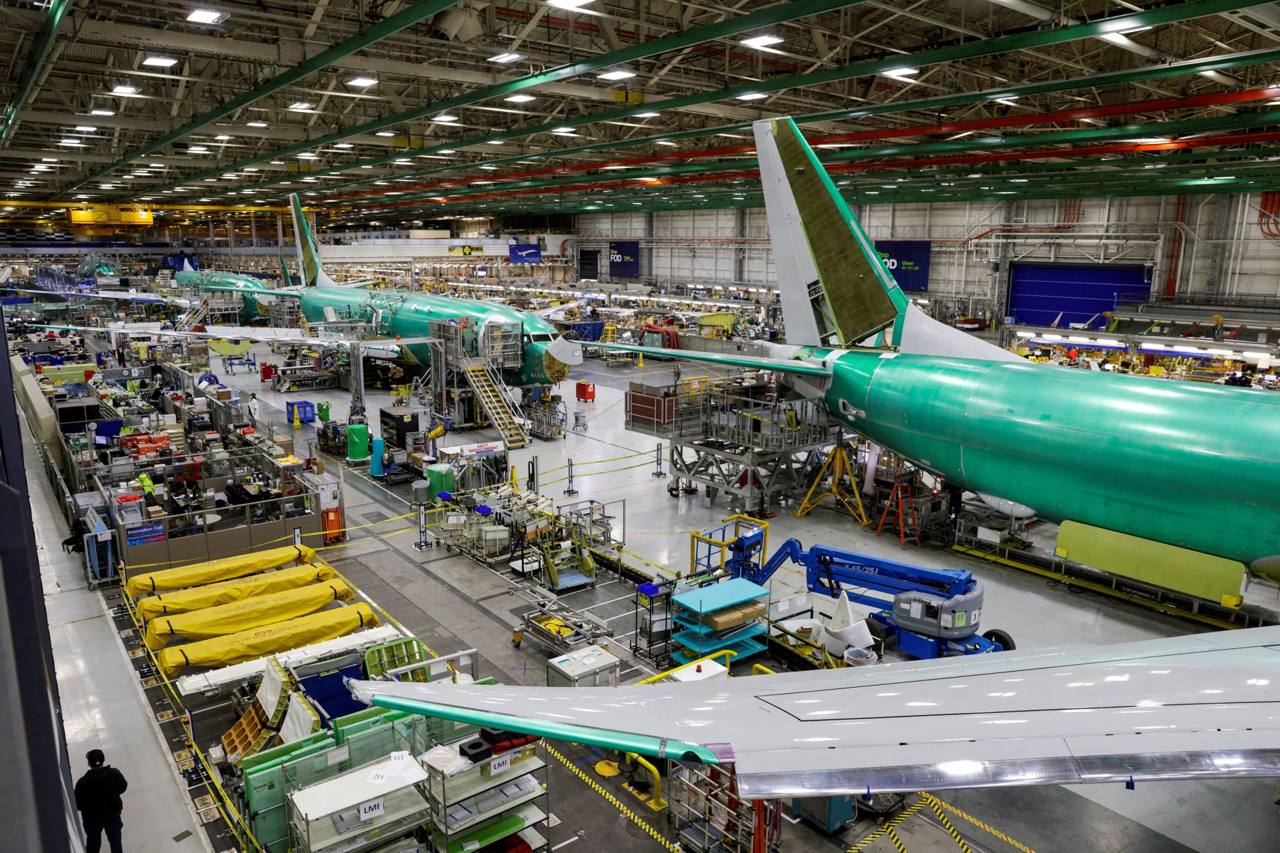
SEATTLE — Boeing Commercial Airplanes plans to cut about 5% of its workforce because the planemaker is increasing jetliner production more slowly than it had planned, the division's chief executive, Stephanie Pope, told employees in an internal memo on Monday, November 9.
Source: Reuters via SRN News
The reductions will happen through a combination of attrition and involuntary layoffs, according to the memo, which was reviewed by Reuters. Employee notifications will begin in December at the earliest. Boeing is required in many states to give workers 60 days' notice before a layoff takes effect.
"As shared in our third-quarter earnings, we need to reset the pace of our production rate ramps to provide our factories and supply chain partners additional time to achieve stability. Adjusting our production schedules and reducing aircraft output puts us in an overstaffed position," Pope said in the memo.
Why Boeing is slowing the ramp
Boeing chief executive Kelly Ortberg told analysts last month that the company would miss its 737 production and delivery targets this year. Boeing now expects to reach a 737 production rate of 47 jets a month in early 2027, after previously projecting it would hit that pace by summer 2026. Wing production has been the pacing item: Ortberg said on the October 27 earnings call that wing output was improving but had not yet shown the sustained performance needed for 47 a month, and that the next increase, to 52 a month, is targeted for the second half of 2027 and depends on stable wings, Wichita-built fuselages and a certified, producing Everett line.
The narrowbody 737 is Boeing's single largest cash generator, so higher output is essential to the company's recovery. Boeing has also struggled to lift production of its widebody 787 Dreamliner from 8 jets a month to 10 a month, and its 767 and 777 programs have been disrupted as well, as Reuters reported last month.
Who is affected — and who is not
Boeing has not disclosed how the cut will be divided between layoffs and attrition, or which sites and job categories will be hit hardest; the reports reviewed on Monday gave no site-by-site breakdown. The division's biggest footprints are in Washington state — the 737 factory in Renton and the widebody plant in Everett — and the 787 plant in North Charleston, South Carolina.
One group was explicitly told it is safe for now: a separate message to local employees said staff in Wichita, Kansas, and Tulsa, Oklahoma, are not being considered for layoffs, voluntary separation or early retirement, KMUW reported. Boeing employs about 13,000 people in Wichita, where it acquired the former Spirit AeroSystems fuselage facility in December 2025.
Source: Airways Magazine / KMUW
The money picture behind the decision
Boeing's October 27 third-quarter results showed a US$697 million operating loss in the commercial airplanes division, with higher projected production-rate adjustment and supply-chain costs weighing on the unit. Its order backlog stood at more than 6,300 aircraft, valued at a record $612 billion at the end of the third quarter — a cushion that protects future work even as near-term output slows. Ortberg also told analysts that Boeing no longer expects to reach $10 billion in free cash flow until 2029, a year later than analysts had expected — a target investors watch as a key milepost in the company's recovery after years of crises and controversies that left it heavily in debt, with a dented reputation and under stricter regulatory scrutiny.
Boeing shares slipped about 1% in Monday trading after the news. The planned cut follows Boeing's late-2024 move to reduce its companywide workforce by about 10%. Reuters reported that, ahead of Monday's announcement, many Boeing workers had already worried that layoffs could soon come.
The Puget Sound region around Seattle and Everett is home to one of the largest South Asian communities on the US West Coast, including many engineers, machinists and supplier-company workers tied to Boeing's factories. Because Boeing has not named the sites or roles affected, no worker will know whether their job is in the cut until the December notices begin — and Washington state's 60-day notice rules mean most affected employees would leave no earlier than February.
What happens next
The next fixed point is December, when the first layoff notifications are expected. After that, attention turns to whether Boeing can hold its revised schedule: stability at 47 737s a month in early 2027, the 787's climb from 8 toward 10 a month, and the planned move to 52 narrowbodies a month in the second half of 2027. If the factories stabilise faster than expected, attrition could absorb more of the 5%; if the ramp slips again, Monday's memo may not be the last word on staffing.