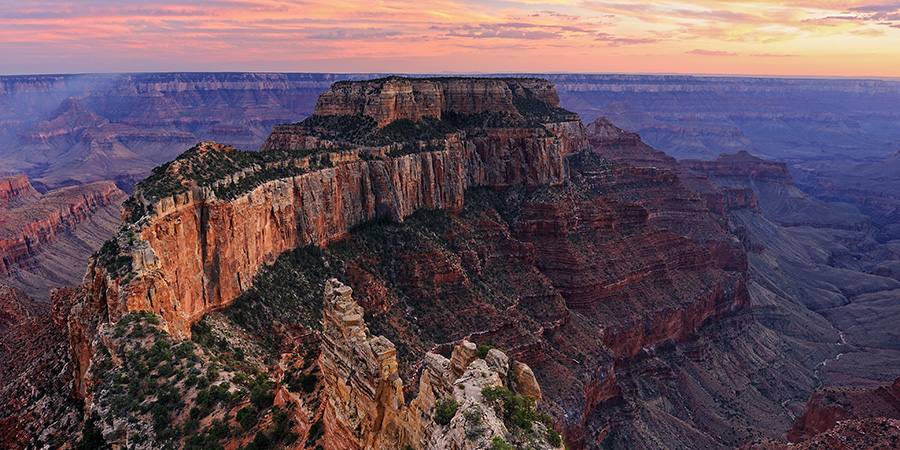
GRAND CANYON NATIONAL PARK, Arizona — Three people were killed when a small single-engine plane crashed on the remote North Rim of Grand Canyon National Park on Sunday evening, November 15, the National Park Service has confirmed. There were no survivors.
Source: National Park Service via AVweb
The aircraft was a Piper PA-24 Comanche, a single-engine, low-wing plane that typically seats four to six people. According to the Federal Aviation Administration, the Comanche went down at approximately 7:15 p.m. local time on Sunday, November 15, in the Basin area of the North Rim. The FAA said three people were on board.
Reported missing late on Sunday night
The plane was not reported missing until hours later. The Grand Canyon Regional Communications Center received a report of a missing Piper Comanche with three people aboard at approximately 11:30 p.m. on Sunday, November 15, according to the National Park Service. The aircraft's last known location was in the vicinity of the Basin area on the North Rim.
That gap — a crash at about 7:15 p.m. and a missing-aircraft report at about 11:30 p.m. — is part of the timeline investigators will work through. Officials have not publicly confirmed the aircraft's registration, its departure airport or its intended destination, and they have not said where the flight began or where it was going.
An overnight search in difficult terrain
The Arizona Department of Public Safety launched an aerial search in the early hours of Monday, November 16, using forward-looking infrared technology and night-vision equipment, the park service said. The search also involved Coconino County Search and Rescue, Kane County Search and Rescue and the Air Force Rescue Coordination Center, according to reporting on the park service statement.
At approximately 10:15 a.m. on Monday, November 16, National Park Service personnel located the aircraft and a debris field in the Basin area. Park officials confirmed there were no survivors. The search, from the late-night missing report to the Monday-morning discovery, lasted nearly twelve hours across some of the most rugged and remote terrain in the American Southwest.
Names withheld, cause not yet known
The names of the three people aboard are being withheld out of respect for their families' privacy at this time, the National Park Service said. No cause has been announced. Authorities have not attributed the crash to weather, mechanical failure or pilot error, and AZFamily reported that conditions around the canyon on Sunday night were neither windy nor rainy.
The National Transportation Safety Board will lead the investigation, with support from the National Park Service and the Federal Aviation Administration. NTSB spokesperson Peter Knudson told the Arizona Daily Star the crash area is mountainous terrain, and an NTSB investigator was expected to arrive at the accident site on Tuesday, November 17, to begin the on-scene phase. The NTSB normally examines the wreckage and documents the scene before publishing a preliminary report, usually within a few weeks; a final report takes considerably longer.
The North Rim: higher, remoter, and nearing its season's end
The North Rim sits on the Kaibab Plateau at an average elevation of about 8,300 feet — roughly 1,000 feet higher than the South Rim — and it draws far fewer visitors than the South Rim's main facilities. The crash occurred in a remote North Rim area, not at the South Rim's principal visitor facilities, and the park service has not announced a park-wide closure resulting from the crash. The North Rim remains open for limited daytime visits until November 30, unless a major snowstorm forces an earlier closure.
For readers who travel or fly in the US Southwest, the practical point is narrow but important: this was a private single-engine aircraft, not a commercial airline flight and not, on the information released so far, a sightseeing tour operation. Officials have released no wider safety warning for visitors, and the investigation — not speculation — will establish what brought the Comanche down.
An NTSB investigator was expected at the site on Tuesday, November 17. The board will document the wreckage in the Basin area, and a preliminary report is normally published within a few weeks. The victims' names have not been released.