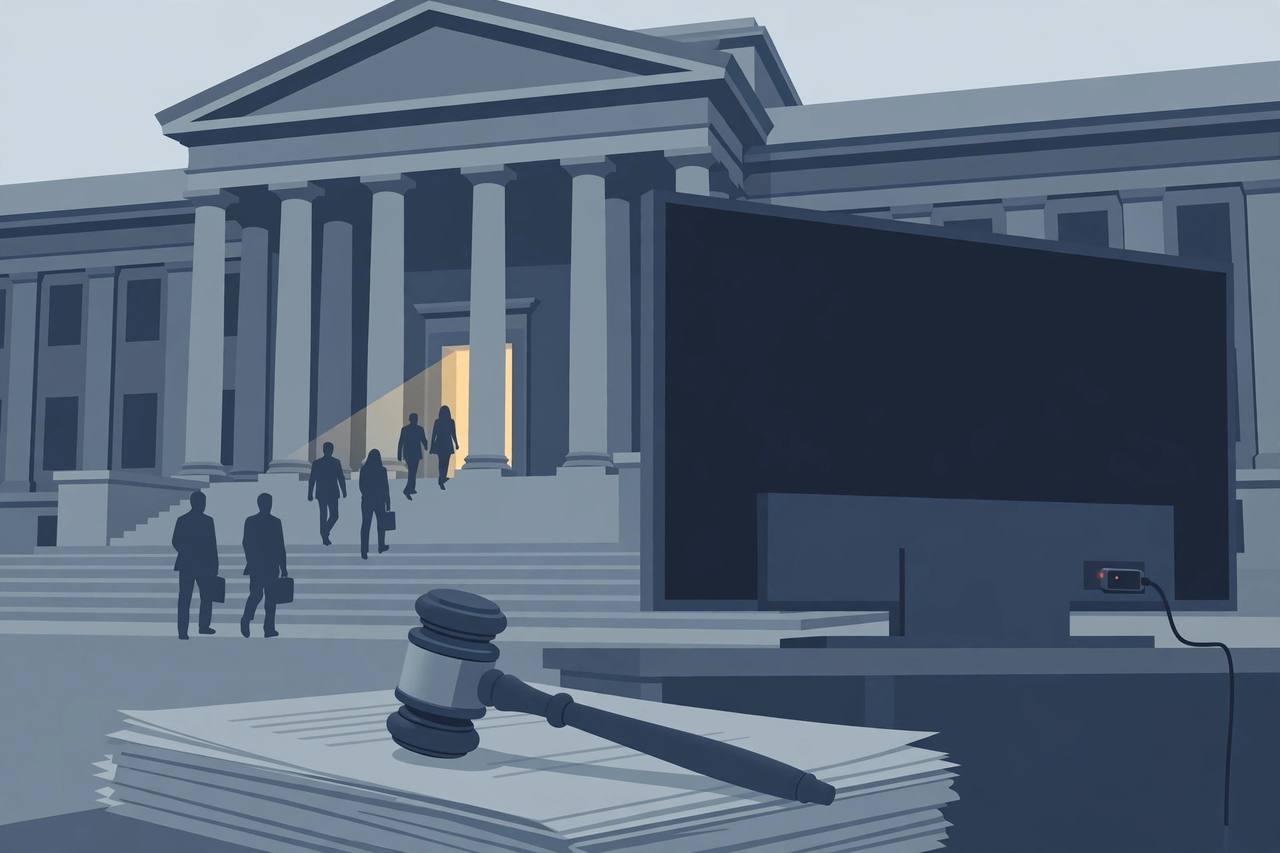
SAN FRANCISCO, California — Abdulrahman Alfozan, the former OpenAI engineer accused of planting a covert recording device in an executive conference room at the company's San Francisco headquarters, pleaded not guilty in federal court on Friday, November 6, and was sent back to jail, where he has been held without bail since his arrest on October 9.
Source: The Hacker News, citing Bloomberg and CNBC reports
The plea is the newest step in a case this newsroom first reported on October 21, when a federal judge ordered Alfozan held without bail after his arrest on a criminal complaint. Since that earlier report, a federal grand jury has indicted him — on October 27 — on a single count of interception of oral communications, and Friday's hearing before Magistrate Judge Peter Kang was his first court appearance on that indictment.
Source: CNBC reporting, via EuropeSays
What happened in court on Friday
Alfozan, 35, entered the not-guilty plea during a brief appearance in San Francisco federal court and was returned to custody afterwards, CNBC reported. His lawyer declined to comment after the hearing. Judge Kang ordered him to appear again on November 17. If he is convicted, Alfozan faces a maximum of five years in prison and a $250,000 fine, followed by three years of supervised release.
A not-guilty plea is a formal denial of the charge, not a finding on the evidence. Nothing prosecutors allege in this case has been proven in court, no trial date has been reported, and Alfozan is presumed innocent unless the government proves its case.
The allegations: a device inside a television
Prosecutors allege that on September 28 Alfozan put a recording device inside a television in an executive conference room at OpenAI's San Francisco offices, a room he had no permission to enter. According to court reporting on the filings, the device was found around September 30, plugged into a USB port on the television. Prosecutors describe the equipment as a sophisticated, custom-built device designed to record and encrypt conversations, and they allege Alfozan took considerable pains to develop bespoke encrypted recording equipment aimed at meetings involving senior OpenAI personnel and executives.
Court filings also allege that Alfozan was in frequent contact via WhatsApp with a member of the Saudi royal family. Prosecutors have not alleged in the charge itself that any recording reached a foreign government, and OpenAI has not been reported as confirming that any confidential information was successfully disclosed. The single count he faces is about the alleged interception of oral communications — the recording itself.
Prosecutors say Alfozan was arrested three days before an October 12 one-way flight to Riyadh, Saudi Arabia, that he had booked for himself, his wife and his son. In their account, his wife and son then left without him: an October 11 flight to Jeddah booked and paid for by the Saudi government was cancelled, and a member of the Saudi military then booked them a business-class one-way ticket to Doha, Qatar, which they took on October 10 — about 36 hours after his arrest. A judge kept him in custody before trial because of the flight risk. These are the prosecution's claims, presented here as allegations.
Who Alfozan is
Alfozan is a Saudi national who worked at OpenAI as an engineering lead focused on AI agents and the data platform, according to his biography page at Raed Ventures, a Saudi Arabian venture capital firm where he is a venture partner. Prince Khalid Bin Bader Al Saud, a member of Saudi Arabia's royal family, is a venture partner in the same firm, CNBC noted. Alfozan's employment at OpenAI ended after his arrest last month.
What is solid
- A grand jury indicted Alfozan on October 27 on one count of interception of oral communications
- He pleaded not guilty on November 6 in San Francisco federal court
- He has been held without bail since his October 9 arrest
- His next hearing is scheduled for November 17, 2026
What is only claimed
- Prosecutors allege he planted a sophisticated recording device in an OpenAI executive conference room on September 28 — he denies the charge
- Prosecutors allege frequent WhatsApp contact with a member of the Saudi royal family and describe him as a flight risk — no espionage charge has been brought
Why the case draws attention far beyond one courtroom
The case lands in the middle of a wider fight over the security of American artificial-intelligence research. OpenAI is among the US companies moving fastest on AI agents, and Washington has grown increasingly protective of that lead: in June, President Donald Trump signed an executive order on AI innovation declaring it US policy to protect American ingenuity and intellectual property from exploitation and theft by adversaries. At the same time, OpenAI earlier this year held discussions with Saudi Arabia's Public Investment Fund, the kingdom's sovereign wealth fund, about investing in the company — a reminder that Gulf money and American AI labs are deeply intertwined even as prosecutors pursue a case like this one.
What happens next
Alfozan is due back in court on November 17, still in custody. The hearings ahead will test whether the government's evidence — the device, the court filings describing encrypted recording equipment, and the communications prosecutors cite — supports the single interception count, and whether any further charges follow. For now, the formal position is simple: indicted, pleaded not guilty, and awaiting the next hearing.