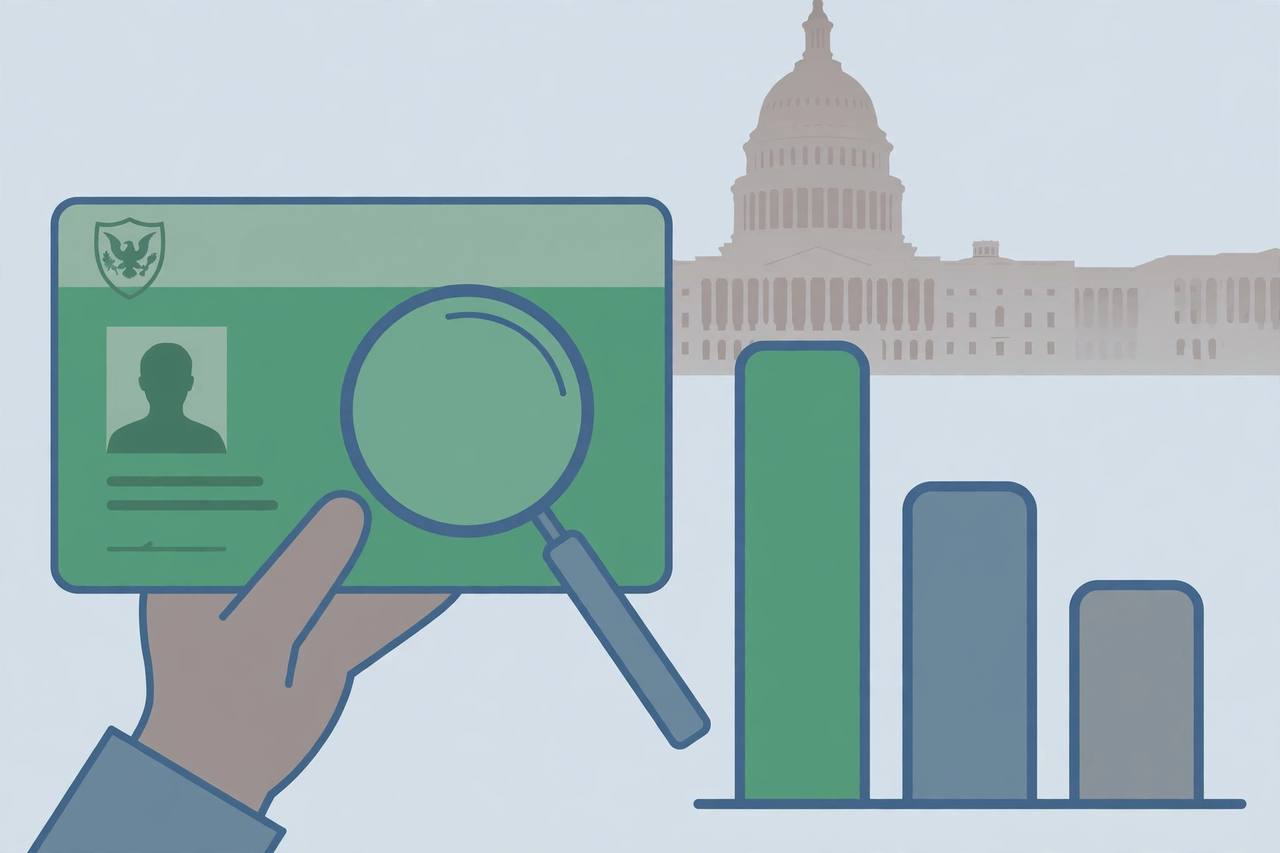
Approvals for the EB-1A 'extraordinary ability' green card have fallen sharply since President Donald Trump returned to the White House, with just 32 percent of petitions approved by mid-2026, down from 75 percent in the final months of the Biden administration, The Washington Post reported on Friday, citing federal immigration data from U.S. Citizenship and Immigration Services (USCIS).
What the EB-1A visa is
The EB-1A is a first-preference, employment-based immigrant visa that offers a path to a green card for people in science, the arts, education, business and athletics who can show sustained national or international acclaim. It is nicknamed the 'Einstein visa', and it is used by self-petitioning researchers, founders, artists and athletes — people who can apply on their own achievements without an employer sponsor.
Under the regulation, 8 C.F.R. 204.5(h)(3), a petitioner must show a one-time major international award, or meet at least three of ten evidentiary criteria, such as published material about the person, judging the work of others, or a high salary. Since the 2010 Ninth Circuit decision in Kazarian v. USCIS, the agency applies a second step, a 'final merits determination', asking whether the whole record shows sustained acclaim and a place among the small percentage at the very top of the field.
Why approvals are falling
The Post said it could not establish that the administration instructed adjudicators to get tougher, and it noted that weaker petitions and a thinner USCIS workforce may also be pushing denials up. Immigration attorneys say officers are taking a more subjective approach to deciding who qualifies, and applicants who might have been approved in previous years are now being turned away. Analysts also point to a rise in templated, thinly documented filings — some prepared with artificial intelligence — and to buyouts and firings coordinated by the U.S. DOGE Service that have left fewer experienced officers to review cases.
'It's a huge, huge drop,' Kate Angustia, a former immigration officer and supervisory policy and practice counsel at the American Immigration Lawyers Association, told the Post. 'It's strange because the Trump administration has repeatedly said they want the best and the brightest.' Rachel Baskin, a Long Island-based immigration attorney, told the Post: 'It's become so much more subjective.' James Hollis, a Memphis-based lawyer, said a technology entrepreneur who raised more than $60 million in venture financing and appeared in 20 news stories was recently rejected. 'They're killing AI entrepreneurs,' Hollis said. 'They're absolutely annihilating them.'
The fallout is already changing behaviour: some law firms have stopped taking EB-1A cases altogether because so many applications are being denied, attorneys told the Post and the Daily Beast.
The August policy change — not yet in the numbers
The timing matters for anyone filing now. USCIS Policy Alert PA-2026-05, issued on August 5, 2026, updated the Policy Manual to stress that officers may deny a filing that lacks required evidence without first sending a request for evidence or a notice of intent to deny. Every decision behind the 32 percent figure was made before that alert took effect. The next quarterly release, covering July through September, will be the first to capture adjudication under the new guidance — and the immigration data firm Lawfully projects the approval rate may have fallen further, to about 27 percent, in the fourth quarter of fiscal 2026.
The Melania Trump connection
The category carries a famous association: First Lady Melania Trump received permanent residency through the EB-1 program in 2001 while working as a model. A 2018 Washington Post report questioned whether her career met the program's high standards, noting she was not a top supermodel on the level of Kate Moss, Gisele Bundchen or Naomi Campbell. The White House and the Department of Homeland Security did not respond to requests for comment, according to the Daily Beast, which followed the Post's story.
What it means for applicants — and what happens next
For immigrants already in the United States on work visas, the EB-1A route has been one of the few self-petitioned paths to a green card. Pending applicants are now weighing whether to file, wait or switch strategies, and advocates warn the United States could lose top talent to other countries if the trend continues. The next test comes with the fourth-quarter fiscal 2026 data, which will show whether approvals fell further once officers began using the no-warning denial power. Until then, lawyers say the practical lesson is to file a far stronger evidence package than the one that might have passed two years ago.
This article is general information about immigration data, not legal advice. Anyone considering an EB-1A petition should consult a licensed immigration attorney about their own case.