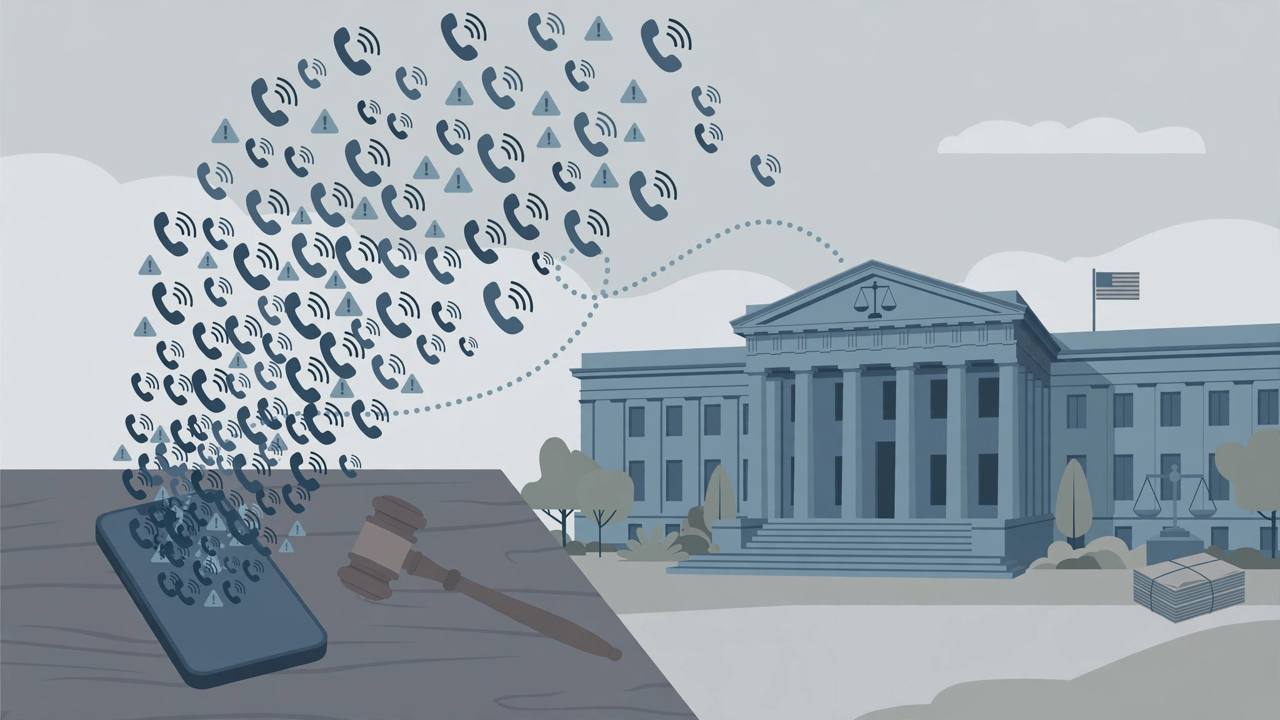
TAMPA, Florida — A Mississippi man who prosecutors say called his victim approximately 600 times in a single week has been sentenced to six years and eight months in federal prison for cyberstalking and transmitting threats to injure, the U.S. Attorney's Office for the Middle District of Florida announced on Monday, November 16.
Source: U.S. Attorney's Office, Middle District of Florida (DOJ)
Percy Bryant, 30, of Mississippi, was sentenced by U.S. District Judge Steven D. Merryday in Tampa. The sentence is 80 months in federal prison. Bryant had pleaded guilty on August 13, 2026, to cyberstalking and transmission of threats to injure, U.S. Attorney Gregory W. Kehoe announced. The guilty plea meant there was no trial; the facts below are taken from court documents as summarised by prosecutors.
What prosecutors say Bryant did
According to court documents, since at least May 2025 Bryant threatened and stalked his victim by telephone, text message, social media and email. Prosecutors say his persistent course of conduct — which included calling the victim approximately 600 times in a single week, and on another occasion calling the victim 80 times in a single day — was intended to harass, intimidate and threaten the victim.
Bryant carried out the conduct while he was on state probation for a different crime, according to court documents. The U.S. Attorney's Office has not named the victim, and Awaaz Punjab is not naming the victim either: in stalking cases, protecting the victim's identity is part of protecting their safety, and nothing in the public court summary requires a name for readers to understand the case.
The investigation and the prosecution
The case was investigated by the Federal Bureau of Investigation. It was prosecuted by Assistant United States Attorney Lindsey Schmidt in the Middle District of Florida, whose federal courthouse is in Tampa. The announcement was made by U.S. Attorney Gregory W. Kehoe on Monday, November 16, and the sentencing was reported independently on November 17.
Background: why cyberstalking is a federal crime
Cyberstalking is prosecuted federally in the United States when a course of conduct using phones, messages, social media or email is intended to harass, intimidate or threaten a victim and causes, or is expected to cause, substantial distress or fear of injury. That is why a pattern of calls and messages — not a single angry call — sits at the centre of this case: prosecutors presented the volume and persistence of the contact, 600 calls in one week and 80 in one day, as the conduct itself.
The second count, transmission of threats to injure, covers communicating a threat to injure another person. Bryant pleaded guilty to both counts on August 13, so the November 16 hearing was about punishment, not about whether the conduct happened. Judge Merryday's 80-month sentence is well above a short county-jail term: it is a federal prison sentence of more than six and a half years for conduct that began, on the court documents, in May 2025.
Keep the messages and call logs — in this case the pattern of contact was the evidence at the centre of the prosecution. Report threats to local police, and in the United States you can also report cyberstalking to the FBI. Blocking a number alone does not preserve evidence; save it first.
What happens next
Bryant will serve the 80-month federal prison sentence imposed by Judge Merryday. The U.S. Attorney's announcement did not set out any additional court date in this case, and the guilty plea on August 13 closed the question of guilt: there is no trial to come. Any question of supervised release or other conditions would be set by the court's written judgment, which the announcement did not detail, so Awaaz Punjab is not speculating about it.
For the Tampa Bay area, the case is a reminder that federal prosecutors in the Middle District of Florida treat sustained telephone and online harassment as a serious violent-crime priority, not a private dispute — particularly, as here, where prosecutors say the conduct continued while the offender was already on probation for another crime.