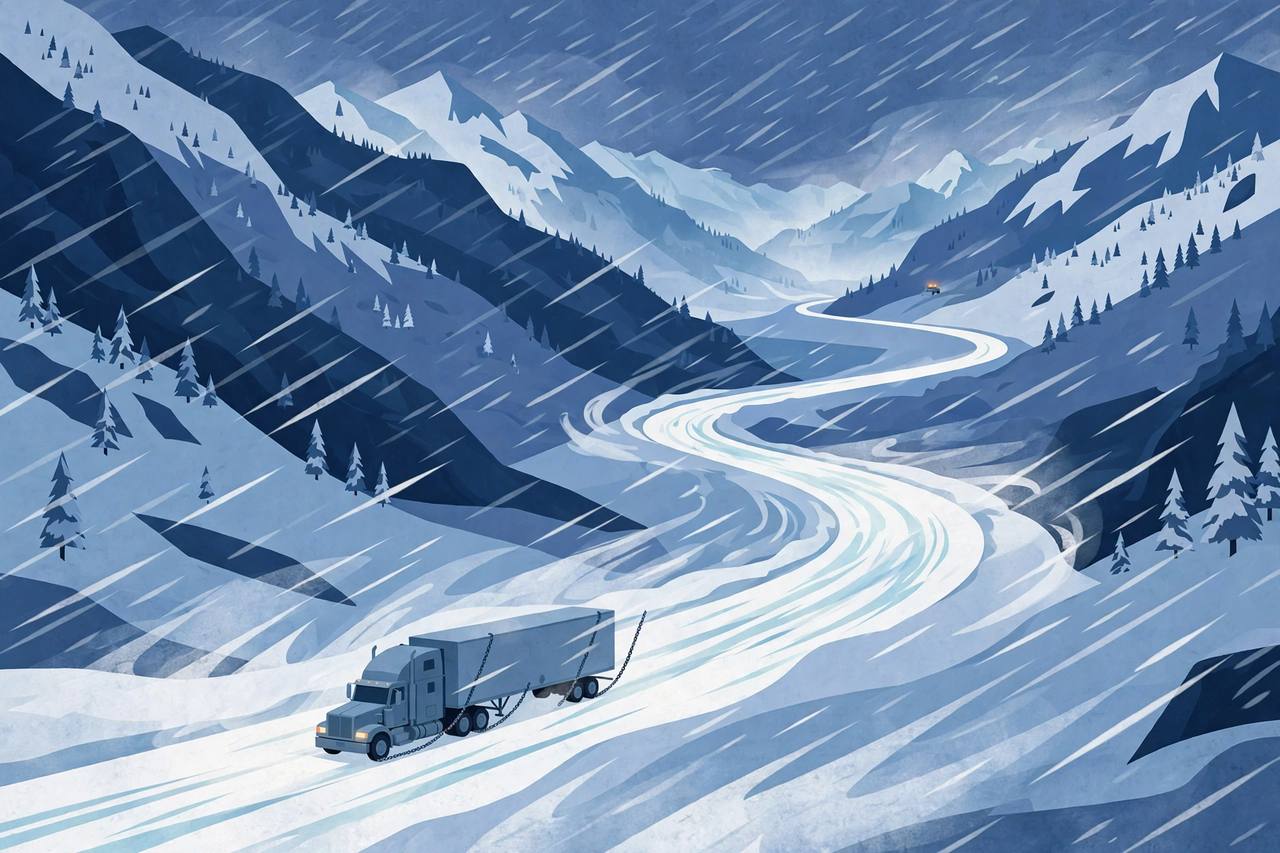
Snow squalls and high winds shut down two of America's busiest trucking corridors on Saturday, November 28, as a winter storm slammed Colorado's high country and Wyoming's Interstate 80 on the busiest travel weekend of the year. The closures stranded drivers, forced detours through mountain passes and left state highway crews working through the night — and fresh closures were still being reported on Sunday morning as a second storm moved in.
What happened on I-70 in Colorado
Snow squalls hit Colorado's high country on Saturday afternoon. The Colorado State Patrol worked multiple crashes on Interstate 70, including a semi-truck that jackknifed near Georgetown at about 5:11 p.m. No injuries were reported in the crashes the State Patrol detailed.
Source: CDLWire, citing Colorado State Patrol and CDOT
The Colorado Department of Transportation closed I-70 in both directions between Georgetown and the Eisenhower Tunnel at 5:30 p.m. The closure was later extended toward Silverthorne before the interstate reopened at 8:20 p.m.
Source: CDLWire, citing CDOT
The storm shut the escape routes too. Loveland Pass on U.S. Highway 6 — the road hazardous-materials loads must use because they are banned from the Eisenhower Tunnel — was closed, along with Highway 9 over Hoosier Pass, and a crash closed U.S. Highway 40 near Granby. Commercial chain requirements were in effect across the corridor.
Wyoming: wind closes I-80
In Wyoming, the danger was wind as much as snow. The Wyoming Department of Transportation closed Interstate 80 from Rawlins to Laramie to high-profile vehicles under 35,000 pounds because of an extreme blow-over risk. A High Wind Watch was in effect through late Monday, with gusts of up to 65 mph possible.
Source: CDLWire, citing WYDOT 511
Rolling closures were also in effect on I-80 through the weekend. TheTrucker reported multiple crashes between milepost 280 and milepost 283, with rolling closures westbound toward Cheyenne and eastbound toward Rock Springs. The crashes were cleared and the closures lifted shortly after 8:30 p.m.
Source: TheTrucker.com
But the corridor did not stay open. By Sunday morning, new crashes were blocking lanes again — all eastbound lanes were shut at milepost 288.3 near Arlington and all westbound lanes near milepost 272, with more crashes near Laramie. Wyoming DOT reported the closures at 6:07 a.m. Mountain Time, citing slick roads and dangerous winds, and advised drivers to avoid I-80 between Arlington and Laramie and to check Wyoming 511 before travelling.
Source: WYDOT 511, via Sunday traffic reports
Why this matters for truckers
I-70 and I-80 are two of the main east-west freight arteries in the United States, and thousands of Punjabi truckers run these lanes every week. A closure on the Eisenhower Tunnel corridor or on I-80 in Wyoming does not just delay one load — it backs up freight across the Rockies, pushes trucks onto two-lane mountain passes, and forces drivers to choose between waiting out the storm and risking a jackknife or a blow-over.
Colorado's chain law runs from September 1 through May 31 on the mountain corridors, and troopers can cite drivers who do not chain up when the law is in effect. In Wyoming, high-profile rigs face the added danger of crosswinds strong enough to tip a trailer — the reason WYDOT shuts the road to lighter trucks before the wind does the job for it.
What happens next
A second storm is moving across the Plains and the South on Sunday, with heavy rain expected to reach Appalachia by Sunday evening and the East Coast on Monday. The Transportation Security Administration expects Sunday to be the single busiest day of the Thanksgiving period, with more than 3.1 million passengers screened, and travel networks are expected to work near capacity through at least Tuesday, December 1.
Source: The Traveler
Check the CDOT and WYDOT 511 boards before you roll, carry your chains, and keep water and blankets in the cab in case of a delay. If the wind says park it — park it.
Highway crews in both states were expected to keep working through the weekend as conditions changed hour by hour. Drivers heading over the passes were advised to expect delays, closures and chain requirements until the second storm clears.