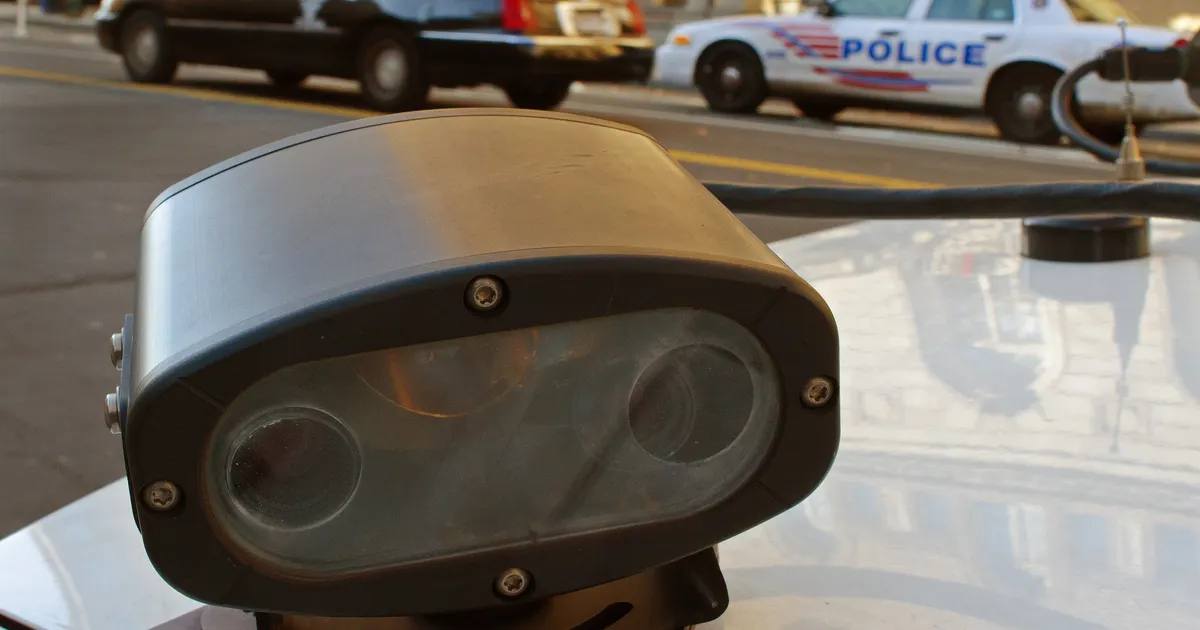
Immigration officers are increasingly using automated license plate readers to scan cars at random and pick out people to detain, according to an investigation published by The Atlantic on November 23, 2026. ICE officials told the magazine the practice has grown as the Trump administration presses for more arrests — even though the Department of Homeland Security's own published rules appear to forbid it.
The investigation centres on a Sunday in Austin, Texas. On September 20, an ICE officer identified in court filings only as D.F. pulled up behind a blue Toyota Corolla parked outside a restaurant, its hazard lights blinking — the sign of a delivery driver running in for a pickup. The officer, driving an unmarked SUV, pointed his automated plate reader at the car.
The scan showed the Corolla was registered to Wilber Rafael Garcés Pérez, a 28-year-old Venezuelan food delivery driver with a pending deportation order. When D.F. and his partner, identified as L.G., tried to stop and question him, Garcés Pérez drove away, clipping L.G. with his side mirror. The officers pursued the car, and when L.G. tried to stop it a second time, he drew his weapon and shot Garcés Pérez in the back. L.G. was not wearing a body camera, in violation of ICE policy, and the moments immediately before the gunfire were not recorded. Garcés Pérez survived and has been charged with assaulting a federal officer; he remains in custody.
Ten days later, at a federal court hearing, the Department of Homeland Security special agent who investigated the shooting, Rick Bazan, testified that the two officers had been “doing random checks on vehicles and at random places” that Sunday and were looking for people they could arrest. In an audio recording of the proceeding obtained by Austin's KUT News, Bazan described the tactics as routine.
The Austin shooting was one of three shootings tied to plate-reader stops in recent months, two of them fatal, according to The Atlantic. Officers fatally shot Lorenzo Salgado Araujo, a 52-year-old contractor, during a traffic stop in Houston on July 7, and an ICE officer in Maine killed another delivery driver, Johan Sebastián Durán Guerrero, in his car six days later. A senior ICE official told the magazine that plate readers were used by officers in both fatal incidents.
What the rules say — and what officers are doing
A Privacy Impact Assessment published by the department in 2022 says the use of plate readers is prohibited for “ad hoc” queries and for starting traffic stops solely on the basis of a search result. The assessment says ICE must limit the readers to officers with appropriate training, require them to state a justification for each use, and keep logs subject to quarterly internal audits. Under the Biden administration, officers also needed a supervisor's sign-off to use the devices, a veteran ICE official told the magazine, and they were not authorised to stop vehicles except in very limited circumstances where they already knew who was in the car.
ICE did not answer The Atlantic's questions about the expanded use of the readers. Trump administration officials have repeatedly said they have a duty to intensify immigration enforcement, arguing that the previous administration allowed dangerous migrants to enter the United States without proper screening.
A phone app that pulls up a driver's whole file
Over the past several months, ICE has been piloting a new license plate reader mobile app that syncs with the agency's databases, including a powerful new mapping tool called ELITE — Enhanced Leads Identification and Targeting for Enforcement — developed by Palantir. ICE officials told the magazine that ELITE can synthesise databases officers used to check one by one, potentially showing phone numbers and addresses, motor-vehicle records, federal immigration files, Medicaid data, criminal records and biometric information. An officer can simply point a phone at a license plate and pull up an individual's case file and photo — something one ICE official likened to looking at a baseball card. A positive match stays in the officer's user history for 30 days; searches with no match are deleted within 72 hours.
The technology push comes as ICE moves to keep its access to a nationwide commercial plate database. On November 12, the agency posted notice of a planned sole-source, four-month bridge contract worth about $1.2 million with Thomson Reuters Special Services. ICE is withholding the performance work statement — the document that would normally spell out what the new contract allows — on law-enforcement sensitivity grounds. An earlier procurement description gives a sense of scale: a database pulling in at least 30 million new plate scans every month, covering at least 25 states and 24 of the country's 30 largest metro areas.
The most extensive AI-powered plate-reader network in the United States is operated by Flock Safety. The company says it is the only major license plate reader provider without a contract with the Department of Homeland Security, and that it gives customers filters to block immigration-enforcement searches. But the American Civil Liberties Union told The Atlantic it has records showing thousands of instances in which ICE officers asked state and local police agencies to run searches of Flock data on their behalf. ICE says it now has more than 2,600 agreements with state and local jurisdictions under its 287(g) programme, up from 135 when President Trump took office last year.
New limits promised — but not yet in force
Senior ICE leaders have been taking steps to rein in the readers, perhaps in anticipation of increased oversight from the incoming Democratic majorities in Congress, The Atlantic reported. The agency has been developing new procedures to prohibit officers from using the readers to go “fishing” for targets at random, three ICE officials said — but the guidelines have not been finalised or distributed. Current and former officials were sceptical the new rules would curb indiscriminate use, because officers face little risk of discipline for a stop based on a plate-reader hit in a neighbourhood with many immigrants subject to arrest.
Anyone behind the wheel can now be scanned without being a target: officers have pointed readers at parked cars outside restaurants and at passing vehicles, and the system builds heat maps of neighbourhoods where officers have the best chance of finding people with deportation orders. For Punjabi truckers and delivery drivers — many of whom spend their working day on the road — a routine drive can now begin with a plate scan. Immigration lawyers advise drivers to know their rights: you do not have to open your door to officers without a judge-signed warrant, and you have the right to remain silent.
The plate readers also help shield the agency from accusations of racial profiling, the investigation notes. To start a vehicle stop, officers must be able to articulate a “reasonable suspicion” that the person is unlawfully present — and a September 2025 Supreme Court opinion by Justice Brett Kavanaugh supported the use of factors such as language and ethnic appearance in establishing it. Those street-level checks are now known colloquially as “Kavanaugh stops”. When officers use plate readers, the technology decides whom to pull over. Peter Mina, a former ICE attorney who was the deputy officer of the department's Office for Civil Rights and Civil Liberties, told the magazine the technology “creates the potential for rampant civil-rights and civil-liberties abuses”.
Pressure for oversight is building. Last month, nearly three dozen lawmakers wrote to ICE Acting Director David Venturella objecting to what they called “side-door” access to the national network of Flock plate readers, and asked for a detailed breakdown by November 20 of how often immigration officers had accessed the databases. Representative Bennie Thompson of Mississippi, the ranking Democrat on the House Homeland Security Committee, has proposed legislation to curb ICE's use of facial-recognition software and other AI-powered apps, and has pledged aggressive oversight when the Democratic majority takes control of Congress in January. The committee has said it plans to investigate fatal shootings involving ICE officers during traffic stops, the agency's hiring surge, its spending on detention centres and deportation flights, and conditions inside ICE facilities.
What happens next: the lawmakers' November 20 deadline for ICE's breakdown has passed without a public answer, and the agency's new plate-reader rules remain unfinished. The Atlantic's findings are likely to feature in the January oversight hearings, and the $1.2 million Thomson Reuters bridge contract will decide whether ICE keeps uninterrupted access to the nationwide plate database in the meantime. For drivers, the practical advice from legal aid groups is unchanged: keep documents in order, know the number of a local immigration lawyer, and do not open the door to officers without a warrant signed by a judge.