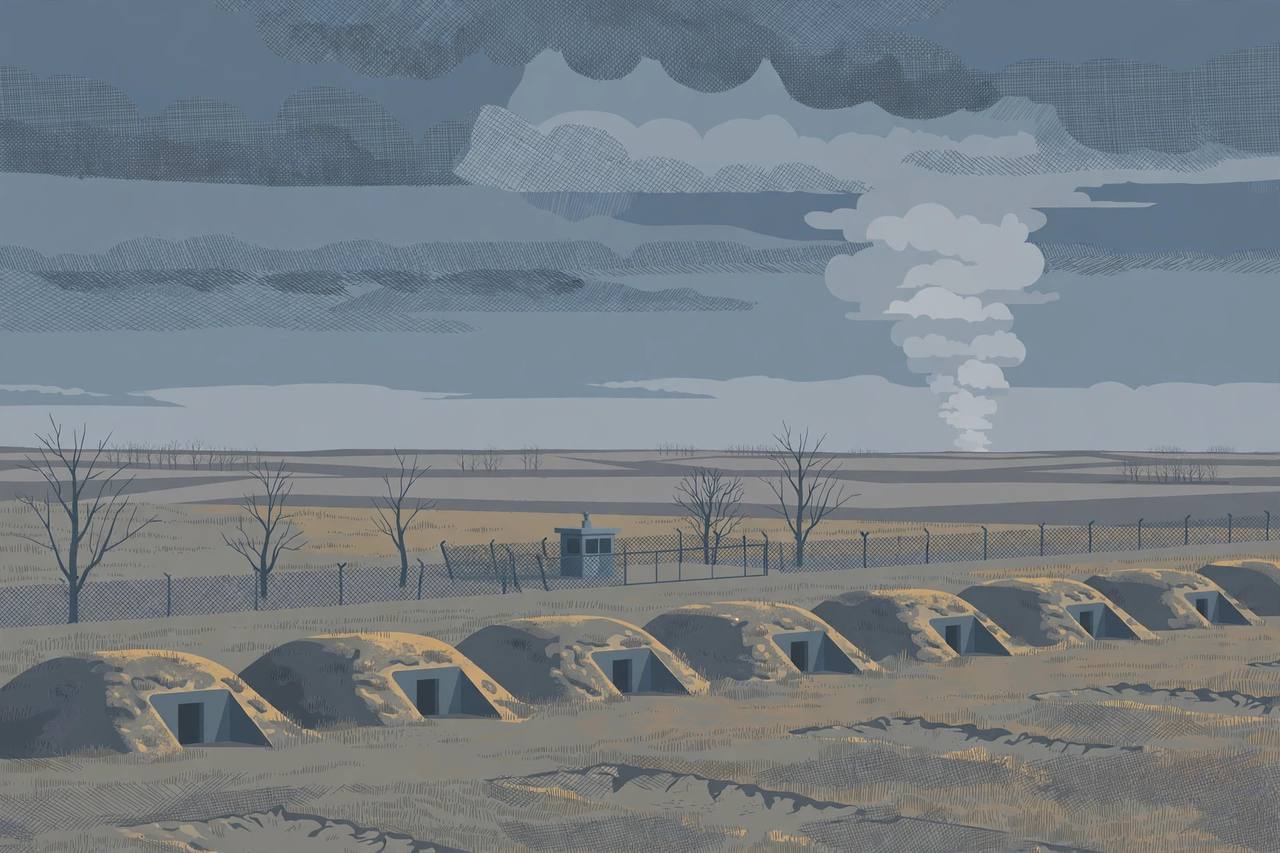
This story follows our November 23 report that President Trump ordered the Army to halt the detonation of 68 barrels of unstable lead azide at the Iowa Army Ammunition Plant until the Eighth Circuit Court of Appeals and Governor-elect Rob Sand agreed. Since that report, the court has lifted its stay, the Army says it will go ahead on Wednesday morning — and the governor-elect has declined to decide. Read the earlier report
What changed on Monday evening
Hours after Mr Trump's order, the Eighth Circuit denied an emergency request from the Iowa Environmental Council and the Sierra Club's Iowa chapter to block the blast, lifting the administrative stay it had imposed on the Environmental Protection Agency's emergency permit last week. The court said the challengers had not shown they were likely to prevail at this preliminary stage; the underlying petition for review of the permit remains pending, the Associated Press and Fox News reported.
Source: Associated Press
That evening, acting Army Secretary Adam Telle said the Army would carry out the disposal on Wednesday morning, November 25, the Associated Press reported. In a post on X, the Army said the new date would allow for optimal weather conditions and all mitigation measures to be put in place.
But the other half of Mr Trump's condition is unmet. In a Monday evening post on X, Mr Sand declined to approve or reject the blast, saying it was for the Trump administration to decide, the Associated Press and The Wall Street Journal reported.
Mr Trump had written on Truth Social on Monday that he had 'ordered the Military not to do so until such time as the Eighth Circuit agrees that we can go forward,' and made the decision 'fully subject to the incoming Governor Elect, Rob Sand, agreeing to the operation.' He added that if Mr Sand and the court did not agree, the administration would have no choice but not to proceed — and said he would hold the incoming governor responsible for 'any and all death or destruction caused by this very unfortunate, and longterm, situation.'
The court has cleared the blast, the Army says it will happen on Wednesday morning, the president says it must not happen without the governor-elect's agreement — and the governor-elect says the decision belongs to the Trump administration.
What is being detonated, and where
The material is about 9,500 pounds of degraded lead azide — a highly sensitive primary explosive used in munitions detonators — stored in 68 drums at the Iowa Army Ammunition Plant in Middletown, a town of about 400 people in south-east Iowa. Some reports put the amount at nearly 10,000 pounds. The plant, built during the Second World War, is operated for the Army by American Ordnance LLC.
The Army found the stockpile in March 2026, during a proactive safety review. Liquid stabilisers inside the ageing drums have evaporated, allowing needle-shaped crystals of lead azide to form around the rims and lids. Army specialists told the court the crystals grow more sensitive as temperatures fall, and that moving or handling the drums could set off an uncontrolled explosion — which is why the Army says a controlled detonation is the safer course.
How we got here
The Environmental Protection Agency approved an emergency permit for the detonation on November 13, and the Army publicly announced its plans on November 15. The blast was first scheduled for Friday, November 20, then pushed to Monday, November 23, and then to Wednesday, November 25. On November 19 the Iowa Environmental Council and the Sierra Club's Iowa chapter sued, challenging the permit. The Eighth Circuit imposed an administrative stay on Thursday, November 20.
Over the weekend the Justice Department told the court the Army would proceed anyway, invoking an emergency exclusion from federal environmental rules, and said it intended to act by Tuesday, November 24. On Sunday the Army announced another postponement, to Wednesday, November 25, to allow for favourable weather and additional safety measures.
What residents face
The Army has said the detonation will send up a plume carrying some lead, a known neurotoxin. The environmental groups' court filing, citing the Army's own modelling, projected that lead dust could settle across an area about 25 miles long and 5 miles wide, including homes and waterways in south-east Iowa and neighbouring Illinois. Some residents near Middletown have been sealing their windows and doors as a precaution.
Mr Sand, a Democrat who won the governor's race earlier this month, does not take office until January 12, 2027. Petitions opposing the blast have gathered tens of thousands of signatures, and residents have protested in Middletown, raising concerns about health risks and what they describe as a lack of transparency in the Army's decision.
What happens next
As of Monday night, the detonation remained scheduled for Wednesday morning, November 25, but its legal and political status was unresolved: the court has lifted its stay, the Army says it will proceed, the president's order says it must not proceed without the governor-elect's agreement, and the governor-elect has declined to give it. The underlying legal challenge to the EPA permit is still pending before the Eighth Circuit, and the Army has not announced a time for the blast.
This report is based on reporting by the Associated Press, Reuters, Fox News, The Wall Street Journal and Iowa Public Radio, and on the court filings and public statements described above.
Source: Reuters