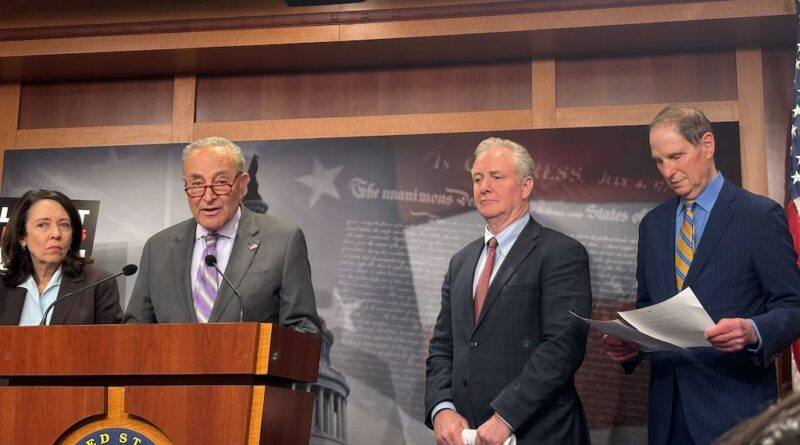
Senate Democrats will vote by secret ballot on Tuesday, December 1, to choose who leads their new majority — and for the first time in more than 30 years, the outcome is genuinely in doubt. The incumbent, Chuck Schumer of New York, is being challenged by Chris Van Hollen of Maryland in a contest that will decide who runs the Senate when Democrats take control in January.
Source: Associated Press
Van Hollen announced on November 12 that he would challenge Schumer, opening the first contested race for Senate Democratic leader in decades. Read our earlier report
A race that is usually quiet — until now
Senate Democrats elect their leader every two years behind closed doors, and the vote is normally a formality. This year it has burst into the open. Van Hollen's challenge is the first contested election for the post in more than three decades — one report puts the last such contest in 1994 — and it comes just weeks after Democrats swept the November 3 midterm elections and won a 56-seat majority in the Senate.
The vote is a secret ballot, which means public endorsements are only a rough guide to the result. A candidate needs 28 votes to win. Public counts put Schumer ahead: roughly 16 senators have publicly backed him, against about seven for Van Hollen. But more than 30 senators have not said publicly how they will vote, and both men insist they can reach 28. Van Hollen says he has 'north of 15' supporters in private; Schumer told reporters, 'I'm confident I'll be the next leader. I have the votes.'
What each man is promising
Van Hollen, 67, has framed his bid as a break with the status quo. He says Democrats need new leadership that delivers for working families, confronts political corruption and makes more aggressive use of congressional power. He supports eliminating the filibuster — the 60-vote threshold needed for most bills — has made regulation of artificial intelligence a core issue, and argues for a major health-care overhaul and action to bring down the cost of gas, groceries and heating.
Schumer, who has led Senate Democrats since 2017, has kept most of his campaigning private. He told colleagues at a caucus lunch that he has the votes, and shared an agenda for the next Congress: move quickly on health-care and tariffs legislation and launch multiple investigations into President Donald Trump's Republican administration. He has also reminded senators that he recruited many of the moderate Democrats whose wins delivered the majority.
The endorsements — and the polls
Van Hollen's public backers include Senators Bernie Sanders and Jeff Merkley, Senator Elissa Slotkin, and senators-elect Abdul El-Sayed of Michigan and Peggy Flanagan of Minnesota. Schumer's public supporters include Senators Brian Schatz, Kirsten Gillibrand, Tammy Baldwin, Mark Kelly and John Fetterman, along with returning Senator-elect Sherrod Brown of Ohio. Kentucky Governor Andy Beshear added a twist on November 26, floating Senator Jon Ossoff of Georgia as a possible 'new voice' — though Ossoff has said he is undecided and has not entered the race. Prediction markets give Schumer a roughly 91 percent chance of winning; a November 20–23 Economist/YouGov poll of Democrats found Van Hollen ahead of Schumer 40 percent to 19 percent among the party's voters.
Senators vote by secret ballot on Tuesday, December 1. The winner will lead the Democratic caucus into its first Senate majority since 2025 and take office as majority leader when the new Congress convenes in January 2027 — deciding which bills reach the floor for the final two years of President Trump's term.
The result matters well beyond the Capitol. The next majority leader will set the Senate's agenda on health care, tariffs and oversight of immigration enforcement — issues that reach directly into immigrant and diaspora communities across the United States, including the Punjabi families whose relatives navigate the immigration system every day. Van Hollen is scheduled to make his case on CBS's 'Face the Nation' on Sunday, ahead of the vote.