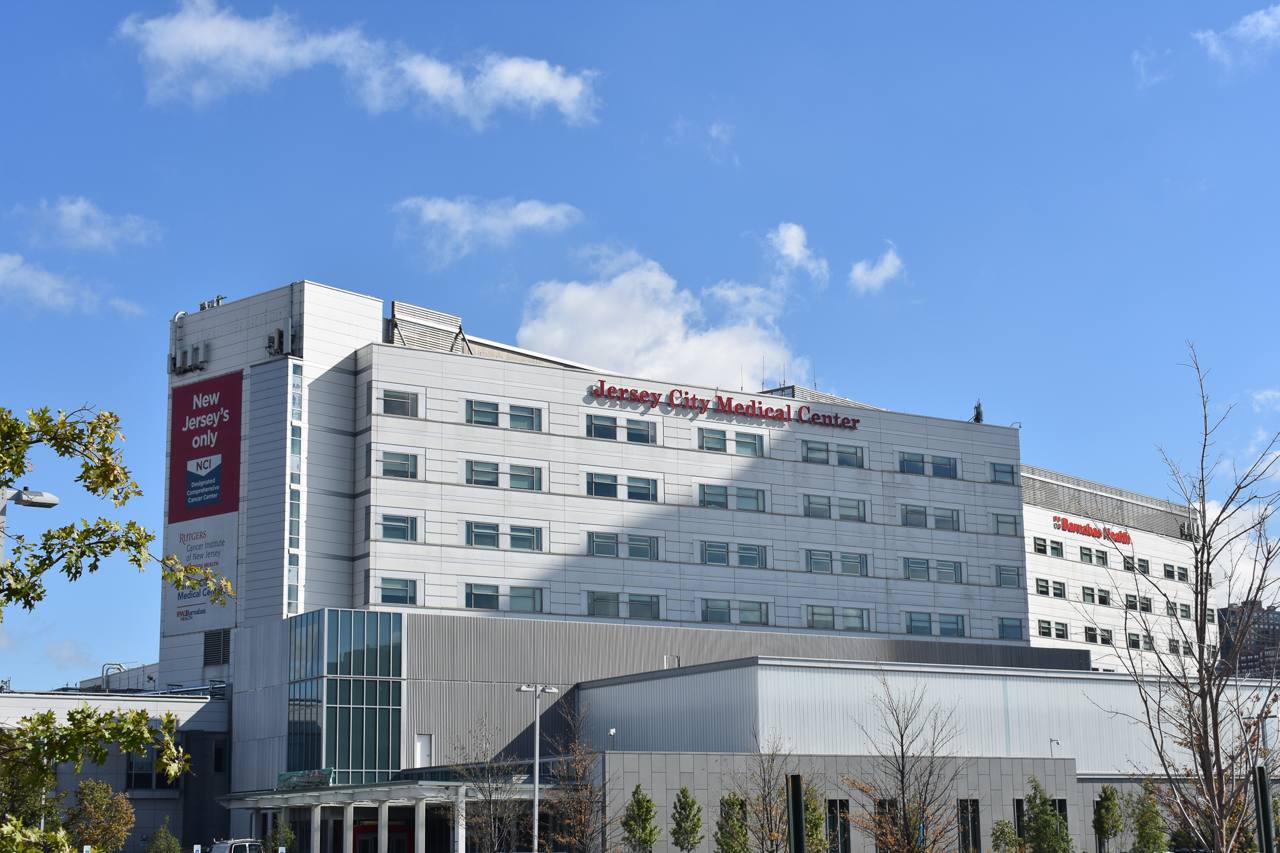
RWJBarnabas Health will redevelop about 5.5 acres around Jersey City Medical Center in a $1 billion, multi-phase project that the Jersey City Redevelopment Agency has approved, the health system announced on Tuesday, November 17, 2026. The plan combines more than 2,200 new homes with retail, dining, parks and public open space — and reserves land for a future outpatient medical building — in one of the largest hospital-anchored redevelopments in New Jersey.
Source: ROI-NJ
The first phase, being developed with Related Companies and Kushner Real Estate Group (KRE Group), calls for three residential towers totalling 1,700 homes, two parking garages with 872 spaces combined, street-level retail and dining, and new parks and public open space, according to the announcement reported by ROI-NJ and BINJE.
A second phase adds another residential tower with 515 homes — including workforce housing at below-market rates — and a six-storey parking garage. The same phase reserves space for a 100,000-square-foot outpatient medical building, so the hospital can expand services later as community needs change.
Separately, RWJBarnabas Health is building a nine-storey parking garage on the medical centre campus itself, to serve the hospital and the surrounding neighbourhood. Across the whole plan, parking totals more than 2,000 spaces.
Why a hospital is building homes
The health system says the real estate is being put to work for the hospital: it intends to reinvest project proceeds in supporting and expanding essential health care services for residents of Jersey City and Hudson County, and to invest in completing the land acquisition in a way that also provides financial support to the city. The announcement did not state the value of the land acquisition, how much revenue the project is expected to generate for health care, or a cost breakdown by phase.
The bet rests on how busy the hospital already is. Jersey City Medical Center handles about 115,000 emergency department visits, 20,000 inpatient admissions and 230,000 outpatient visits a year, according to the hospital, and it expects those numbers to keep climbing as Jersey City and Hudson County grow. The centre is a 352-bed, not-for-profit teaching hospital and a state-designated Level II Regional Trauma Center.
It is also the only full-service heart hospital in Hudson County, offering cardiac surgery and transcatheter aortic valve replacement, provides cancer care in partnership with Rutgers Cancer Institute — the state's only NCI-designated Comprehensive Cancer Center — and delivers more than 2,100 babies a year in its Lord Abbett Maternity Wing. The hospital provides Advanced Life Support for Hudson County, runs the county's 911 medical call screening and operates one of the state's busiest EMS systems, BINJE reported.
"Jersey City Medical Center has proudly served this community for generations, and our commitment to providing high-quality, accessible healthcare has never been stronger. As Jersey City and Hudson County continue to grow, so too does the need for the comprehensive healthcare services our patients and families depend on. This redevelopment is an investment in our hospital's future and, more importantly, in the health and well-being of the communities we serve."
Steve Barry, RWJBarnabas Health's executive vice president for facilities management and real estate development, said the partnership is meant to unlock the property's potential: creating housing, economic activity and community amenities "while generating resources that can be reinvested in health care services for the people of Jersey City and Hudson County." Related Companies and KRE Group also cited the planned housing, retail, dining and public spaces in describing the development.
The project, designed by Kohn Pedersen Fox, sits near the Jersey Avenue light rail station and the Grove Street PATH station, as well as Liberty State Park and the Morris Canal Greenway — a location that puts the new homes a short transit ride from Manhattan. Mayor James Solomon called the hospital one of the city's most important institutions and said the project addresses housing, neighbourhood amenities and economic development while strengthening it: "This is the kind of thoughtful, forward-looking development that Jersey City needs as our population continues to grow."
What happens next
Construction will proceed in phases over roughly the next decade, starting with the nine-storey campus parking garage. Several important details are not yet public: the announcement did not specify how many of the 515 second-phase homes will be below market or on what affordability terms, did not detail the project's financing, and gave no schedule for individual phases beyond the approximate decade-long timeline. For Hudson County's large South Asian community — Jersey City is home to one of the biggest Indian and Punjabi communities on the U.S. East Coast — the project matters twice over: as housing near transit, and as a guarantee that the county's busiest hospital keeps room to grow.