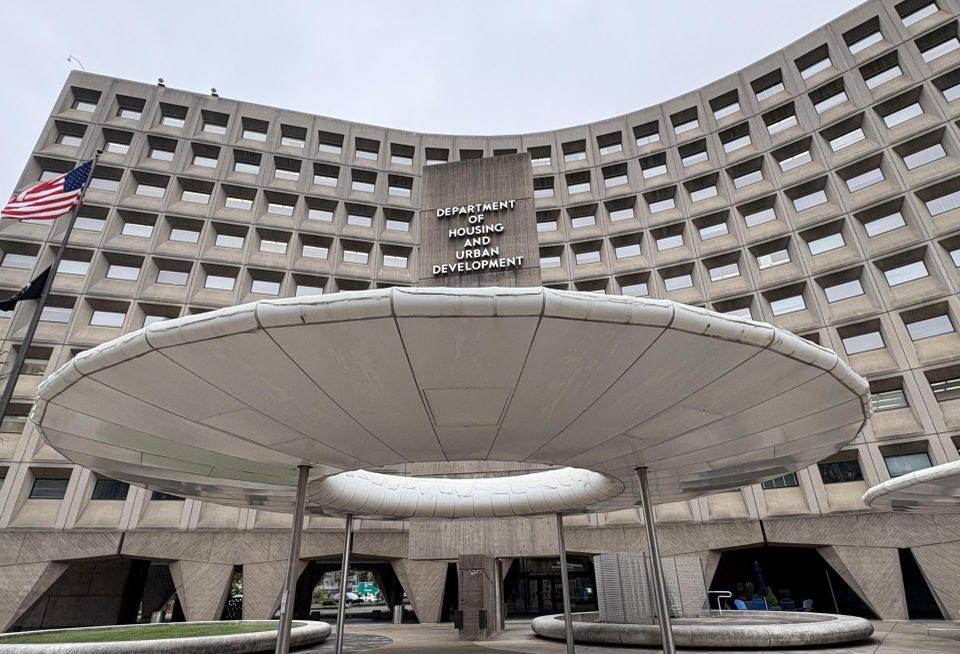
Twenty-one states, the District of Columbia and the governor of Pennsylvania sued the U.S. Department of Housing and Urban Development (HUD) on Monday, November 23, 2026, asking a federal court in Massachusetts to block a new rule that would cut off federal housing assistance to any household in which even one member lacks eligible citizenship or immigration status.
Source: Associated Press
What the states are asking the court to do
The coalition, led by the attorneys general of New York, California and Massachusetts, filed the lawsuit in the U.S. District Court for the District of Massachusetts. It asks the court to declare the rule unlawful, strike it down, and block HUD from implementing or enforcing it against the plaintiff states, their local governments and their public housing authorities.
Source: Washington State Attorney General
Joining the three lead states are the attorneys general of Arizona, Colorado, Connecticut, Delaware, Hawaii, Illinois, Maine, Maryland, Michigan, Minnesota, New Jersey, New Mexico, Oregon, Rhode Island, Virginia, Vermont, Washington and Wisconsin, along with the District of Columbia and Pennsylvania Governor Josh Shapiro. The states argue the rule illegally reverses nearly 30 years of federal policy, exceeds HUD's authority and violates the Administrative Procedure Act.
What the rule changes
The rule, titled “Housing and Community Development Act of 1980: Verification of Eligible Status,” was finalised by HUD on November 12, 2026. It ends the system of prorated assistance that has been in place since 1988: until now, a mixed-status family could stay in subsidised housing, with the subsidy covering only the household members who are U.S. citizens or eligible immigrants. Under the new rule, the whole household loses assistance if any member cannot prove eligible status, and every member of a household must submit evidence of U.S. citizenship or eligible immigration status, regardless of age.
HUD's own estimates put the scale of the change at around 20,000 mixed-status families, totalling 78,100 people, of whom about 55,000 are fully eligible for assistance. HUD's own analysis estimates that 65 percent of the eligible members of mixed-status families are under the age of 18. In Washington state alone, about 600 mixed-status families face losing their homes, and about 82,000 people who have already demonstrated their eligibility would have to prove it again or risk eviction.
Source: Washington State Attorney General
HUD Secretary Scott Turner said on November 23 that the change fully implements the 1980 Housing and Community Development Act and ends what he called the “exploitation” of taxpayer dollars by mixed-status families. Turner said it would reallocate up to $218 million in federal funds to eligible Americans currently on waitlists, and that eligibility would be verified through the SAVE database or documents such as birth certificates and passports.
The plaintiffs argue the opposite: that the rule forces eligible U.S. citizens, including children and seniors, into homelessness or requires them to separate from family members to keep housing assistance, that it will increase homelessness and shift major costs onto state and local governments, and that federal law expressly allows prorated assistance. Maryland Attorney General Anthony Brown called the policy change “cruel and unlawful,” and Senate Democratic Leader Chuck Schumer condemned it as “another cruel attempt by the Trump administration to arbitrarily pull families apart.”
This is the second lawsuit against the rule
The states' lawsuit follows an earlier challenge filed on November 16, 2026, by three Los Angeles residents and two tenant-organising groups, People Organized for Westside Renewal (POWER) and Unión de Vecinos, in the U.S. District Court for the Central District of California. That case, M.P. et al v. Turner et al, also seeks to have the rule declared unlawful and blocked before it takes effect.
Source: National Apartment Association
Awaaz Punjab earlier reported the Los Angeles residents' lawsuit against the same HUD rule. Read the earlier report
What happens next
No court has ruled on either lawsuit yet. The states are seeking an injunction before the rule takes effect on December 14, 2026, and the legal battles are expected to escalate as that date approaches, with advocates vowing to challenge the rule on statutory and constitutional grounds. New York City has directed affected residents to legal aid resources while the cases proceed.
For immigrant households — including many Punjabi families in California, New York and New Jersey, three of the states bringing this lawsuit — the stakes are direct: mixed-status households are common in immigrant communities, and the rule would put the housing of U.S.-citizen children and other eligible family members at risk because of the status of one relative. Housing authorities in the plaintiff states are now waiting on the Massachusetts court before telling families how to comply.