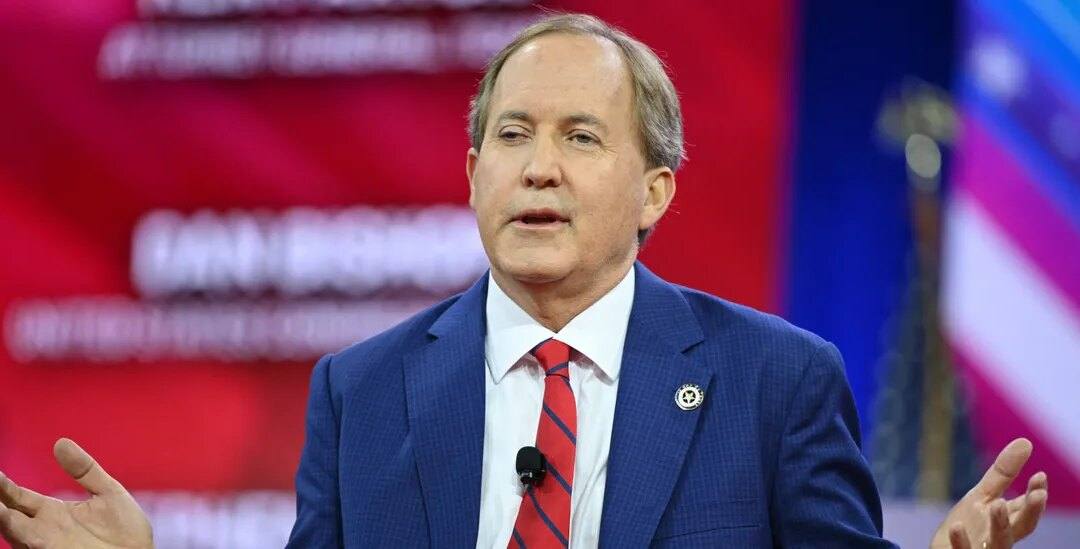
Texas Attorney General Ken Paxton's office on Monday withdrew the lawsuit that sought to ban the Council on American-Islamic Relations (CAIR) — the country's largest Muslim civil rights organisation — from operating in Texas, according to state court records reported by Bloomberg Law and The Texas Tribune. Paxton's office filed a notice of nonsuit in Collin County, ending a case it had opened in February.
Source: Bloomberg Law
The February petition had asked a Collin County judge to declare CAIR and the Muslim Brotherhood foreign terrorist and transnational criminal organisations, and to prohibit CAIR and its Texas chapters in Dallas–Fort Worth, Houston and Austin from operating in the state. The petition alleged — as an allegation, never tested or ruled on in court — that CAIR was working with the Muslim Brotherhood to "usurp governmental power and establish dominion through Sharia law," The Texas Tribune reported.
Source: The Texas Tribune
CAIR disputed the allegations from the start. When the suit was filed, CAIR said it was being punished for its opposition to Israel's war in Gaza — a position it has maintained throughout the case.
The nonsuit was filed without prejudice, which in principle leaves the state able to file the claims again. It is not a court decision on whether the allegations were valid: no judge ruled on them. Paxton's office did not explain the withdrawal in the court notice, according to the published reporting.
Abbott's separate designation still stands — for now
The lawsuit grew out of a separate step by Gov. Greg Abbott, who in 2025 placed the same terrorist designation on CAIR and the Muslim Brotherhood and urged Paxton to take legal action against CAIR, amid what the Tribune described as a surge in Republican candidates running anti-Islam campaigns. Dropping the lawsuit does not remove that designation: it remains in place and has not yet been rescinded.
Governor-elect Gina Hinojosa has said she will remove the "foreign terrorist organization" label against CAIR when she takes office. CAIR and its Texas chapter cheered that pledge, which Hinojosa announced in an interview with The Washington Post. "Greg Abbott, Ken Paxton, Bo French, and Mayes Middleton staked their political campaigns on shredding the First Amendment to target Texas Muslims, but the people of Texas rejected this un-American bigotry," the groups said in a statement. "Anti-Muslim hate is no longer an effective political weapon in Texas, and it must no longer have any place in state governance." The organisation did not immediately respond to the Tribune's request for comment about the lawsuit's end itself.
One of a flurry of cases abandoned since the election
The withdrawal came nearly two weeks after the Nov. 3 election, in which a blue wave sank Paxton's bid for the U.S. Senate and swept Abbott out of office, the Tribune reported. It follows a flurry of other lawsuits Paxton's office has abandoned since that election, including cases against immigrant-rights groups as well as the NCAA over transgender athletes in women's sports.
Last week, Paxton's office dropped its lawsuit seeking to shut down FIEL, a Houston immigrant-rights organisation the state had accused of violating nonprofit restrictions by criticising the immigration policies of President Donald Trump and Gov. Abbott. It also dropped a lawsuit seeking to shut down Annunciation House, an El Paso migrant shelter Paxton had accused of illegally harbouring undocumented immigrants, and it informed a state district court in Lubbock that it would not proceed with the NCAA case, which had accused the association of deceptive marketing of women's competitions. Democrat Nathan Johnson, who defeated Republican Mayes Middleton in the race for attorney general, has said he plans to review Paxton-era lawsuits when he takes over the office.
What happens next
For CAIR's Texas chapters, the immediate legal threat of a court-ordered ban is over, but two questions remain open. The first is Abbott's executive designation, which only the incoming governor's promised action would remove. The second is the theoretical possibility of a refiling, since a nonsuit without prejudice preserves the claims — though the incoming attorney general has signalled a review of Paxton-era cases rather than a revival of them, and the incoming governor has pledged the opposite direction on the designation. For Texas's Muslim community — and for the state's wider immigrant communities, including the large Punjabi population in Houston and Dallas–Fort Worth, who watched a civil-rights organisation face a ban case built on untested allegations — Monday's filing closes a nine-month legal fight without any court ever ruling on the claims at its heart.