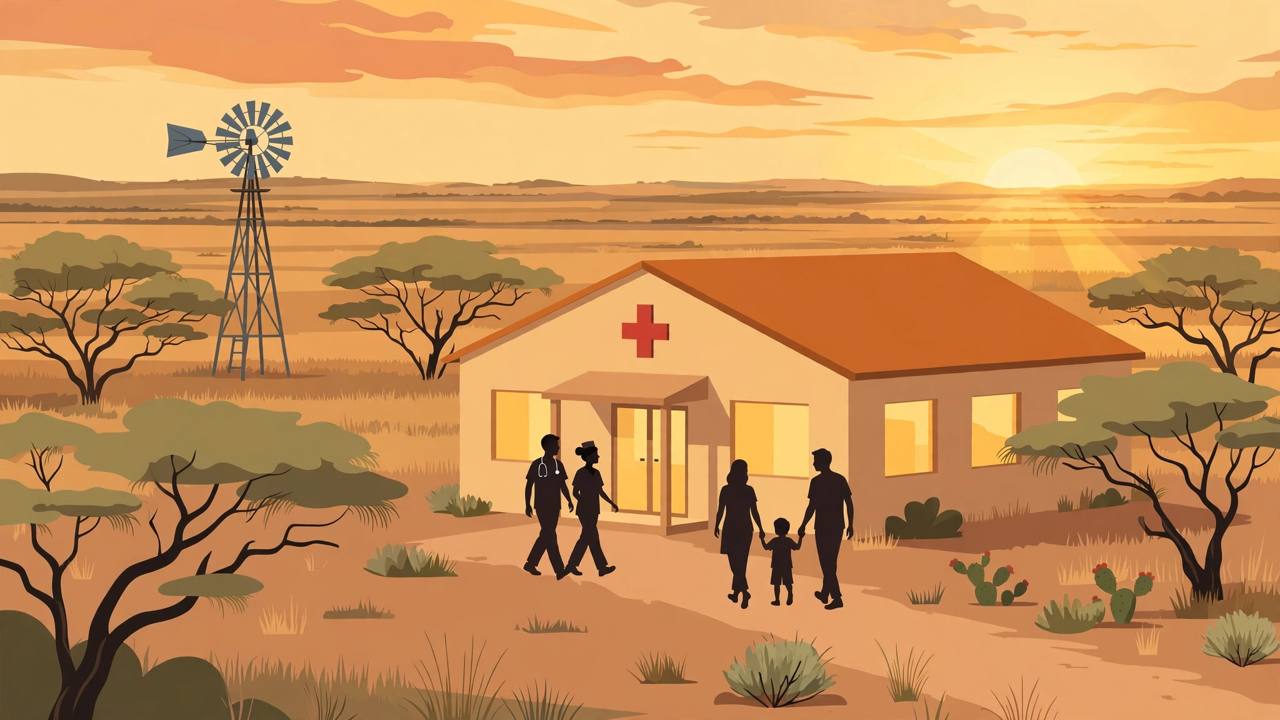
Texas will receive $281 million in federal funding for the second year of Rural Texas Strong, the state's five-year plan to rebuild rural health care, Governor Greg Abbott announced in Austin on Tuesday, November 10. The money goes to the Texas Health and Human Services Commission (HHSC), which will distribute it to rural hospitals and clinics through a competitive process, with applications opening this month.
Source: Texas Health and Human Services Commission
"This $281 million will deliver critical resources for patients and facilities in rural Texas," Governor Abbott said. "Providers will recruit and retain personnel, upgrade equipment and facilities, and expand preventative care so rural Texans receive the healthcare they need close to home." The announcement is the second-year award under the federal Rural Health Transformation Program run by the Centers for Medicare & Medicaid Services (CMS), and it almost exactly matches the size of Texas's first-year award.
Six initiatives the money will fund
Rural Texas Strong is the CMS-approved Texas plan, and HHSC says it is 100 percent federally funded. Year-two money will be allocated competitively across six initiatives: reducing chronic disease through prevention, wellness and nutrition services; investing in consumer-facing technology that engages patients in improving their health; deploying artificial intelligence and telehealth services to bridge service gaps; recruiting and retaining rural health-care workers through career development, scholarships, relocation payments and training programs; improving cybersecurity defences to protect patient data; and upgrading equipment in rural hospitals and clinics.
"Rural Texas Strong laid a strong foundation for improving access to care in rural communities," said HHS Executive Commissioner Stephanie Muth. "We look forward to building on that momentum in year two and continuing to bring healthcare closer to home through trusted local providers who serve their neighbors." Eligible providers may apply for the year-two initiatives beginning in November, HHSC said, and public notices and procurement opportunities will be announced through GovDelivery email notifications.
How year one was spent
Texas received its first-year award of $281,319,360.67 from CMS on December 29, 2025, after proposing a smaller $200 million plan, and the state expects about $1.4 billion in federal funding over the program's five years. HHSC has been awarding the first-year money in rolling rounds through the autumn. On October 29, the state announced planned awards of $87,248,124.49 to 129 rural health-care providers, and an earlier October round planned $78,089,434.73 for 216 providers, aimed at chronic-disease prevention and management, recruiting and keeping health workers in small towns, and replacing aging equipment and improving facilities.
Source: Granted AI — Rural Texas Strong year-one tracker
The chronic-disease work funded in year one targets the conditions that dominate rural Texas caseloads — diabetes, cardiovascular disease, chronic respiratory disease and obesity — under an initiative the state calls "Make Rural Texans Healthy Again." HHSC has stressed that announced rounds are intentions to award: the money becomes available to a provider only after its contract is finalized, and federal funding remains contingent on meeting all applicable program requirements.
Part of a national rural-health programme
The Texas award is one state's share of the federal Rural Health Transformation Program, the national programme whose second-year funding round totals about $10 billion across all states. Rural hospitals operate on thin margins, serve older and poorer populations than urban systems, and are often the only emergency care within an hour's drive — which is why their condition matters well beyond their own towns, including for the long-haul truckers, many of them Punjabi, who cross rural Texas daily on Interstates 10, 20, 35 and 40 and depend on those facilities after highway crashes.
HHSC says applications for year-two initiatives open in November and every notice will be published through GovDelivery and the HHSC Rural Health Transformation webpage. Providers that won year-one intent-to-award rounds still receive cash only after contracts are finalized, and all funding is contingent on meeting federal program requirements.
What happens next
HHSC will now open the year-two competitions, publish each opportunity through GovDelivery, and announce intended awards as applications are reviewed, following the weekly pattern it used through the autumn. The programme runs for five years, so further annual awards of a similar size are expected if Texas continues to meet CMS requirements. For rural Texans, the test of year two will be visible locally: whether small hospitals can keep staff, replace failing equipment and hold on to services — obstetrics, dialysis and emergency care among them — that residents currently drive long distances to reach.