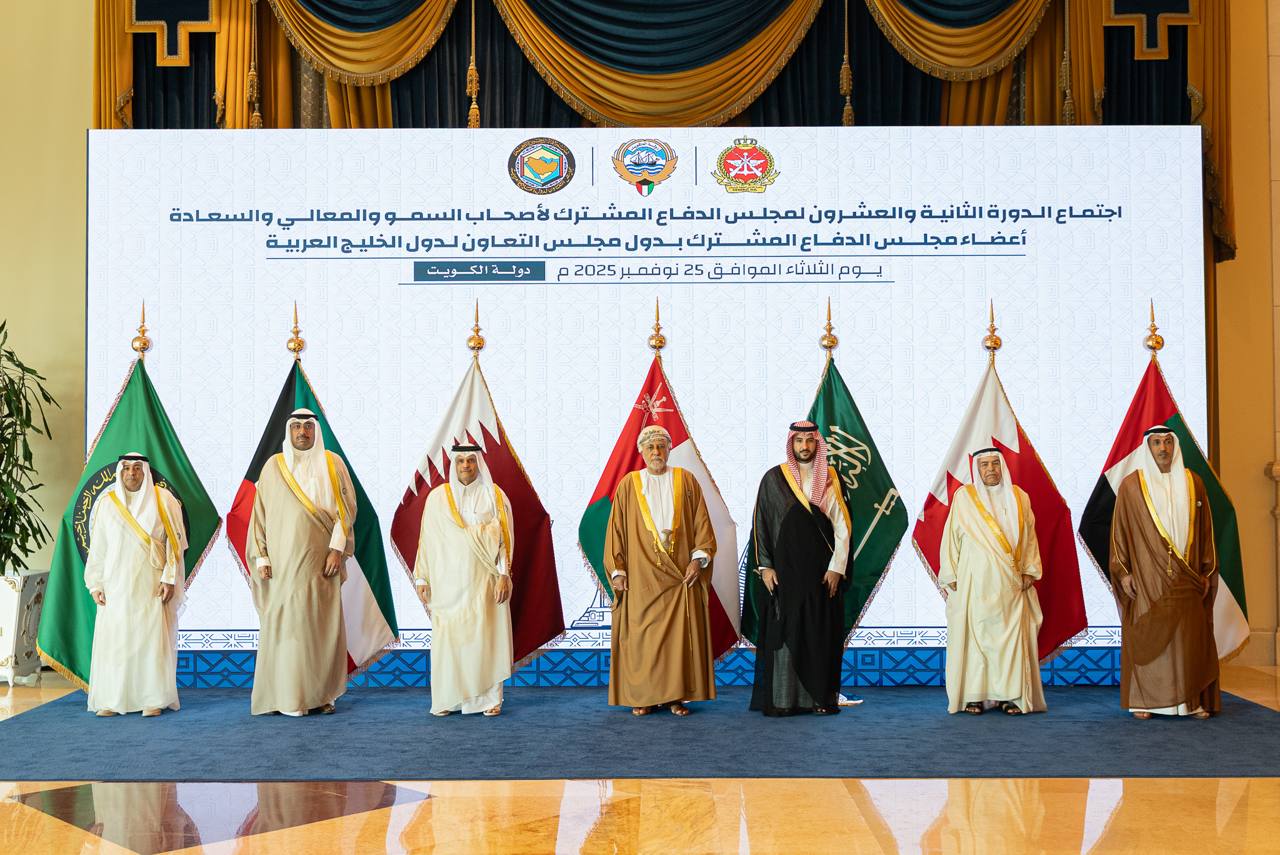
MANAMA / KUWAIT CITY — The six Gulf Cooperation Council states have approved the establishment of an advanced headquarters for their Unified Military Command in Kuwait and the deployment of 'appropriate' forces to it, GCC Secretary-General Jasem Mohamed Albudaiwi said on Tuesday, according to Saudi state television Al Ekhbariya. The announcement followed the 23rd meeting of the GCC's Joint Defence Council, attended by defence ministers from the bloc's member states in Bahrain.
Source: Reuters via Devdiscourse, Nov 10 2026
The session in Manama was chaired by Bahrain's Minister of Defence Affairs, Lieutenant General Abdullah bin Hassan Al-Nuaimi. Albudaiwi described the Kuwait command centre as an important step in strengthening joint Gulf military cooperation and coordination, and said it reflected backing from GCC leaders for joint military action and collective security. He pointed to directives leaders gave at an extraordinary meeting in Jeddah last April, which called for stronger joint action and a better shared ability to respond to security threats together.
What the command is — and what is not yet known
The GCC established its Unified Military Command at a summit in Kuwait in December 2013 to plan and manage joint military operations and strengthen member states' defence capabilities against potential threats to their territory, airspace, waters and interests. Tuesday's decision adds an advanced headquarters for that command inside Kuwait, with member states assigning forces to support it. No further details on the headquarters — its exact location, size, opening date or the number and type of forces to be deployed — were immediately available, the secretary-general's announcement said.
Albudaiwi condemned what he described as Iranian attacks on GCC countries, and attacks attributed to the Houthi movement on Saudi Arabia, including sites considered holy by Muslims. He reaffirmed GCC solidarity with Saudi Arabia and backed the measures the Kingdom has taken to protect its security and territorial integrity, saying Saudi Arabia's security is part of the collective security of every GCC member state. He also praised the cooperation among member states in handling the fallout from those attacks, and the role of GCC armed forces.
The decision lands in the same week Tehran restated its conditions for ending the war and reopening the Strait of Hormuz — the waterway at the centre of the Gulf's security and energy crisis. Read: Iran tells US to meet its demands to end the war
Background: a war that reached the Gulf states themselves
The Gulf Arab states, most of which host large US military bases, have faced repeated Iranian missile and drone attacks since the United States and Israel launched their war on Iran on February 28, Reuters reported. The war has disrupted air travel and shipping, and raised concerns over the security of the region's vital oil and gas exports. For the lakhs of Punjabi and Indian workers who live and work across Kuwait, Saudi Arabia, the UAE, Qatar, Bahrain and Oman — in construction, transport, services and energy — a permanent joint Gulf command in Kuwait is not distant diplomacy: decisions like this shape the security of the cities, ports and work sites they depend on, and the remittances their families back home rely on.
What is solid
- The six GCC states approved an advanced headquarters for the Unified Military Command in Kuwait and the deployment of 'appropriate' forces to it — GCC Secretary-General Albudaiwi, via Reuters / Al Ekhbariya
- The announcement followed the 23rd GCC Joint Defence Council meeting in Bahrain, attended by member-state defence ministers — Reuters
- The Unified Military Command was established at a Kuwait summit in December 2013 — Reuters
What is only claimed
- No details were immediately available on the headquarters' exact location, size, opening date or the forces to be deployed — the announcement itself, via Reuters
- Why now, in each capital's own terms: Albudaiwi framed the step as implementing GCC leaders' Jeddah directives and responding to Iranian and Houthi attacks; no member state has published a separate operational rationale in the sources for this report
What happens next: Kuwait's defence authorities and the GCC secretariat are expected to set out how the advanced headquarters will be staffed and when forces assigned to it will deploy. Any published timetable, location or force contribution — or a first joint operation run from Kuwait — would be a major new development on this story.