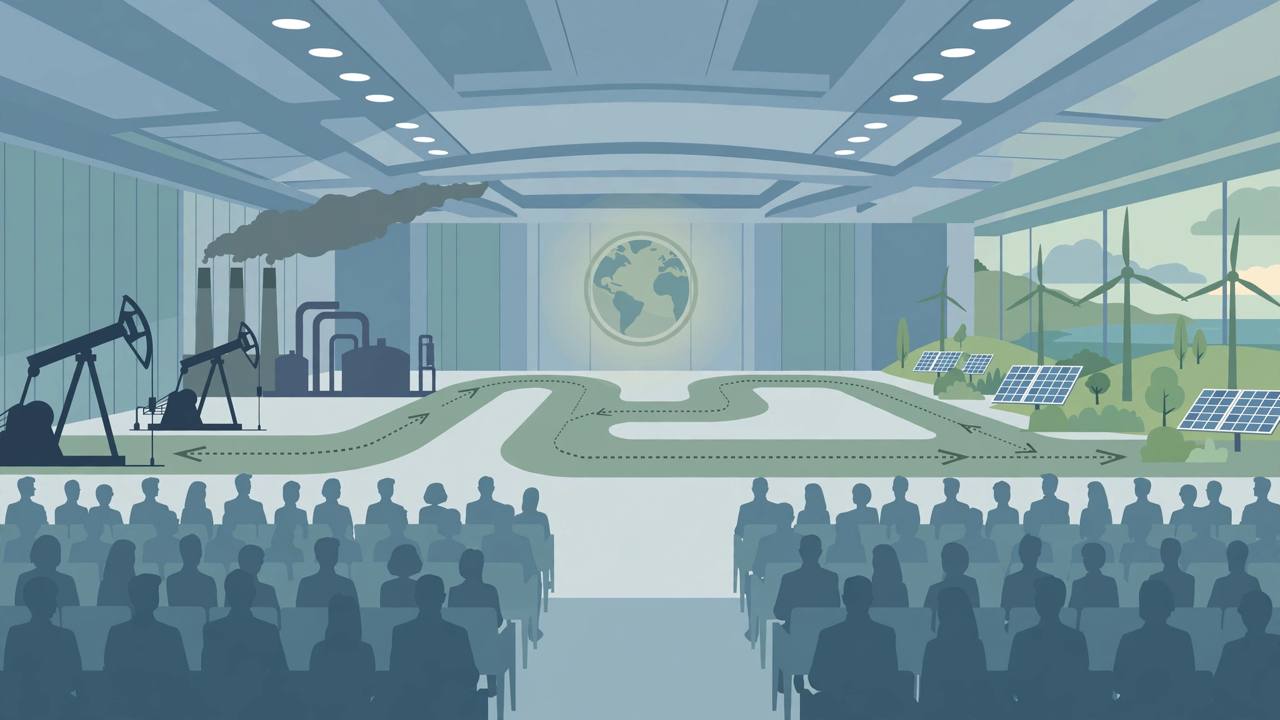
ANTALYA — Brazil, which led last year's COP30 climate summit, formally presented its roadmap for transitioning away from fossil fuels at COP31 in Antalya, Turkiye, on Tuesday, November 10, 2026, on the summit's Energy and Transport Day, UN News reported. Three years after countries agreed in Dubai at COP28 to transition away from coal, oil and gas, the roadmap is aimed at turning that promise into reality.
Source: UN News, Nov 10, 2026
'It's long past time to stop treating the transition away from fossil fuels as taboo or intractable,' UN Secretary-General Antonio Guterres said at the launch of Brazil's COP30 initiative. But he also warned that fossil fuel dependence is not just bad for the climate — it is becoming an increasingly expensive liability: since the current escalation in the Middle East began, the European Union alone has paid more than 100 billion euros in additional fossil fuel import costs, he said, while petrol and diesel prices have surged across 130 countries. 'Changing suppliers will not eliminate this exposure. Disruption anywhere drives up prices everywhere.'
Source: UN News, Nov 10, 2026
COP30 president Andre Correa do Lago told delegates the roadmap is 'not a mandate' and 'not related to the negotiations', Carbon Brief reported from the plenary session. 'It's a contribution and input for the implementation that we need to do.' The session also featured UN climate chief Simon Stiell, COP26 president Alok Sharma and former US climate envoy John Kerry, in what Carbon Brief noted was one of Guterres's last addresses as UN chief.
Source: Carbon Brief, Nov 10, 2026
A roadmap, not a prescription
First released on November 3 and formally presented on Tuesday, Brazil's roadmap seeks to turn the global commitment to move away from fossil fuels into national plans, UN News said. Ana Toni, CEO of Brazil's COP30 Presidency, said the roadmap examines three interconnected challenges — fossil fuel demand, production and supply, and the economic consequences of moving away from them — and offers countries indicators to assess their readiness, identify obstacles and plan next steps, alongside proposals for greater international cooperation. 'Start now from wherever you are. Start now. Don't wait,' she urged. The roadmap is voluntary and is not a new binding climate agreement, and it proposes a collective agenda in three phases running from 2028 to 2033.
Source: UN News, Nov 10, 2026; Euronews via The Bay, Nov 2026
The challenge looks different from one country to another, UN News noted: oil and gas producers must prepare for declining revenues and changes to jobs and industries, while countries dependent on imported fuels need alternatives that reduce their exposure to volatile energy markets — and both face the task of securing the investment, infrastructure and international support to make the transition possible. Guterres nevertheless called on countries to produce national plans with clear timelines and financing needs and to demonstrate measurable progress by 2028, and he urged the COP31 presidency of Australia and Turkiye, and future presidencies, to carry Brazil's work forward, according to the Greenpeace Australia Pacific account of his address.
Source: UN News, Nov 10, 2026; Greenpeace Australia Pacific, Nov 10, 2026
The roadmap landed on the same COP31 day that delegates took up Turkiye's 35-by-35 electrification pledge and new data on fossil emissions — our earlier COP31 report covered that electrification goal and the emissions figures in full. Read the earlier COP31 electrification and emissions report
Energy experts at the summit pointed to the practical bottlenecks. Dario Liguti of the UN Economic Commission for Europe told UN News that around 2,500 gigawatts of power generation and other energy projects are awaiting grid connections worldwide — some facilities cannot connect at all, and others must cut production because networks cannot take the power. Olli-Pekka Kuusela of UNU-WIDER said poorer countries face much higher borrowing costs that make clean energy hard to finance even when the technology is competitive, and noted that in sub-Saharan Africa more than half a billion people still lack electricity.
Source: UN News, Nov 10, 2026
What is solid
- Brazil's COP30 presidency formally presented its fossil-fuel transition roadmap at COP31 in Antalya on Tuesday, Nov 10 — UN News and Carbon Brief, reporting from the session
- The roadmap is voluntary, is not a mandate and is not part of the COP31 negotiations — COP30 president Andre Correa do Lago, via Carbon Brief
- Guterres urged national plans with clear timelines and financing needs, with measurable progress shown by 2028 — UN News / Greenpeace account of his address
What is only claimed
- Whether COP31's presidency (Australia and Turkiye) will put the roadmap onto the summit's formal agenda — Guterres appealed to them to carry it forward, but no such decision had been announced when the roadmap was presented
- Whether countries will actually produce the national plans — the roadmap sets no binding timetable or single energy mix for any country
What happens next: COP31 runs in Antalya until November 20, and the test of Tuesday's launch is whether the Australia-Turkiye presidency and other governments pick the roadmap up in the summit's remaining days — and whether countries begin publishing the national transition plans, with timelines and financing needs, that Guterres asked to see progress on by 2028.