About half a dozen senior members of President Donald Trump's administration now live in military housing in Washington, DC, CNN reported on Friday — a historically high number of civilian officials living on secure military bases in the capital. Under past presidents, it was rare for any senior civilian official to live in base housing at all.
Source: CNN
The officials named in the report are Treasury Secretary Scott Bessent, Secretary of State Marco Rubio, Defense Secretary Pete Hegseth, Attorney General Todd Blanche, and White House Chief of Staff Stephen Miller, who lives on base with his wife Katie and their four children. Former Attorney General Pam Bondi also lived in military housing last year, and former Homeland Security Secretary Kristi Noem lived at Joint Base Anacostia-Bolling toward the end of her tenure.
Bessent, the newest arrival, cites Iranian death threats
Bessent is the most recent Cabinet member known to have moved onto a base. He left his mansion in Georgetown early in November and moved to a secure military installation after threats against his life from Iran, telling CNBC's Squawk Box that the threats forced the change. “They have initiated death threats against me and other members of the Cabinet. We're not going to be cowered,” he said. Bessent leads the administration's economic pressure campaign against Iran, built on sweeping sanctions.
Source: CNBC
Awaaz Punjab reported on November 11 that Bessent had moved to a military base after Iranian threats, after Reuters reported the move and the Wall Street Journal published an aerial photograph of his Georgetown home that allowed it to be located. The new CNN report shows his move was part of a much wider pattern. Read our November 11 report
“Generals' Row” at Fort McNair
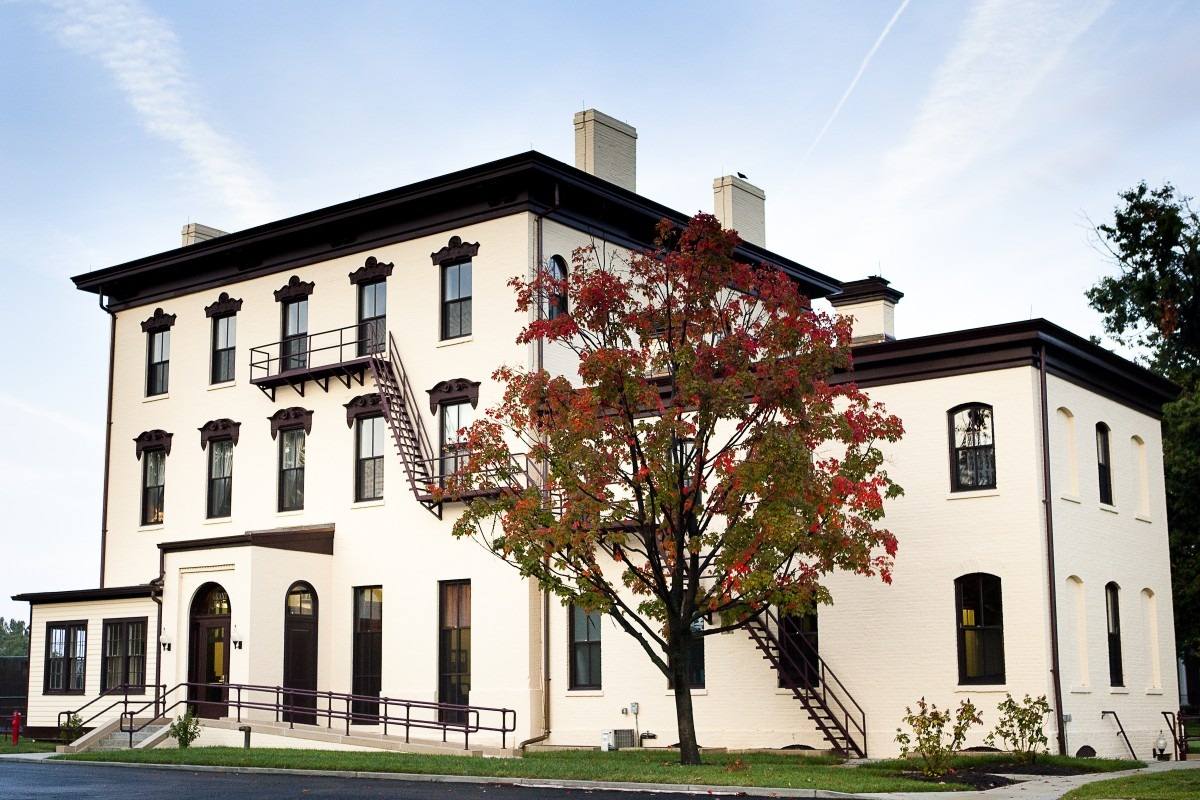
Rubio and Hegseth are neighbours on “Generals' Row” at Fort Lesley J. McNair, an Army installation on a peninsula where the Potomac and Anacostia rivers meet, the Washington Post reported in March. The century-old residences there were built for generals and senior military officers and sit behind access-controlled gates, fenced off from the rest of the capital. Miller and his family live on the same base.
Source: The Washington Post
Miller, his wife Katie and their four children moved onto military housing in 2025, leaving their home in Virginia after a woman protested outside it and distributed flyers carrying the family's home address. A White House official said the family relocated “because there was an elaborate, well-documented stalking, doxing, and threat campaign targeting their residence.”
Blanche was also recently relocated to a military base over concerns for his safety, CNN reported, citing people familiar with the matter. The Justice Department has not given details of the threats against him or confirmed the move.
The threats behind the moves
CNN reported on November 17, citing US intelligence, that Iran was planning to detonate a chemical weapon or a so-called “dirty bomb” — a device that spreads radioactive material — in Washington as part of efforts to target senior administration officials. The report added to fears for the safety of high-ranking officials. Security concerns have also grown after the killing of conservative activist Charlie Kirk and a series of credible threats against public officials.
Source: CNN
What the housing costs — and the 2008 precedent
Civilian officials living in military housing must pay rent, typically upwards of $4,500 a month depending on the residence. The arrangement traces to a 2008 decision by then Defense Secretary Robert Gates, who became the first defense secretary to live in military housing, moving into a historic 19th-century home on Navy Hill, next to the State Department. The Pentagon argued at the time that using existing base security could save taxpayers money compared with providing round-the-clock security at a private home. Jim Mattis, Trump's first-term defense secretary, and Mike Pompeo, his first-term secretary of state, later lived in military housing as well.
The costs have still drawn criticism. Lawmakers discovered last year that the Army was preparing to spend $137,297 on repairs and upgrades to Hegseth's Fort McNair residence.
Congress wants answers by spring 2027
The House Armed Services Committee has asked the Pentagon to report by this spring on the political appointees living in military housing — identifying who they are, the threats behind their moves, the legal basis for civilian occupancy, and how much rent they pay. Representative George Whitesides, the California Democrat who secured the committee's approval for the report, said “politically-appointed officials living in housing designated for military members” must be investigated “to ensure they are paying fair market rates.”
Source: CNN
A White House official defended the arrangements, saying that “while many of these Cabinet officials aren't able to live in the city themselves due to targeted security threats, they have personally contributed to the administration's efforts” to make the capital safe — a reference to the administration's push to make Washington “safe and beautiful,” which has included deploying the National Guard in the city.
What happens next
The Pentagon must deliver its report to the House Armed Services Committee by spring 2027, and the scrutiny is likely to grow as the list of civilian residents — and the bill for their security — becomes public. For now, the arrangement continues: about half a dozen of the officials running the country's Treasury, foreign policy, military and law enforcement live behind the gates of Washington's military bases, in homes built for generals.
The officials at the centre of the story are the same ones shaping the policies that reach deep into immigrant communities — from the Treasury's sanctions to the State Department's visa and foreign-policy decisions and the Justice Department's enforcement of immigration law. That is why the security climate around them, and Congress's questions about who pays for it, matter well beyond Washington.