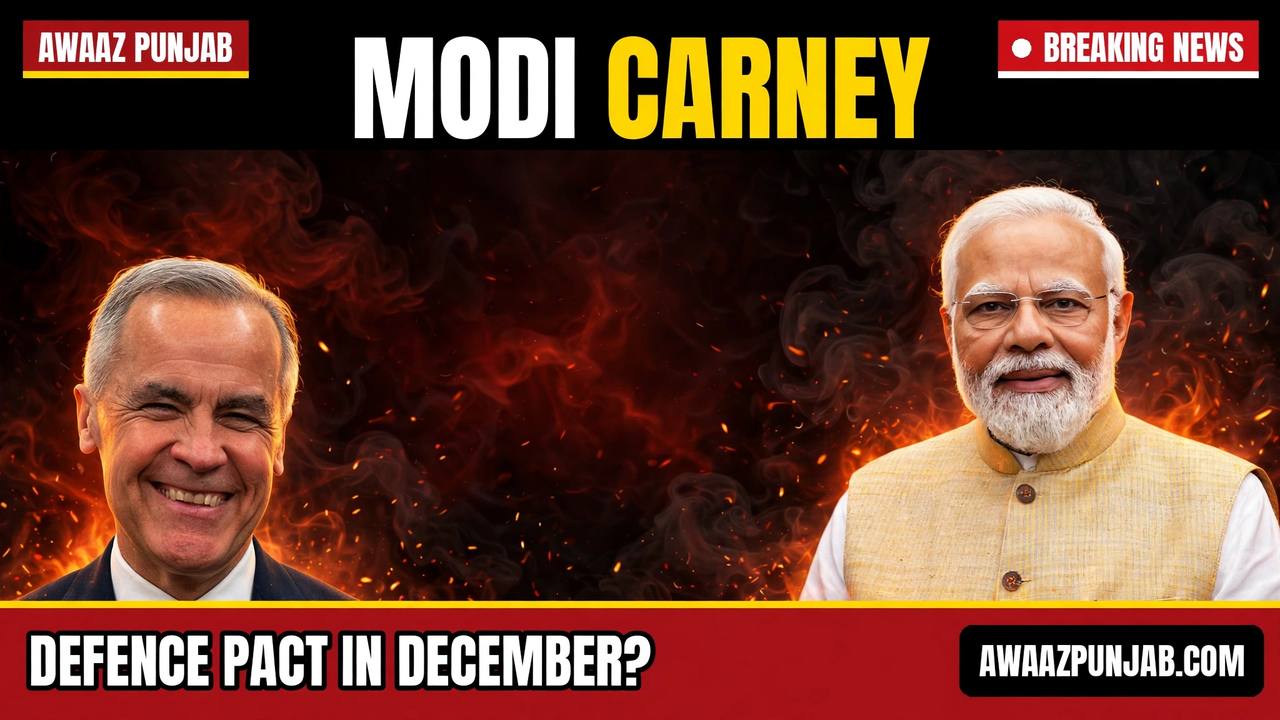
Canada and India are negotiating two major security agreements — a military-cooperation pact and a deal to share classified information — timed to coincide with Indian Prime Minister Narendra Modi's visit to Canada on December 11–12, India's High Commissioner to Canada, Dinesh Patnaik, has said.
Source: The Globe and Mail (via Europe Says)
Patnaik said the defence agreement would range from strategic cooperation, including warship visits, to joint training, capacity building and exchanges, and finally the production of military goods in aerospace, naval and space sectors.
He said the two sides were looking at early-warning and surveillance aircraft, adding that Canada's Bombardier makes the best platform for it. Indian companies are also willing to set up a factory in Canada to produce 155-mm shells, shell casings and missile guidance and control systems, he said.
The second agreement under negotiation would cover sharing 'sensitive, classified and deep-tech information' between the two countries and keeping it protected. Patnaik said the two countries were also working on a more permanent mechanism for cooperation on security and intelligence matters.
Source: The Globe and Mail (via Europe Says)
Trade deal 'very close'
The security talks run alongside trade negotiations that an official said on Tuesday are 'very close' to concluding. Negotiators from India and Canada are holding daily discussions on the proposed Comprehensive Economic Partnership Agreement (CEPA), and both sides aim to conclude the talks by the end of this year.
Source: The Hindu BusinessLine (PTI)
The sixth round of CEPA negotiations ran from November 11 to 20 and covered trade in goods and services, rules of origin, trade remedies, intellectual property and investment promotion. Commerce Secretary Rajesh Agrawal met Canada's Vice Minister of International Trade, Glenn Purves, to review progress.
Modi and Canadian Prime Minister Mark Carney are expected to announce the conclusion of the trade talks during the December visit. The two countries have set a target of increasing bilateral trade to $50 billion by 2030 — yaani lagbhag ₹4.15 lakh crore. Bilateral trade fell 8.23 per cent to $7.95 billion in 2025–26 — yaani lagbhag ₹66,000 crore — from $8.66 billion the year before. India is also negotiating a separate bilateral investment protection agreement with Canada.
India and Canada concluded the sixth round of CEPA talks in Delhi on November 21, pushing for a balanced pact. Read the earlier story
From deep freeze to December handshake
The agreements would mark a new level of trust after a diplomatic rupture in 2023, when then-prime minister Justin Trudeau publicly accused New Delhi of a role in the British Columbia killing of Hardeep Singh Nijjar, a Canadian who campaigned for a separate Sikh homeland. Relations stayed frozen for years. Carney travelled to India in the final week of February 2026, and he and Modi launched the CEPA talks in March. Since Carney took office in March 2025, Canadian and Indian ministers have held more than a dozen bilateral visits and engagements.
Modi's trip will include a reception with the Indo-Canadian community in Toronto on December 11 and meetings in Ottawa on December 12. Patnaik also said increased security cooperation has led New Delhi to cooperate on the deportation of Indian citizens who overstayed visas or entered fraudulently — he said he provided emergency travel documents to assist in nearly 5,000 removals in 2026 alone.
What happens next: the two sides must close the remaining 'politically sensitive' items in the trade talks, including tariff-rate quotas, before the December visit. If the defence and information-sharing pacts are ready in time, they would be announced alongside the trade deal — the clearest signal yet that Ottawa and New Delhi are rebuilding the relationship as a strategic partnership.