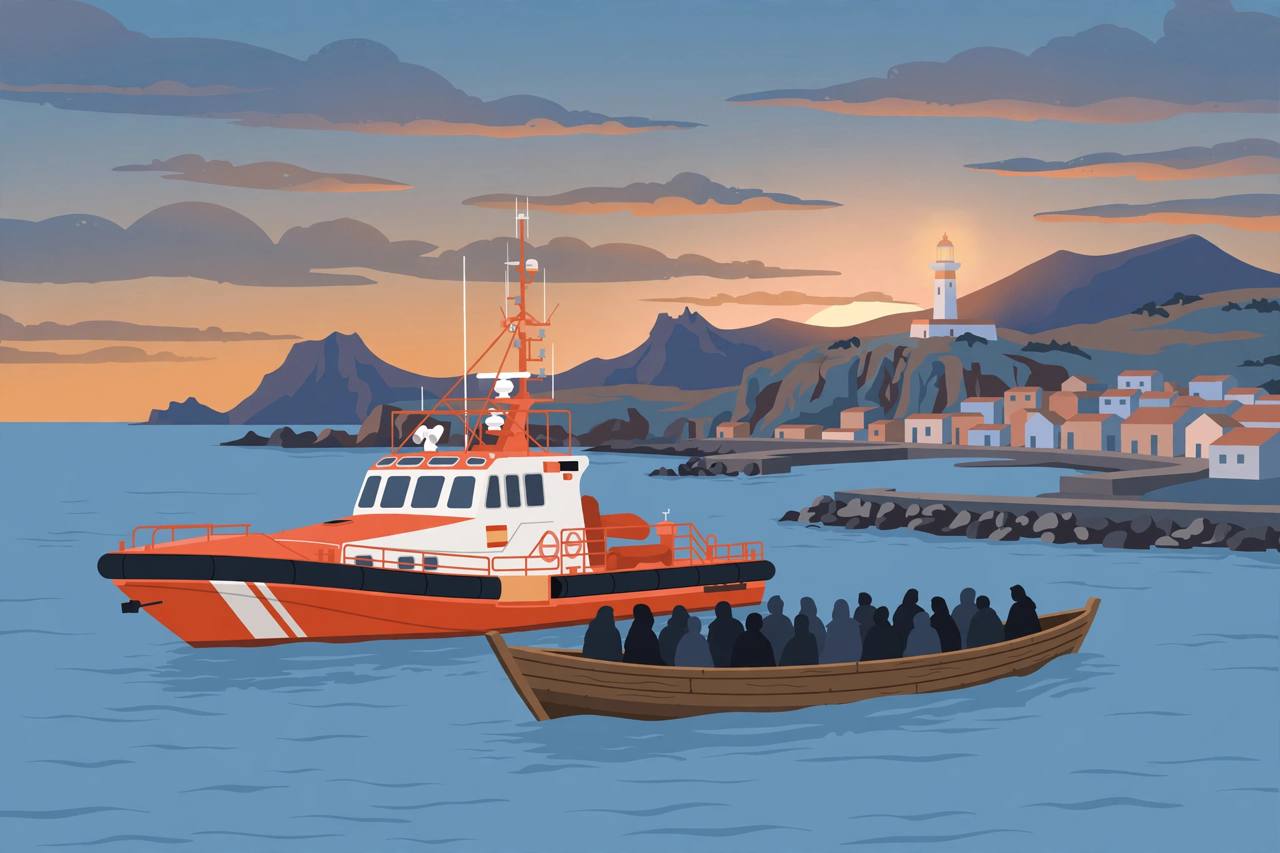
Spain's Interministerial Commission on Immigration has declared a migration emergency in the Canary Islands after 7,432 migrants reached the archipelago in the first 10 days of November, regional president Fernando Clavijo said. The declaration, made on Tuesday, November 10, is the national government's formal recognition that the Atlantic crossing surge has outgrown the islands' reception capacity.
Source: InfoMigrants (EFE)
The latest arrivals came on Wednesday, November 11, when maritime rescue teams escorted four boats into La Restinga port on El Hierro carrying more than 300 people in total, Reuters reported. The final two vessels arrived at night carrying 148 and 55 people. Al Jazeera reported the same landings as rescue services worked through the day amid a surge in departures from West Africa.
Source: Reuters
Four cayucos — the long wooden boats used on the Atlantic route — carrying 377 people reached La Restinga between Tuesday night and Wednesday morning in one account of the same wave. The first boat carried 111 people who said they had left Kafountine in Senegal seven days earlier; others reported departing from M'bour and Saint Louis five to six days before. The passengers came from Senegal, Guinea-Bissau, Gambia, Mali and Guinea-Conakry, and crossed in waves reported at up to three metres.
An island of 11,400 under strain
El Hierro, the smallest of the main Canary Islands, has about 11,400 residents, and La Restinga, the fishing village where most boats land, has just 673. The island council (Cabildo) declared a social emergency on November 6 and estimated that more than 2,000 migrants remained on the island awaiting transfer. Clavijo described the situation as “absolutely unsustainable”, said medical teams and buses had already been redeployed from other islands, and asked Madrid for a contingency plan with more security personnel, greater maritime rescue capacity, Red Cross healthcare at La Restinga and the temporary reception centre at San Andrés, and compensation for El Hierro residents and businesses.
The emergency follows the surge Awaaz Punjab reported on November 7, when 3,261 people had been rescued in the first six days of November. The 10-day total of 7,432 is more than double that figure. Read the earlier report
Spain's EFE news agency counted 5,857 arrivals in 57 boats between November 1 and 5pm on Monday, November 9, before the Tuesday and Wednesday waves pushed the total past 7,400. Clavijo has linked the surge to calm sea conditions and to political circumstances in departure countries, including the Dakar 2026 Youth Olympic Games, which he said reduced Senegalese coastal surveillance, and electoral campaigning in Gambia. At least eight people died on the Atlantic route during the first six days of November. The route from West Africa to the Canaries is considered one of the world's deadliest migration crossings, even though Spain's overall sea arrivals for the year remain below the record pace of 2024.
What happens next: the emergency declaration is expected to speed transfers of migrants from El Hierro to larger islands and the mainland, and to unlock extra staff and funding for reception. Clavijo welcomed the measures but said they had come too late, and warned that departures from West Africa were still rising.