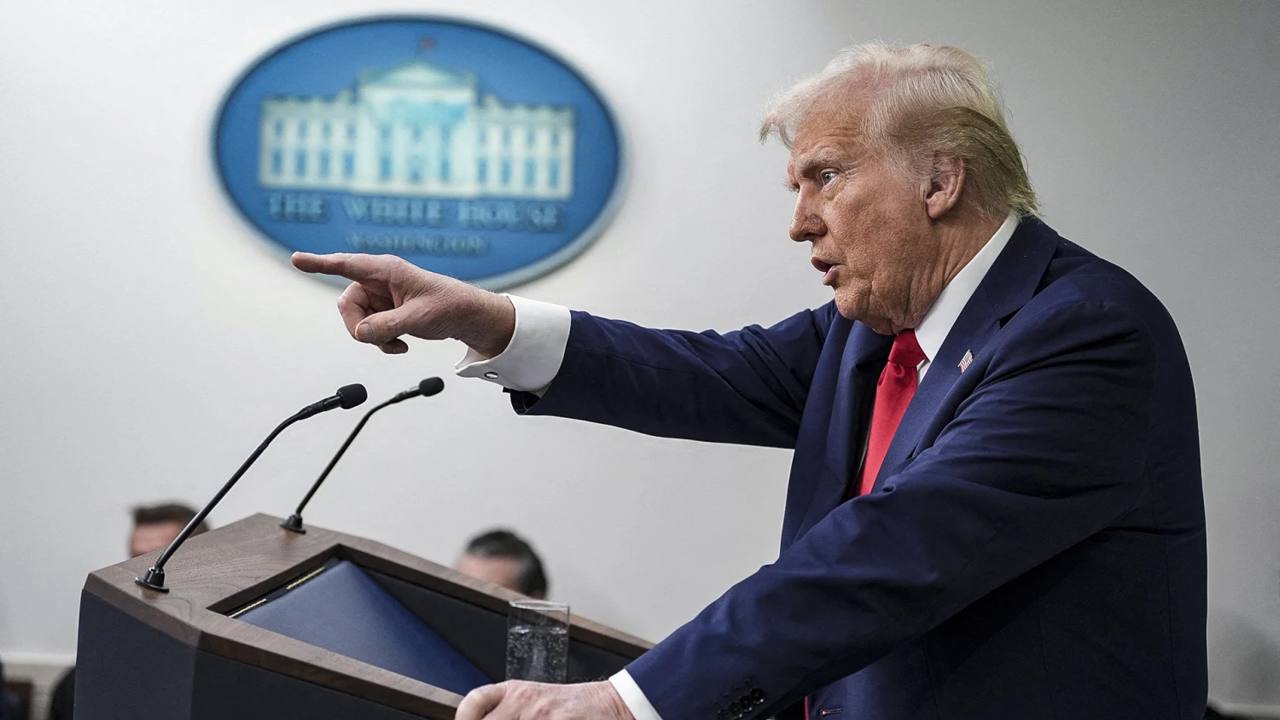
US President Donald Trump said on Thursday, November 12, that the United States does not need a deal with Iran, and that he has asked Vice President JD Vance to turn his complete attention to what he called massive corruption and crime in Democratic-run cities and states — a public reversal that came one day after reports that Vance was preparing possible face-to-face talks with a senior Iranian security official to end the war.
Source: Reuters
"We don't need a deal with Iran. Those days have long since passed. We've got their money, Hundreds of Billions of Dollars, and we've got their Strait!" Trump wrote in his Truth Social post on Thursday morning, as reported by Reuters. He added that he had asked Vance to focus "his complete and total attention" on the alleged corruption and crime, saying the federal budget could be quickly balanced if that activity were corrected — a claim he did not support with figures.
The post landed a day after The Wall Street Journal reported that Vance was considering face-to-face talks with Iranian security chief Mohsen Rezaei, and that Trump himself had told aides and counterparts he was open to Vance reopening negotiations and had empowered him to negotiate. Those discussions were described as preliminary, with no date set, according to the Journal's reporting summarised by Just Security.
Source: Just Security / Wall Street Journal
Oil jumps as deal hopes fade
Oil markets reacted within the hour. Brent crude pushed above $94 a barrel after Trump's post before easing to $93.34, up about 0.6% at the time of the Associated Press report, while US West Texas Intermediate rose more than 1% to around $86.40 a barrel, according to market reports. The Associated Press noted Brent has traded in a wide range of roughly $70 to $150 a barrel since the US-Israeli war on Iran began in late February.
Source: Associated Press via EL7
A vice president pulled off the Iran file
Vance had emerged in recent weeks as Washington's lead channel to Tehran. He took part in indirect talks with Iran over the previous two weeks aimed at a new ceasefire and a resumption of nuclear negotiations, working with Qatari and Pakistani mediators, according to reporting cited by the Associated Press. On Wednesday, however, Vance publicly distanced himself from the war after the Republicans' midterm election rout by the Democrats, questioning whether the conflict was worth its cost, Reuters reported.
Trump's post does not formally close the diplomatic track, and the White House has not announced any change to the negotiating team. But redirecting the vice president to a domestic anti-fraud portfolio — Vance chairs the administration's Task Force to Eliminate Fraud — while declaring a deal unnecessary is the clearest public signal yet from Trump that he is in no hurry to settle the war on Tehran's terms.
Background: a war in its ninth month
The United States and Israel launched the war on Iran on February 28, 2026. A ceasefire that took effect on April 8 collapsed in early July and none has been in force since. The US naval blockade of Iranian ports, first imposed on April 13, was lifted in June and reimposed on July 14, and remains in force. Iran has effectively restricted traffic through the Strait of Hormuz, the waterway that normally carries about a fifth of the world's oil and liquefied natural gas, and Tehran continues to claim attacks on shipping in the strait.
Source: Reuters / Al Jazeera background
In the latest claimed shipping incident, Iran's Revolutionary Guards said two supertankers were disabled by explosions in the strait on Wednesday night — a claim Awaaz Punjab is reporting separately and which has not been independently confirmed. Read: IRGC supertanker claim in the Strait of Hormuz
Iran's stated conditions for entering nuclear talks include an end to the US blockade of its ports, the lifting of sanctions, the release of frozen Iranian assets, compensation for war damage and an end to hostilities in the region, according to the Associated Press. Trump's post claimed the opposite leverage — that Washington already holds Iran's money and controls its strait — leaving the two sides publicly further apart than at any point since the Vance backchannel opened.
Why it matters for Punjabi and Indian readers
Every spike in crude feeds directly into fuel, freight and food prices in India and into the cost of living for the large Punjabi and Indian workforce across the Gulf states, whose remittances and jobs sit close to the shipping lanes and oil economies of the region. A longer war with no negotiating track in motion typically means sustained pressure on oil prices — and on household budgets from Punjab to the Gulf — rather than relief.
What happens next
Watch three things: whether Vance or the White House clarifies if the Iran backchannel is closed or merely paused; whether Iran responds to Trump's post through its foreign ministry or the Revolutionary Guards; and whether Brent holds above $90, which traders read as the market pricing in a longer blockade of the Strait of Hormuz. Awaaz Punjab will update this story as official reactions arrive.