Latest News — Punjab, India, USA and the World
Awaaz Punjab is an independent digital news platform publishing original, source-verified reporting in English, Punjabi and Hindi. Every story below is published with its sources named and dated, and every article is available in all three languages. Our newsroom covers Punjab first — its politics, districts and the road to the 2027 assembly election — along with India, the Punjabi diaspora in the USA and Canada, and world affairs that touch Punjab's people, from the Gulf to North America.
The Aam Aadmi Party on Thursday released its second list of 31 candidates for the 2027 Punjab Assembly elections, taking its declared total to 71 of 117 seats. Agriculture Minister Gurmeet Singh Khuddian lost Lambi to his nephew Randhir Singh Dhira Khuddian, former minister Anmol Gagan Maan was dropped from Kharar, eight sitting MLAs were replaced in all, and sitting MPs Gurmeet Singh Meet Hayer (Barnala) and Dr Raj Kumar Chabbewal (Phagwara) were fielded, alongside 25 newcomers.
Published 2026-11-12 · Awaaz Punjab
NHRC member Priyank Kanoongo has forwarded a Legal Rights Observatory representation on UNICEF's reported financial association with Meta to Women and Child Development Secretary Anil Malik, seeking examination in the interest of child protection, IANS reported.
Published 2026-11-12 · Awaaz Punjab
A day after a hijack threat note found in the lavatory of Air India flight AI 2772 forced the Kolkata–Mumbai aircraft into an isolation bay and delayed it by hours, Kolkata airport said a passenger had been apprehended and handed over to the NSCBI Airport police. IANS identified him as 56-year-old Partha Pratim Nandi and reported, citing sources, that he confessed to planting the note.
Published 2026-11-12 · Awaaz Punjab
Manipur's Lairenlakpam Ambekar Meetei scripted history at the Dakar 2026 Youth Olympic Games on Thursday, November 12, coming back from losing the opening round on all five judges' cards to beat Ireland's Kristian Jubani 3-2 in the men's 50kg final — India's first-ever boxing gold at the Youth Olympics and its first gold medal of the Dakar Games.
Published 2026-11-12 · Awaaz Punjab
Reliance Industries plans to invest about Rs 43,000 crore in two phases to build an integrated underground coal gasification complex in Andhra Pradesh, according to a government document seen by Reuters. The project could attract up to Rs 2.7 lakh crore over its lifetime.
Published 2026-11-12 · Awaaz Punjab
A New York judge sentenced Joseph Makhani to four to 12 years for one stolen Harlem brownstone and three to nine years for the second, to run one after the other — plus $500,000 in restitution — after a jury convicted him of criminal possession of stolen property and scheme to defraud.
Published 2026-11-11 · Awaaz Punjab
India's men's football team suffered a heavy 5-0 defeat to New Zealand in their first friendly of the November window at Auckland's Go Media Stadium on Thursday, November 12 — an early own goal, a Jesse Randall brace, a Chris Wood header and a Lachlan Bayliss volley doing the damage, with goalkeeper Vishal Kaith's penalty save sparing the Blue Tigers a worse scoreline.
Published 2026-11-12 · Awaaz Punjab
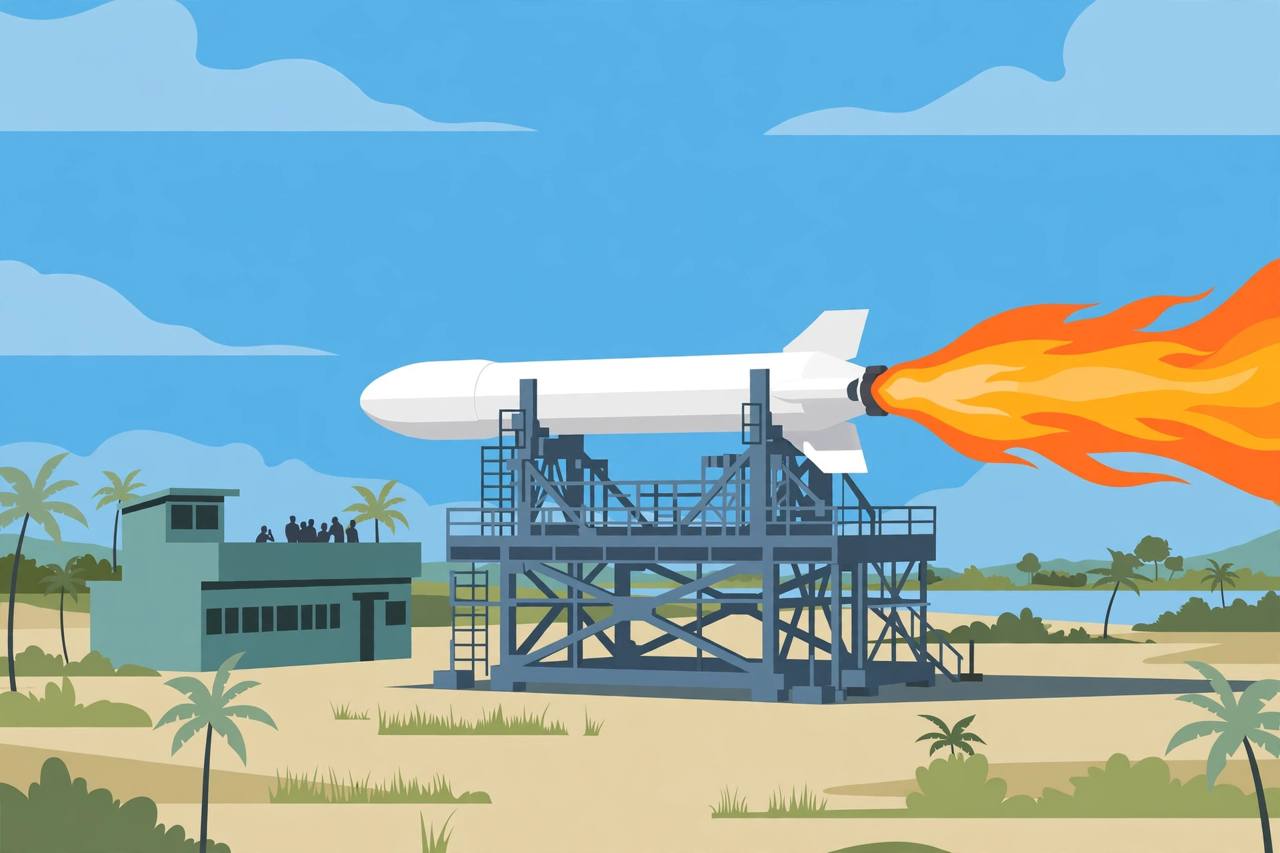
The IIT Madras-incubated start-up successfully tested its indigenously developed Precision Aerial Delivery System from 1 km, a step toward precise landings for its reusable orbital spacecraft planned for 2028.
Published 2026-11-12 · Awaaz Punjab
A Bench of Justices B.V. Nagarathna and R. Mahadevan transferred commercial suit CS(COMM) 625/2026 from the Delhi High Court to the Madras High Court, holding that the mere existence of jurisdiction in several courts cannot justify forum shopping or notions of a hierarchy among High Courts.
Published 2026-11-12 · Awaaz Punjab
India has regained its position as the world's fifth-largest stock market, with listed equities worth $5.4 trillion after a $640 billion rebound since late October, according to Bloomberg data. Foreign investors have turned aggressive buyers in November.
Published 2026-11-12 · Awaaz Punjab
More than 3,500 exhibitors from 32 states and Union Territories, 51 central ministries and departments and 11 countries will take part in the 14-day fair, themed 'Vikas aur Virasat', ITPO said.
Published 2026-11-12 · Awaaz Punjab
The Punjab State Election Commission on Thursday announced the full schedule for the court-ordered re-election in 52 municipal wards — 30 of the Patiala Municipal Corporation, 15 of the Bagha Purana Municipal Council and all 7 of the Dharamkot Municipal Council. Nominations open on Friday, November 13, and 1,76,429 voters will vote on Saturday, November 28, with the Model Code of Conduct in force from today.
Published 2026-11-12 · Awaaz Punjab
President Droupadi Murmu on Thursday interacted with meritorious students of Eklavya Model Residential Schools at Rashtrapati Bhavan, saying India has no shortage of talent — only of the right opportunities, environment and guidance — and urging students to become job creators on the road to Viksit Bharat 2047.
Published 2026-11-12 · Awaaz Punjab
Addressing journalists at the BJP headquarters in New Delhi on Thursday, November 12, Prime Minister Narendra Modi urged the media to work on the country's success stories, contrasted the old 'Garibi Hatao' slogan with his claim — citing the World Bank — that 50 crore people have risen above the poverty line in 12 years, and sought the media's help against drug abuse.
Published 2026-11-12 · Awaaz Punjab
Union Education Minister Pralhad Joshi on Thursday launched three Kendriya Vidyalaya Sangathan platforms in New Delhi — an AI-integrated Vidya Samiksha Kendra with a 'Samiksha' bot, the KVS-Samvaad parent connect app and portal, and a KVS Alumni Connect portal.
Published 2026-11-12 · Awaaz Punjab
A special CBI court in Raipur on Thursday remanded alleged Mahadev Online Book promoter Sourabh Chandrakar to judicial custody until November 19 after his eight-day CBI custody ended, and dismissed the Enforcement Directorate's application to execute a non-bailable warrant against him — the latest step after his November 1 extradition from Oman.
Published 2026-11-12 · Awaaz Punjab
An eight-count superseding indictment unsealed in Manhattan federal court on Tuesday charges Mohammad Baqer Saad Dawood al-Saadi, Mohsen Mohajeri and Mohammad Ali al-Hassani with terrorism offences for the IRGC and Kata'ib Hizballah, including a September plot against RAF Fairford in England, where US bombers were stationed. Prosecutors allege al-Saadi coordinated from a New York jail cell through coded family calls. Only al-Saadi is in custody; all charges are allegations and Iran has denied involvement in the Fairford episode.
Published 2026-11-10 · Awaaz Punjab
Captain Lakshya Raichandani's 93 off 90 balls led India to an eight-wicket win over Afghanistan in the Under-19 Asia Cup semi-final in Muscat on Thursday, November 12, setting up a final against Pakistan on Saturday.
Published 2026-11-12 · Awaaz Punjab
Addressing the two-day Air Force Commanders' Conference in New Delhi on Thursday, the Defence Minister called for stronger intelligence, surveillance and system integration, dedicated doctrines for electronic, cyber and space warfare, and launched AI applications built in-house by the IAF's UDAAN unit, ANI and the Ministry of Defence said.
Published 2026-11-12 · Awaaz Punjab
The Technology Development Board has signed an agreement with Bengaluru-based Astrome Technologies for Rs 64.05 crore of support under the RDI Fund toward a Rs 128.11 crore project to develop an indigenous AI-enabled electronic intelligence satellite constellation for national security, the Ministry of Science and Technology said on Thursday, IANS reported.
Published 2026-11-12 · Awaaz Punjab
India ranked 28th in the Climate Change Performance Index 2027, released on Wednesday at COP31 in Antalya by Germanwatch and the NewClimate Institute — down five places from 23rd, despite a high rating for its renewable-energy trend, IANS and other reports said.
Published 2026-11-12 · Awaaz Punjab
The Ministry of Heavy Industries said on Thursday, November 12, that it has received 22 bids for 10 GWh of Advanced Chemistry Cell manufacturing capacity reserved for grid-scale stationary storage under the Rs 18,100-crore PLI ACC scheme, with technical bids opened on November 11.
Published 2026-11-12 · Awaaz Punjab
The Punjab Congress on Thursday rolled out its statewide 'Jawani Sambhal' cycle yatra from Chamkaur Sahib in Ropar district, with state president Pargat Singh, Punjab in-charge Sachin Pilot and former chief minister Charanjit Singh Channi leading the launch after prayers at Gurdwara Sri Katalgarh Sahib — a youth-focused campaign against drugs, gangster culture and unemployment under the party's 'Punjab Mangda Insaaf' drive ahead of the 2027 Assembly elections.
Published 2026-11-12 · Awaaz Punjab
The Reserve Bank is working on proposals to prevent private equity firms from holding a controlling stake in more than one NBFC, citing the risk that stress at a global investor could spread across lenders, two people familiar with the plans told Reuters. Holdings of 15% or less would count as financial investments and face lighter scrutiny.
Published 2026-11-12 · Awaaz Punjab
Published 2026-11-12 · Awaaz Punjab
Published 2026-11-12 · Awaaz Punjab
Published 2026-11-12 · Awaaz Punjab
Published 2026-11-12 · Awaaz Punjab
Published 2026-11-11 · Awaaz Punjab
Published 2026-11-11 · Awaaz Punjab
Published 2026-11-12 · Awaaz Punjab
Published 2026-11-12 · Awaaz Punjab
Published 2026-11-12 · Awaaz Punjab
Published 2026-11-12 · Awaaz Punjab
Published 2026-11-12 · Awaaz Punjab
Published 2026-11-12 · Awaaz Punjab
Published 2026-11-06 · Awaaz Punjab
Published 2026-11-11 · Awaaz Punjab
Published 2026-11-11 · Awaaz Punjab
Published 2026-11-11 · Awaaz Punjab
Published 2026-11-11 · Awaaz Punjab
Published 2026-11-11 · Awaaz Punjab
Published 2026-11-11 · Awaaz Punjab
Published 2026-11-11 · Awaaz Punjab
Published 2026-11-11 · Awaaz Punjab
Published 2026-11-11 · Awaaz Punjab
Published 2026-11-11 · Awaaz Punjab
Published 2026-11-11 · Awaaz Punjab
Published 2026-11-11 · Awaaz Punjab
Published 2026-10-22 · Awaaz Punjab
Published 2026-10-19 · Awaaz Punjab
Published 2026-10-18 · Awaaz Punjab
Published 2026-10-18 · Awaaz Punjab
Published 2026-10-18 · Awaaz Punjab
Published 2026-10-18 · Awaaz Punjab
More from Awaaz Punjab
Our Editorial Standards
How we work: every story is checked against at least two independent, reputable sources before publication; allegations are labelled as allegations; figures carry the name of the outlet or agency that reported them and the date; corrections are published openly. Read our full verification method on the How We Verify page, our data desks on the School, Podcast and SUNO audio pages, and our numbered original investigations in the Investigations section.
Awaaz Punjab is an independent, trilingual newsroom — for Punjab, by Punjabis. We do not sell aggregated news; we publish investigations that stand on sources, with the outlet and date attached to every claim. Our first beat is Punjab's drug crisis, our second is Punjab politics. From Amritsar to Toronto — wherever a Punjabi lives, Awaaz Punjab reaches.