China has formally rejected Britain's latest cyber-security accusations, with foreign ministry spokesperson Mao Ning saying on Wednesday that Beijing had "grave concern" over a "speculative accusation" made by the UK "despite the absence of evidence", Xinhua reported on Thursday, November 5.
Source: Xinhua via State Council Information Office
Mao was responding at a regular press briefing in Beijing to the annual report of Britain's National Cyber Security Centre (NCSC), part of the GCHQ intelligence agency, which said on Tuesday that by 2028 it is "highly likely" China will routinely use AI-powered cyber operations to carry out hacking, and called China the "most sophisticated and sustained" cyber challenge facing the UK.
Source: Xinhua via SCIO
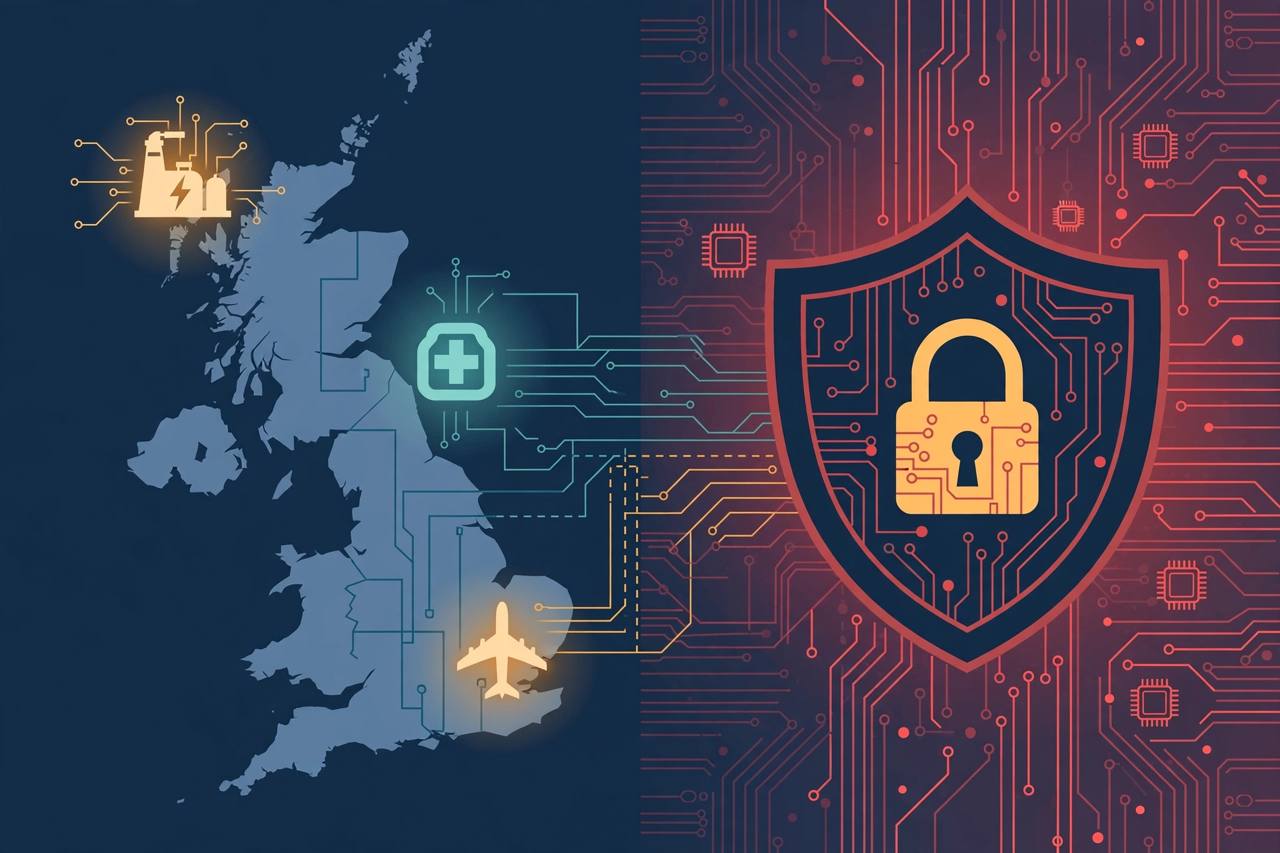
The NCSC warning itself — that an AI-powered ransomware attack on British power stations, hospitals and airports is highly likely by 2028 — was reported by Awaaz Punjab on November 3. Beijing's answer, delivered a day after the report, is the new development in the row. Read: UK cyber chief's AI ransomware warning
"A pretext to curb China's AI development"
AI-generated cyber-security risks are a global challenge that require new rules formulated at the United Nations to build a global response, Mao said. "Regrettably, the UK, having long politicized the cybersecurity issue, is now rehashing hacking allegations as a pretext to curb China's AI development," she added, according to Xinhua's account of the briefing.
Source: Xinhua via SCIO
"This type of action is not helpful for increasing mutual trust between China and the UK, and hurts the UK's credibility when it comes to cooperation on global AI security governance," Mao said. She added that China believes the development of AI should be open and for progress, for good and for all, aim at both security and advancement, and ensure it is safe, reliable and controllable.
Source: Xinhua via SCIO
What Britain's report actually said
Launching the annual review on Tuesday, NCSC chief executive Richard Horne warned Britain faces "an unprecedented rise in cyber incidents" in the coming months and said: "We know that China highly likely has the intent and is best positioned to use AI for operations against our critical national infrastructure and other strategic targets." The report also said Russia was making sustained attempts to penetrate UK military networks and that Iran was carrying out malicious cyber operations globally, Reuters reported. Moscow, Beijing and Tehran have all repeatedly denied similar accusations in the past.
Source: Reuters
The NCSC said it was highly likely there would be a ransomware attack involving AI-powered malware on Britain's critical national infrastructure — energy, transport, defence, food, health and finance — by 2028, and that AI would increase the scale and speed of hostile operations, The News reported in its coverage of Horne's speech.
Source: The News (NCSC annual review coverage)
What is solid
- China's foreign ministry spokesperson Mao Ning said on Wednesday, November 4, that Beijing had 'grave concern' over the UK's 'speculative accusation' and called it a pretext to curb China's AI development (Xinhua, November 5)
- The UK NCSC's annual report, published Tuesday, November 3, said an AI-powered ransomware attack on UK critical infrastructure by 2028 is 'highly likely' and named China as best positioned to conduct such operations (Reuters)
What is only claimed
- Whether China is in fact preparing AI-powered cyber operations against UK infrastructure is the NCSC's assessment — Beijing denies the accusation and says no evidence has been presented; neither side has published proof in public
- Mao's counter-claim that the UK is using hacking allegations to curb China's AI development is China's stated position, not an independently established finding
Why it matters, and what happens next
The exchange puts AI at the centre of the China–West security argument: London is using the threat assessment to argue for heavier spending on cyber defence, while Beijing is pushing its rival frame — that AI rules should be written at the UN, not by Western security agencies naming China in annual threat reports. For the hundreds of thousands of Punjabi and Indian families who live and work in Britain — many in the NHS, transport, logistics, food retail and finance, the exact sectors the NCSC names — the row is not abstract: a successful ransomware attack on a hospital, airport or power network would land on their workplaces and services first. What happens next is diplomatic as much as technical: whether London offers evidence or a channel for talks, and whether Beijing's call for UN-level AI rules gains support from other countries in the coming months.