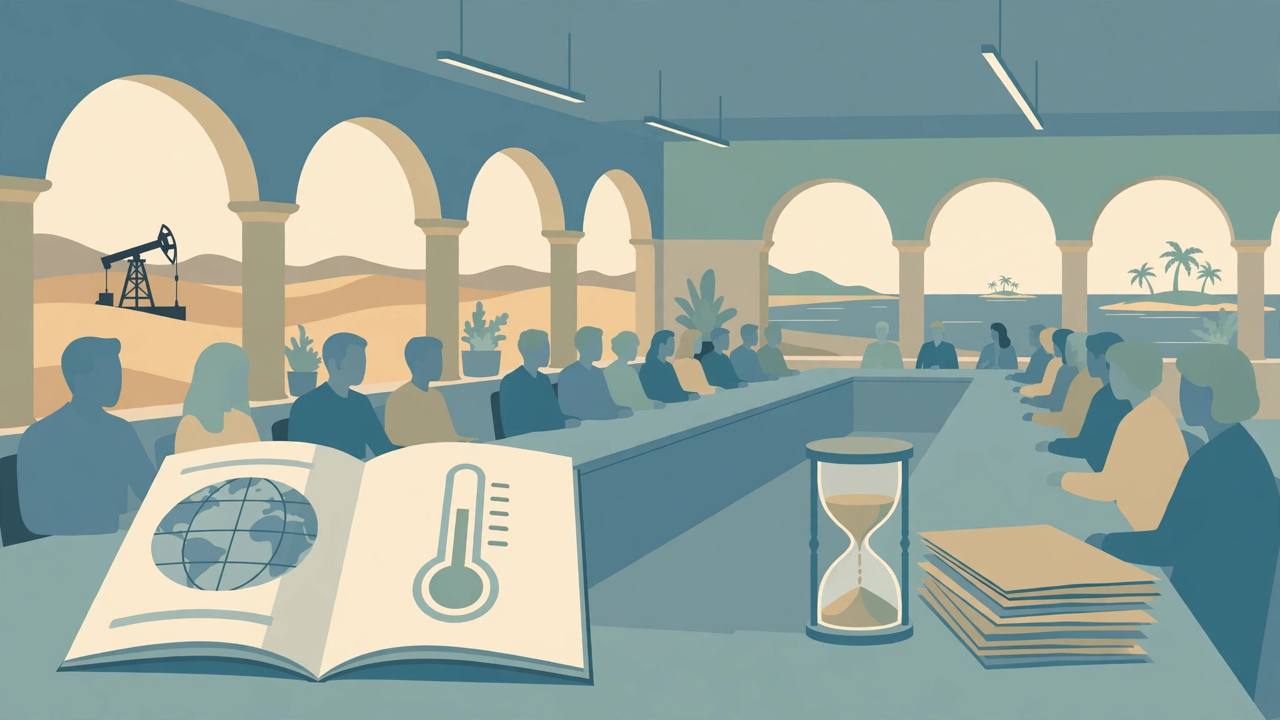
ANTALYA, Türkiye — Saudi Arabia on Tuesday defended its position over the publication timeline of the UN climate science panel's next major reports, as a dispute over climate science became one of the main battlegrounds at the COP31 summit in Antalya, AFP reported.
Source: AFP
"Saudi Arabia is not seeking to delay climate science," the kingdom's delegation at COP31 said in a statement. "Its position is to safeguard the scientific integrity, independence and inclusivity of IPCC assessments through appropriate publication timelines and established governance procedures," it said, adding that the kingdom "advocates publication timelines that allow sufficient scientific review, transparency and meaningful participation, particularly from developing countries". The statement did not explicitly say when Saudi Arabia would like to see the reports published.
Source: AFP
The Saudi delegation also said that "COP31 does not determine IPCC publication timelines. These decisions fall under the IPCC's own governance and decision-making processes". Several countries are pushing for a reference to the timing standoff to be included in the broad political statement — the cover decision — being negotiated at the talks, which end on Friday, November 20.
What the fight is about: 2028 or 2029
The Intergovernmental Panel on Climate Change (IPCC) publishes a series of reports every five to seven years that provide the definitive scientific assessment of global warming and inform policy responses around the world. Dozens of European, African and Pacific nations want the next set — the Seventh Assessment Report, known as AR7 — published ahead of the second Global Stocktake, the crucial check on global carbon-cutting efforts that concludes at the 2028 climate summit, COP33. Saudi Arabia, Russia and India are among a group of countries accused of pushing for AR7 to be delayed until 2029. A wider group opposing the proposed timeline on differing grounds also includes China and Kenya, with a common argument that a compressed schedule could disadvantage lower-income countries, which need time and resources to review the reports and contribute to the assessment.
Source: Europe Says / COP31 science battle
The IPCC has been unable to agree a publication schedule for AR7 for more than three years. Its last meeting — the 65th plenary session in Addis Ababa, Ethiopia, in October — failed to agree either the AR7 timeline or the organisation's 2027 budget and was suspended, leaving both issues unresolved. IPCC chairman Jim Skea has used his time in Antalya to try to make progress, urging delegates last week "to use your influence here to prepare for a successful outcome", AFP reported. A draft cover decision released on Monday by the COP31 negotiations presidency, led by Australia's Chris Bowen, calls for the IPCC reports to be available "in time" for the global stocktake in 2028 — wording Saudi Arabia and others have resisted, according to reporting on the draft.
Source: Climate Fact Checks
Awaaz Punjab reported Monday's first COP31 draft deal, with its rival fossil-fuel wordings and $120 billion-a-year adaptation proposal, here: Read the COP31 first-draft report
'Unjustifiable to us': the pushback on Tuesday
"It is equally fundamental to protect the integrity of climate science and the role of the IPCC as the source of best available science," EU climate envoy Wopke Hoekstra said in a speech at COP31 on Tuesday, AFP reported. Ilana Seid, who chairs the Alliance of Small Island States, said any delay to the report's publication "is unjustifiable to us". "There needs to be a strong political push. A lot of the countries that are not supportive of science are trying to extend the deadline for that report," Seid said.
Source: AFP
Former Irish president Mary Robinson, speaking at a media gathering on the sidelines of COP31 on Tuesday, said the world "just cannot either undermine or indeed lose the IPCC. It is vital to the multilateral climate regime." "We need the seventh assessment report in time for the next global stocktake," Robinson said, arguing that countries cannot properly assess collective progress without the latest science, and that representatives from the Maldives, Nepal and the Marshall Islands had personally told her they want the report delivered on time. "They don't have the capacity to have separate reports. They rely on this report," she said of vulnerable developing countries. Robinson argued the budget dispute was being used as political leverage — "It's not a huge amount of money, but the point is the budget is being used as a kind of tactic" — while acknowledging that African countries' capacity concerns should be addressed separately rather than used to hold up the IPCC's work.
Source: Europe Says / COP31 science battle
"It's unusual that the IPCC becomes such a battleground (at UN climate talks)," Soenke Kreft, a veteran of 17 COPs and a senior expert at the United Nations University in Bonn, Germany, told AFP. "It's unfortunate. It should not be this way. It should be a principal foundation of this process that the IPCC is the most authoritative source of information."
COP31 closes on Friday, November 20, and negotiators must decide whether the final cover decision names the IPCC timeline at all. Governments then resume the suspended IPCC session virtually on December 1–3. If they still cannot agree, the 2028 stocktake may have to rely on partial AR7 reports or on other assessments, such as the World Meteorological Organization's and UNEP's gap reports — which supporters say cannot fully replace the IPCC's comprehensive review.