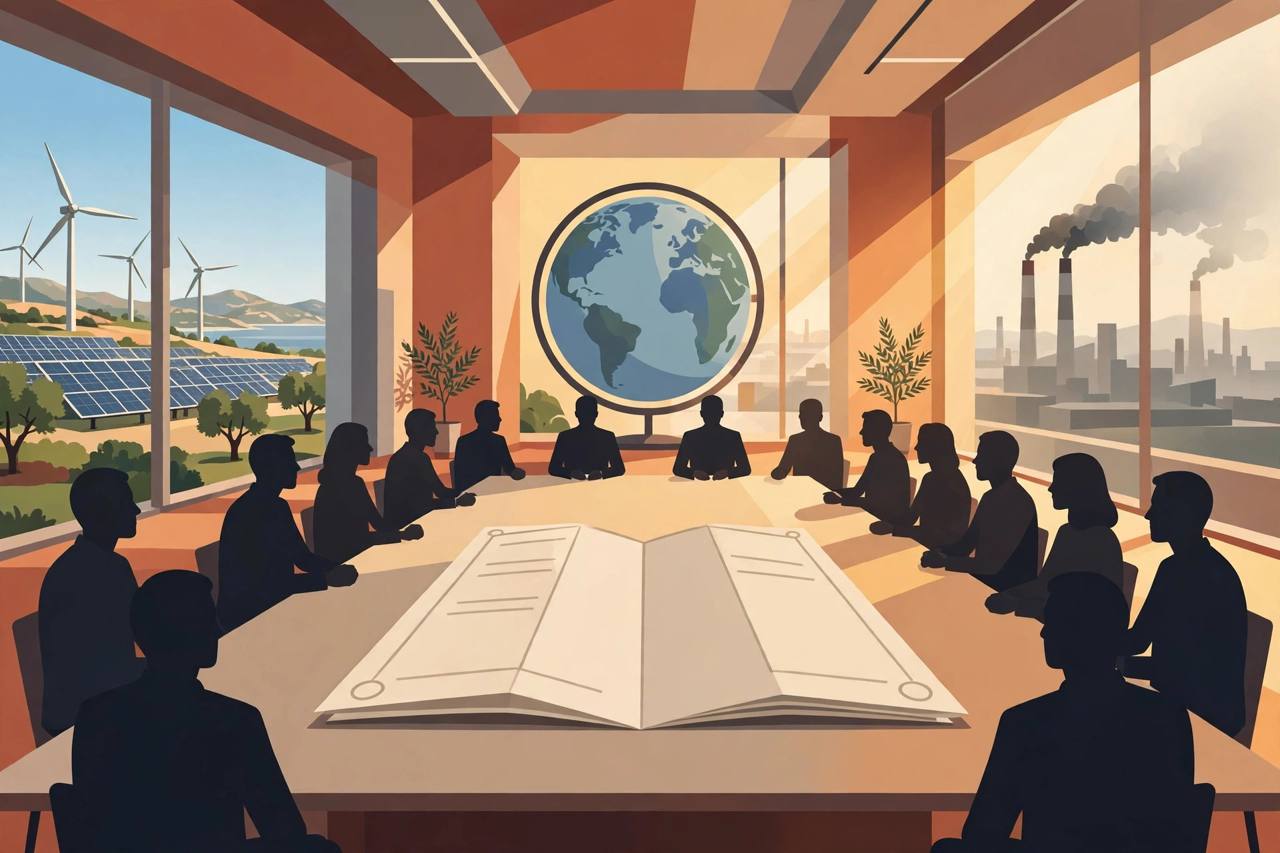
Negotiators at the COP31 United Nations climate talks in Antalya, Türkiye, published a first draft deal text on Monday, November 16, opening four days of bargaining over the future of fossil fuels, climate finance and how the world responds to warnings that global warming is set to overshoot 1.5°C, Reuters reported. The annual talks began on November 9 and need consensus from almost 200 nations before an official deadline on Friday, November 20, although past climate conferences have regularly run days past their scheduled close.
Source: Reuters via France 24 / Al-Monitor
The 18-page draft, with 144 provisions, was released by Australia's negotiating team. Australia is leading the negotiations under a split presidency arrangement with Türkiye, and its climate minister Chris Bowen, the president of negotiations, said the document deliberately carries wording some delegations have already rejected, because the contested questions have to be debated openly rather than left out.
Source: AAP
Two fossil-fuel options, both could be dropped
On fossil fuels — the main source of greenhouse gas emissions — the draft carries two sets of phrasing side by side. One reiterates the wording agreed in 2023, and strengthened at COP28, about 'transitioning away' from fossil fuels in energy systems. The other, more ambitious clause 'calls for accelerated action to phase out fossil fuels, including through the immediate transition away from fossil fuels in energy systems,' Agence France-Presse reported. Both could still be omitted from a final deal, Reuters noted.
Source: AFP via Turkish Minute
Other proposals go further than many current national commitments: developed nations would target net zero emissions by 2030 and net-negative emissions by 2040, electricity's share of global final energy use would rise to 35 per cent by 2035 under Türkiye's '35-by-35' electrification goal, and the text also covers expanding carbon capture and cutting methane emissions, AAP reported.
$120 billion adaptation pledge — yaani about Rs 10 lakh crore a year
The draft proposes tripling finance to help poorer countries prepare for floods, droughts and extreme heat, to at least $120 billion a year by 2035 — yaani roughly 12,000 crore dollars, or about Rs 10 lakh crore, every year. It asks developed countries to produce a roadmap with milestones for increasing adaptation finance and to announce pledges by the end of 2027 to funds including the Adaptation Fund and the Fund for Responding to Loss and Damage, and it proposes an Antalya-to-Addis Ababa roadmap for predictable public funding, The Business Standard reported, citing the draft text.
Source: The Business Standard (TBS News)
Even that tripling would cover no more than about 29 per cent of estimated needs: the draft itself, citing the UN Environment Programme's 2026 Adaptation Gap Report, puts developing countries' adaptation needs at around $305 billion a year by 2035. Campaigners warned the language must be backed by public grants and clear delivery timelines, and Bareesh Hasan Chowdhury of Friends of the Earth International said the draft's acceptance of a 1.5°C overshoot risked normalising a breach of the Paris threshold, TBS News reported.
Bowen: 'A first draft — it won't be the final draft'
Bowen stressed the text is a negotiating basis, not an agreement. 'This is a draft, a first draft, it won't be the final draft,' he said, adding that Türkiye and Australia released the draft cover decision earlier than at previous summits to give delegates more time to debate and reach consensus. The document was built from submissions by 160 countries and more than 500 pages of feedback, he said. 'We need to show that the world is keeping up climate action,' Bowen said. 'We need to send a message to the board rooms and living rooms: board rooms to keep investing, living rooms to give hope that countries of the world are going to keep on tackling the climate crisis which is still here and getting worse.'
Source: AAP
Greenpeace Australia Pacific spokesman Simon Bradshaw called it 'some of the strongest language we've seen in a draft COP decision,' adding: 'The question now is how much of it will survive the tough days of negotiations ahead.' Cosima Cassel of the E3G think tank told Reuters the long preliminary text appeared built to let parties fight for the trade-offs, and 'the test will be whether the final decision keeps the core elements once that process plays out.' Politico Europe reported European diplomats were taken aback by a clause recognising a demand from some developing countries that rich nations reach net zero by 2030, decades ahead of the EU and British 2050 targets.
What happens next
The draft now goes into four days of bargaining in Antalya. Every element remains open: the fossil-fuel clauses, the $120 billion figure and the electrification goal all need consensus, and any of them can be cut before the conference closes on Friday, November 20. A parallel Antalya AI Pledge launched by the COP31 presidency on Monday has so far been signed by only nine of the nearly 200 countries represented, Reuters reported — an early measure of how hard consensus will be this week.