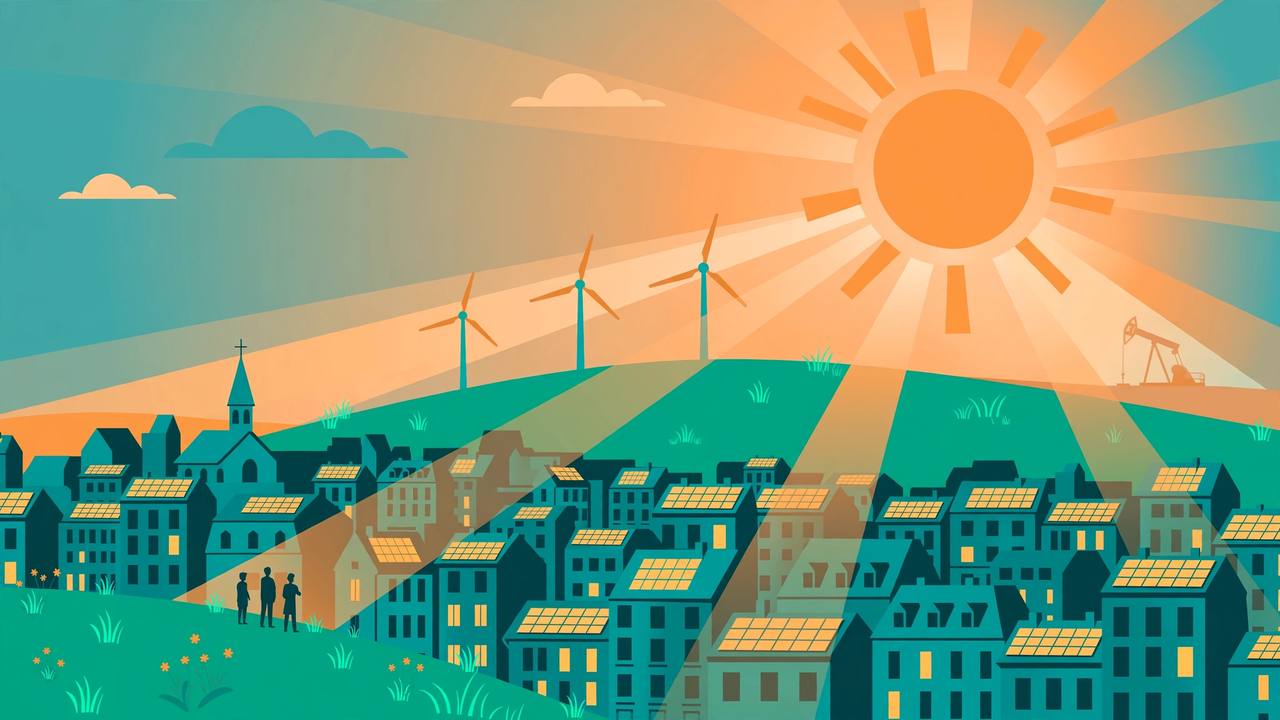
Three quarters of European Union citizens say moving away from fossil fuels is urgent, and nearly nine in ten want their politicians to prioritise renewable energy, according to a survey of 23,000 people published by the European Investment Bank (EIB) on Thursday.
Source: Reuters
The findings, shared exclusively with Reuters, show broad public support for rapid climate action ahead of the COP31 climate talks next week, even as European governments are under pressure from wars, popular protests and strained public finances, Reuters reported from London.
Source: Reuters via EuropeSays
The Iran war changed how Europe feels about fossil fuels
Reuters said that in the import-dependent EU, the impact of the US-Israeli war on Iran in driving fossil fuel prices higher has convinced more people that renewable energy is the best way to bring energy costs down. The survey's support for prioritising low-carbon energy, at 87 percent, is up from 82 percent in a survey in 2022, during a previous energy crisis linked to the start of Russia's full-scale invasion of Ukraine.
"In a rapidly shifting geopolitical landscape, this is both the right thing to do for the planet and the smart thing to do for our economies, in order to bring down energy costs for businesses and households," EIB Group President Nadia Calviño told Reuters.
The same war-driven energy shock sent oil prices plunging this week as traders bet a chastened Washington may seek a way out of the Iran war. Read: Oil Prices Plunge 9% as Trump's Midterm Defeat Raises Iran Peace Hopes
Solar first, nuclear last — and Europe wants its own clean tech
Nuclear was the least popular low-carbon source in the survey: 52 percent of respondents said solar power should be the focus, ahead of wind power at 37 percent and nuclear at 19 percent, Reuters reported.
While backing urgency, EU citizens also prioritise self-reliance. China has established a lead in wind and solar power as well as batteries, but more than half of those surveyed — 55 percent — said they would prefer the EU to develop its own clean technology, even if it was slower to arrive.
The EIB said its annual energy financing has doubled since 2022, reaching €33 billion in 2025 — yaani about 3,300 crore euros in a single year. In 2025 the bank signed €100 billion in new financing and advisory services — yaani about 10,000 crore euros — for more than 870 projects, it said. Reuters gave the dollar equivalent of the energy figure as $37.06 billion.
How the survey was done, and what happens next
This is the eighth EIB Climate Survey. It was conducted with Ipsos bva between August 3 and 25, and the results were weighted to be representative of each country's population. This year, for the first time, the survey asked people whether they viewed the energy transition as urgent.
The findings land as European leaders prepare for the COP31 summit in Antalya, Turkey, next week, where the EU plans to push a package of efforts to cut greenhouse-gas emissions, according to Reuters reporting on European Central Bank President Christine Lagarde's climate-resilience speech on Wednesday.
Source: Reuters (Lagarde / COP31 context)
Some political and industry leaders globally have continued to back oil and gas as a way to provide jobs and growth, Reuters noted. The survey suggests that, in Europe at least, two energy shocks in four years — first Ukraine, now Iran — have moved public opinion in the opposite direction: away from fossil fuels, and faster.