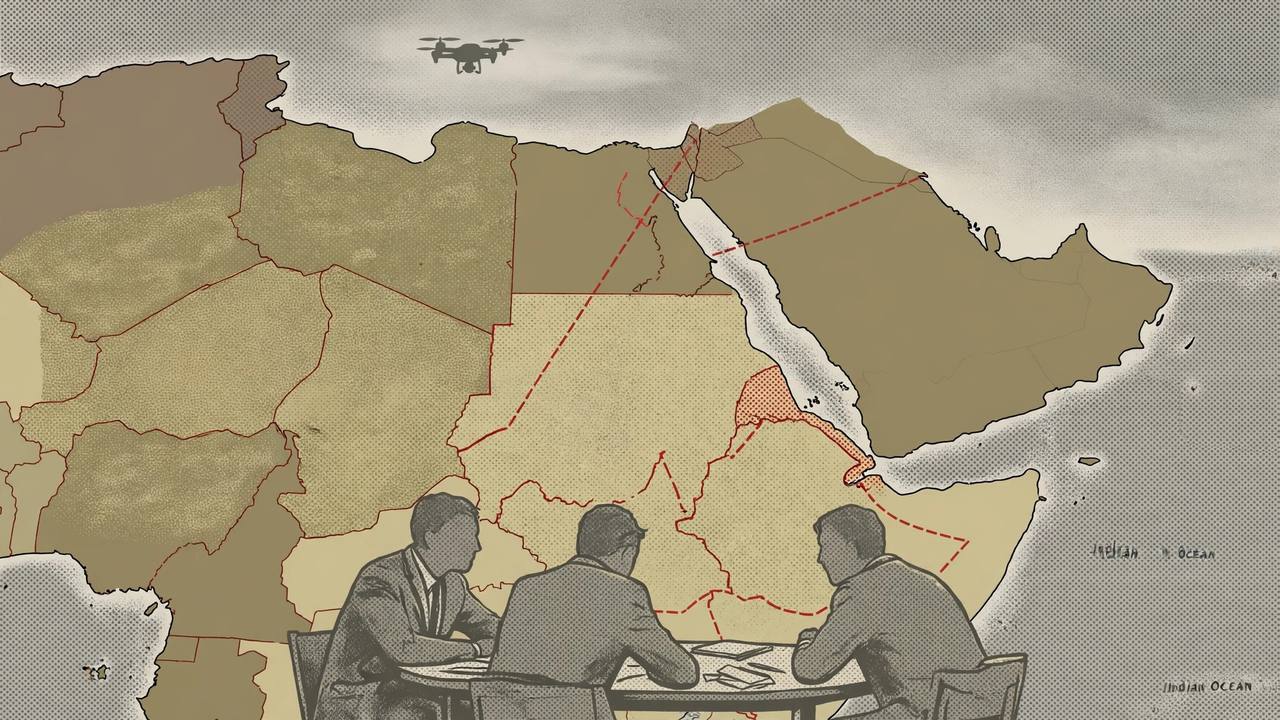
Addis Ababa — Ethiopia has accused Eritrean President Isaias Afwerki and Sudan's army chief General Abdel Fattah al-Burhan of supporting, arming and coordinating armed groups operating inside Ethiopia, including through repeated drone attacks, Prime Minister Abiy Ahmed's Horn of Africa adviser Getachew K. Reda said after a meeting on Wednesday, November 11, with Guang Cong, the UN Secretary-General's Special Envoy for the Horn of Africa.
Source: Addis Standard
Getachew said he had presented Ethiopia's position to the UN envoy on what he described as activities by the Eritrean and Sudanese leadership to equip and coordinate armed elements inside Ethiopia, and had urged both governments to stop supporting and arming the groups, arguing that doing so was necessary for meaningful dialogue and to prevent further escalation. He said he and the envoy agreed that dialogue rather than military confrontation offered the best path forward, concluding that “talking, not shooting is the best game in town.”
The accusations landed on the same day G7 foreign ministers published a joint declaration from their Paris meeting of November 9–10, warning that the worsening security situation between Ethiopia and Eritrea “bears the risk of regional escalation amid rising cross-border tensions”, and calling on all parties to exercise “maximum restraint”.
Source: The Abay Times
In a section headed “Horn of Africa”, the G7 ministers — from Canada, France, Germany, Italy, Japan, the United Kingdom and the United States, together with the European Union's High Representative — said they had noted “with great concern the worsening security situation in the Horn of Africa, specifically between Ethiopia and Eritrea”. They underlined “the serious consequences further escalation could have for regional stability, already dire humanitarian crises, security and international trade, including in the Red Sea”, and urged the parties to pursue diplomatic solutions, ensure safe and unhindered humanitarian access and protect civilians, especially women and children.
The same declaration also addressed the war in Sudan, Ethiopia's western neighbour. The ministers called on “all external actors to cease supplying or facilitating armed, logistical, and financial support to the belligerents”, and demanded that the Rapid Support Forces and the Sudanese Armed Forces comply with international humanitarian law and engage in negotiations towards a permanent ceasefire. They separately reaffirmed the importance of maritime safety and security in the Red Sea and the Bab al-Mandab Strait.
Addis Standard's own editorial note states that the allegations against Eritrea and Sudan's military leadership have not been independently verified, and that the statement included no responses from Asmara or Khartoum. Awaaz Punjab reports the accusations as Ethiopia's claims, not as established fact.
Why tensions are rising
Relations between the two neighbours have deteriorated sharply this autumn. On October 1, Ethiopia closed its embassy in Asmara and declared 10 Eritrean diplomats in Addis Ababa persona non grata, ordering them to leave within 48 hours, citing what it described as Eritrea's “direct and indirect acts of hostility and belligerence”. Eritrea cut diplomatic ties. Eritrea's UN ambassador, Sophia Tesfamariam, wrote on X on November 4, after meeting the same UN envoy, that any engagement with Ethiopia's leadership “requires a prior, public, unequivocal, and unconditional renunciation of coercion, threats, and the use of force, alongside unambiguous recognition of Eritrea's independence, sovereignty, and territorial integrity”.
Ethiopia and Sudan have also been expelling each other's diplomats. On November 4, Ethiopia ordered six Sudanese diplomatic staff members to leave the country within 48 hours, following the closure of Sudan's consulate in Assosa. The following day Sudan closed Ethiopia's consulate in the eastern city of Gedaref and ordered Ethiopian diplomatic staff to leave in retaliation. Sudan's army-aligned government had lodged formal complaints against Ethiopia with the United Nations Security Council and the African Union Peace and Security Council, accusing Addis Ababa of allowing the paramilitary Rapid Support Forces to use Ethiopian territory to launch drone attacks against civilian infrastructure in Sudan — a claim Ethiopia denies.
The diplomatic standoff sits on top of renewed fighting in northern Ethiopia. Hostilities between Ethiopia's federal government and opposition forces have shattered the fragile peace in Tigray established by the 2022 Pretoria Agreement, with fighting spreading into Afar and Amhara after seven armed groups announced an alliance in September. Ethiopia has also accused Egypt and Eritrea of supporting Tigrayan rebels; both countries have denied the allegations. Five US senators — Jeanne Shaheen, Cory Booker, Chris Coons, Jeff Merkley and Chris Van Hollen — wrote to Secretary of State Marco Rubio on November 11 urging diplomatic engagement to avert a widening conflict, warning of a possible multi-front war that could destabilise the Horn of Africa, the Red Sea and vital shipping lanes.
What is solid
- G7 foreign ministers published a joint declaration on November 11 warning of regional escalation risk between Ethiopia and Eritrea
- Getachew Reda met UN envoy Guang Cong on November 11 and made the accusations publicly afterwards
- Ethiopia closed its embassy in Asmara on October 1 and expelled 10 Eritrean diplomats
What is only claimed
- Whether Eritrea and Sudan are arming groups and carrying out drone attacks inside Ethiopia — Ethiopia says yes; both deny the claims against them and they are not independently verified
- Whether the RSF uses Ethiopian territory to launch drone attacks on Sudan — Sudan says yes; Ethiopia denies it
What happens next will turn on whether the UN and African Union mediation the G7 backed can open a channel between Addis Ababa and Asmara. The African Union said last week it had renewed diplomatic efforts between the two countries, and Germany's foreign minister Johann Wadephul warned in a call with Foreign Minister Gedion Timothewos on October 4 that any escalation in the Horn of Africa must be avoided. For now, both sides are trading accusations in public while the region's trade — including through the Red Sea, a lifeline for Gulf shipping and for the lakhs of Indian and Punjabi workers who travel and work across the Gulf — hangs on whether restraint holds.