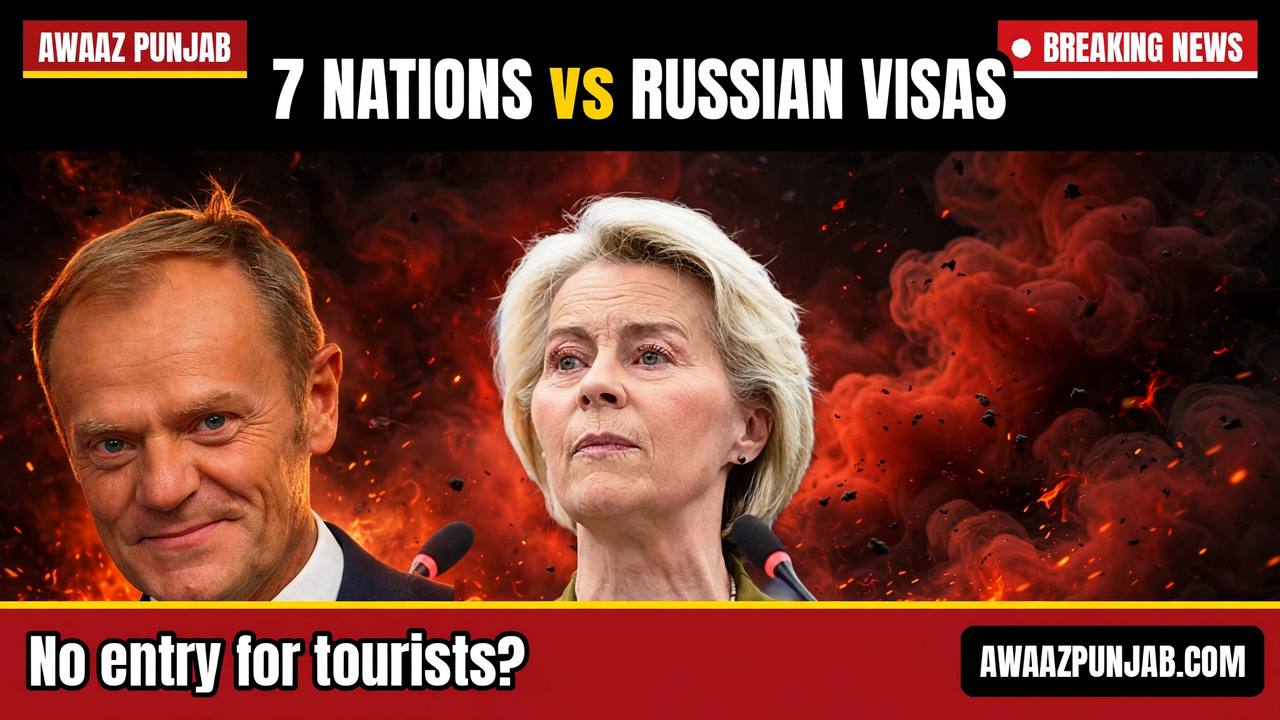
Seven EU countries have jointly urged Brussels to slam the door on non-essential travel by Russian citizens — including trips to sporting events — in a letter sent on Sunday, 23 November, to European Commission President Ursula von der Leyen and European Council President António Costa.
The letter was signed by Lithuanian President Gitanas Nausėda and the prime ministers of Denmark (Mette Frederiksen), Estonia (Kristen Michal), Finland (Petteri Orpo), Latvia (Andris Kulbergs), Poland (Donald Tusk) and Sweden (Ulf Kristersson), according to the Kyiv Independent, which first reported the letter on Tuesday, and Lithuanian public broadcaster LRT.
What the seven countries are asking for
“A central objective of EU policy is to demonstrate to Russia that its invasion of Ukraine will not bring rewards,” the leaders wrote, adding that “recent developments in the world of sports now threaten to send the opposite message.”
They say the Commission’s new visa guidelines, part of its 22nd sanctions package, “must provide a clear direction on preventing non-essential travel of Russian nationals into the territory of the Member States, including participation in sporting events.” They also urged member states not to issue visas to Russian and Belarusian athletes, and want the curbs written into the EU’s updated Visa Code — though a draft is not expected before the first quarter of 2027, which the signatories say is too long to wait.
Arrived the same day as the 22nd sanctions package
The letter landed on the same day the Commission unveiled its 22nd sanctions package against Moscow. The package proposes barring Russian teams and athletes from competing under the Russian flag at events in the EU, banning official Russian symbols, squeezing Russian sponsorship money for European sport and culture, denying visas to former combatants, cutting around 60 more banks from the SWIFT payment system and listing more than 70 additional shadow-fleet vessels.
Presenting the package, von der Leyen said: “Sports events cannot be a forum for propaganda activities.”
EU ambassadors will hold a first discussion of the travel and sports curbs on Wednesday, 25 November, and the seven countries plan to raise the issue at the EU leaders’ summit in Brussels on 26–27 November. It is for Costa to decide whether the matter goes on the summit agenda; neither he nor von der Leyen has responded publicly to the letter.
Why now
Finland announced earlier in November that it would restrict visas for Russian athletes, and Norway and Sweden announced similar bans, according to LRT. The letter also notes that Russia has stepped up attacks on Ukrainian civilians and critical infrastructure ahead of winter.
The push comes nearly five years into Russia’s full-scale invasion of Ukraine, which began in February 2022. EU sanctions need the agreement of all 27 member states, so none of the proposed curbs is law yet.
What is solid
- Seven EU leaders signed a joint letter dated 23 November to von der Leyen and Costa.
- The European Commission proposed its 22nd sanctions package the same day.
- EU ambassadors are due to discuss the curbs on 25 November.
What is only claimed
- Whether all 27 EU capitals will agree to the travel and visa curbs — sanctions need unanimity.
- Whether the issue will be added to the 26–27 November summit agenda — that is Costa’s decision.
The Commission’s latest sanctions package against Russia, proposed the same day as the letter, is covered in our earlier report. Read the earlier report