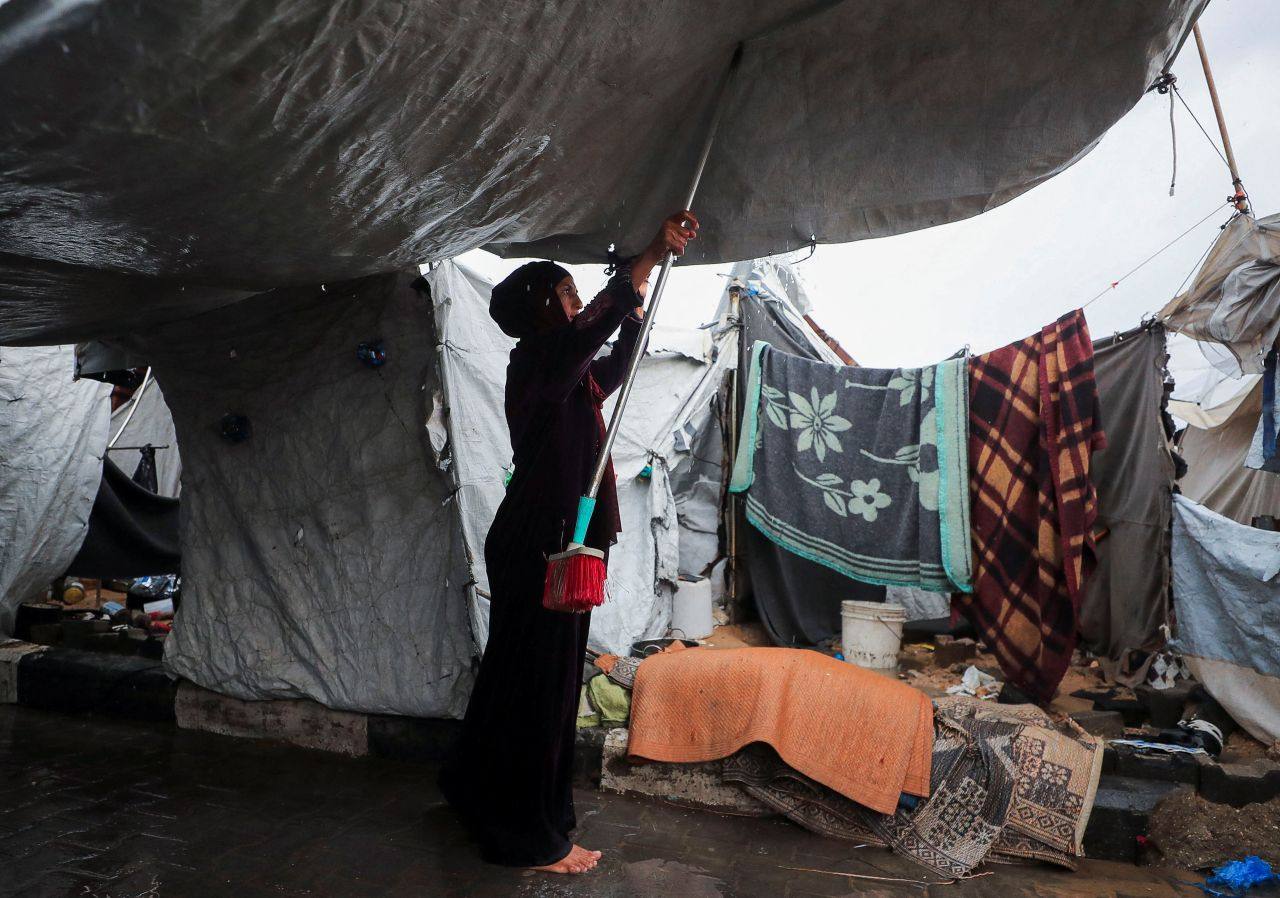
GAZA CITY — Heavy rain flooded thousands of tents across the Gaza Strip early on Saturday, forcing displaced Palestinian families out into the cold as the first winter storm of the season swept through the territory, Al Jazeera reported from Gaza. Gaza's civil defence agency said its crews received about 1,500 distress calls in just 10 hours after the rain began, with water levels in several shelter sites rising by 30 to 40 centimetres (12 to 16 inches).
Source: Al Jazeera, Nov 7, 2026
"What we feared has actually happened," Civil Defence spokesperson Mahmoud Basal told Al Jazeera. "A few shelter centres were completely flooded, and everyone inside them has now been forced out into the unknown." Basal said premature babies, the elderly and the sick were most at risk: "Those living in tents are at risk of death at any moment, and of illness at any moment."
The flooding came a day after forecasters warned that about 100mm of rain was bearing down on Gaza, where some 950,000 displaced Palestinians live in areas flagged as at risk of flooding. Read: Storm bearing down on Gaza — 950,000 displaced in flood-risk areas
Buildings weakened by war came down in the wind and rain
The storm also brought down buildings damaged in the war. The Civil Defence said rescuers evacuated residents of a building in the central Nuseirat area that partially collapsed in the strong winds and rain. In northern Gaza, the wall of a separate building collapsed in the heavy rainfall, injuring two people, according to the Wafa news agency.
Footage from camps in Gaza City, Khan Younis and Deir el-Balah showed families wading through ankle-deep water, mattresses and blankets soaked, and children standing barefoot in pools of mud and sewage. "Even houses can't hold up against this rain, so how can open plastic sheeting?" said Al Jazeera's Nour Khaled, reporting from a camp in Gaza City. She said more than 28,000 widows were among those facing the winter alone with their children.
In al-Mawasi, the coastal area in southern Gaza where more than 900,000 displaced people are sheltering, rain had been falling since 10pm (20:00 GMT) on Friday, Al Jazeera's Rami Abu Taima reported from Khan Younis. "People woke up to find hundreds, even thousands, of tents flooded across the Gaza Strip," he said, adding that more than 125,000 families living along the coast were at particular risk of having their tents swept away by the sea.
"Civil Defence does not have a single tarpaulin or a single tent"
Raed al-Dahshan, director of civil defence in Gaza governorate, told Al Jazeera that crews could do little once they reached flooded families. "Civil Defence does not have a single tarpaulin or a single tent," he said. "We deal only with saving lives, and that is not enough."
Gaza's emergency committee said more than one million displaced people face the dangers of winter, and that the territory urgently needs about 200,000 tents along with heating supplies. Aid groups blame Israeli restrictions on the entry of shelter materials for the shortage — an allegation Israel has disputed in past disputes over aid entry, saying large numbers of tents have entered the territory since the ceasefire.
Mohammed Salha, director of the Palestinian NGO Network, told Al Jazeera that only 180 to 200 trucks were entering Gaza daily, far short of the 600 agreed under the humanitarian protocol of the ceasefire, and that only about 40 of those carried humanitarian aid. "We don't want to respond after the tents flood," Salha said, adding that 50,000 tents had been waiting on the Egyptian side of the border. "We must respond before the disaster happens." He described international pressure on Israel to allow in more supplies as "timid".
What is solid
- Heavy rain early on Saturday, November 7 flooded thousands of displaced families' tents across Gaza, and civil defence crews received about 1,500 distress calls in 10 hours, with water 30-40 cm deep at several shelter sites (Gaza civil defence agency, reported by Al Jazeera; Reuters photographs from Gaza City camps, Nov 7)
- A war-damaged building partially collapsed in Nuseirat and residents were evacuated; a wall collapse in northern Gaza injured two people (Civil Defence via Al Jazeera; Wafa news agency)
- On Friday this desk reported the forecast behind this storm: about 100mm of rain expected, with some 950,000 displaced Palestinians in UN-flagged flood-risk areas
What is only claimed
- Aid groups and the Palestinian NGO Network blame Israeli restrictions on shelter materials and say only 180-200 of an agreed 600 daily trucks are entering, about 40 of them humanitarian — figures given to Al Jazeera by the network's director; Israel has disputed similar aid-entry allegations in the past and there was no Israeli response in Saturday's reporting
- The emergency committee's figures — more than one million people at winter risk and about 200,000 tents urgently needed — are the committee's own assessment, not an independently verified count
Saturday's storm was the first of the winter season, and it arrived while the ceasefire's humanitarian terms remain contested and most of Gaza's displaced are still under canvas or plastic sheeting. With more winter rain ahead, aid officials say the difference between a flooded tent and a dry one is whether shelter materials waiting at the border are allowed through. Awaaz Punjab will follow the storm's toll and the aid-entry dispute as both develop.