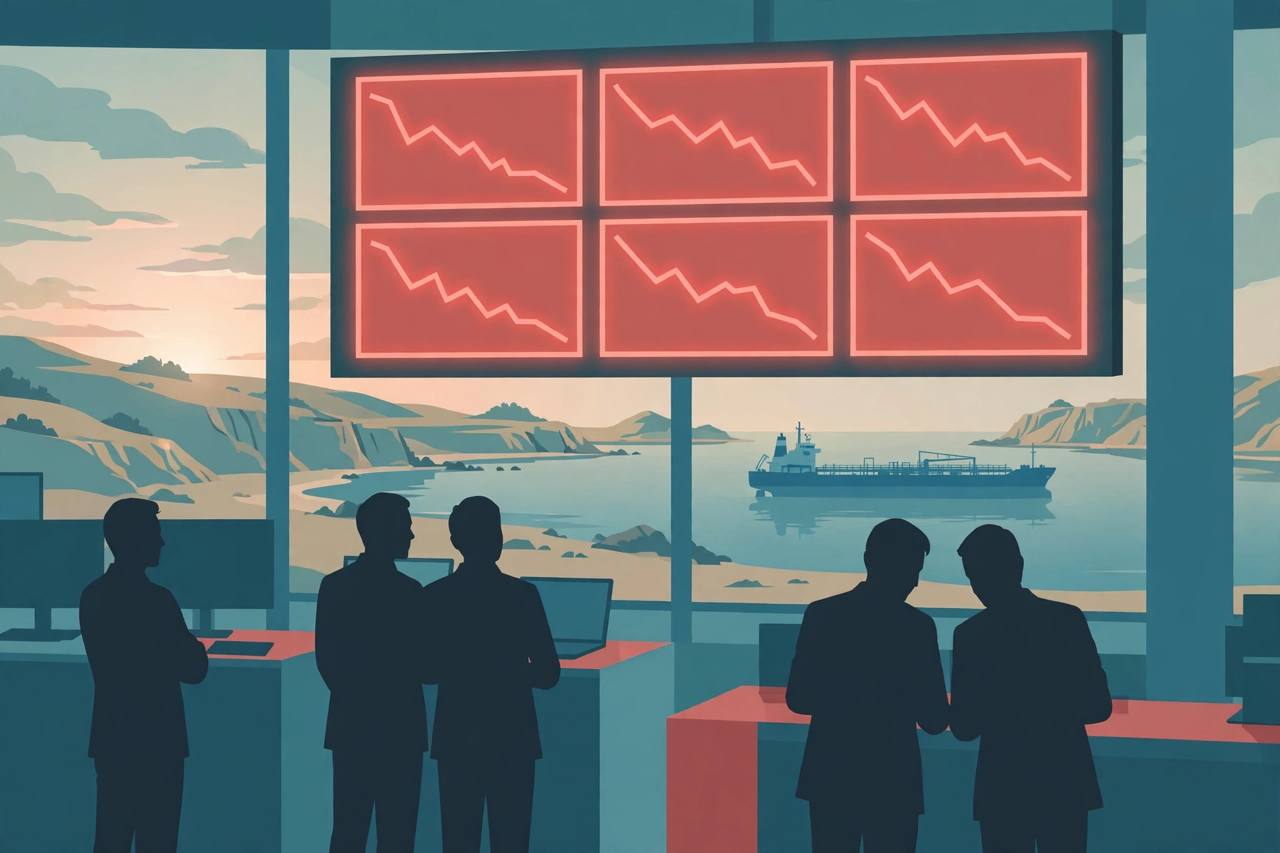
Most Gulf stock markets opened the week on the back foot on Sunday, November 8, as investors waited to see whether US President Donald Trump will order fresh attacks on Iran, Reuters reported. Saudi Arabia's benchmark index dropped 1 percent in early trade, weighed down by a 0.6 percent fall for Al Rajhi Bank, the news agency said.
Qatar's benchmark index declined around 1.3 percent in the same early trading, according to market reporting of the Reuters dispatch. Later reporting put Saudi Arabia's Tadawul index down 0.78 percent on the day, after reports of explosions in Iran and attacks near the Strait of Hormuz unsettled investors, while Saudi Aramco shares slipped just 0.31 percent.
Source: Finimize, Nov 8 2026 — Saudi stocks slip as Middle East tensions rattle sentiment
A weekend of missiles, ships and warnings
The nervous opening followed a weekend of escalation around the Gulf. Saudi air defences intercepted missiles over Riyadh and the Eastern Province, the United States said it had disabled a cargo vessel in the Gulf of Oman that it accused of trying to run its Iran blockade, and Iran's Revolutionary Guards reported tankers damaged by mines near the Strait of Hormuz — all developments Awaaz Punjab has reported separately. None of the claims has been independently settled, and each side attributes the incidents differently.
For Gulf markets, the question is no longer only about oil supply. It is about whether the US-Iran war, which began on February 28, widens again after the US midterm elections — or whether the mediation efforts that pulled oil prices down last week gain ground.
Oil down on the week, gold up
Brent crude ended the week near 99 dollars a barrel, down sharply over the week as traders priced in hopes of US-Iran diplomacy, according to market reporting — yaani the same barrel that panic over Hormuz had pushed far higher was suddenly cheaper because talks looked possible. Gold moved the other way, ending the week around 4,070 dollars an ounce, up about 5 percent on the week as the dollar weakened after the midterms.
Why it matters for Punjabi and Indian workers in the Gulf
Lakhs of Punjabi and Indian workers live and work across Saudi Arabia, Qatar and the other Gulf states, and their wages, overtime and remittances home move with the same oil economy these markets price every morning. A falling Gulf market does not by itself cut a worker's salary, but sustained falls driven by war risk are the earliest signal of frozen hiring, delayed projects and thinner overtime in the construction, transport and services jobs where most Punjabi workers in the Gulf are employed.
What happens next depends on Washington and Tehran. If Trump authorises fresh strikes, traders expect another risk-off session when Gulf markets reopen; if the mediation track that weakened oil last week produces a verifiable pause, the same markets are positioned for a sharp relief rally. Either way, Monday's oil opening will be the first verdict.