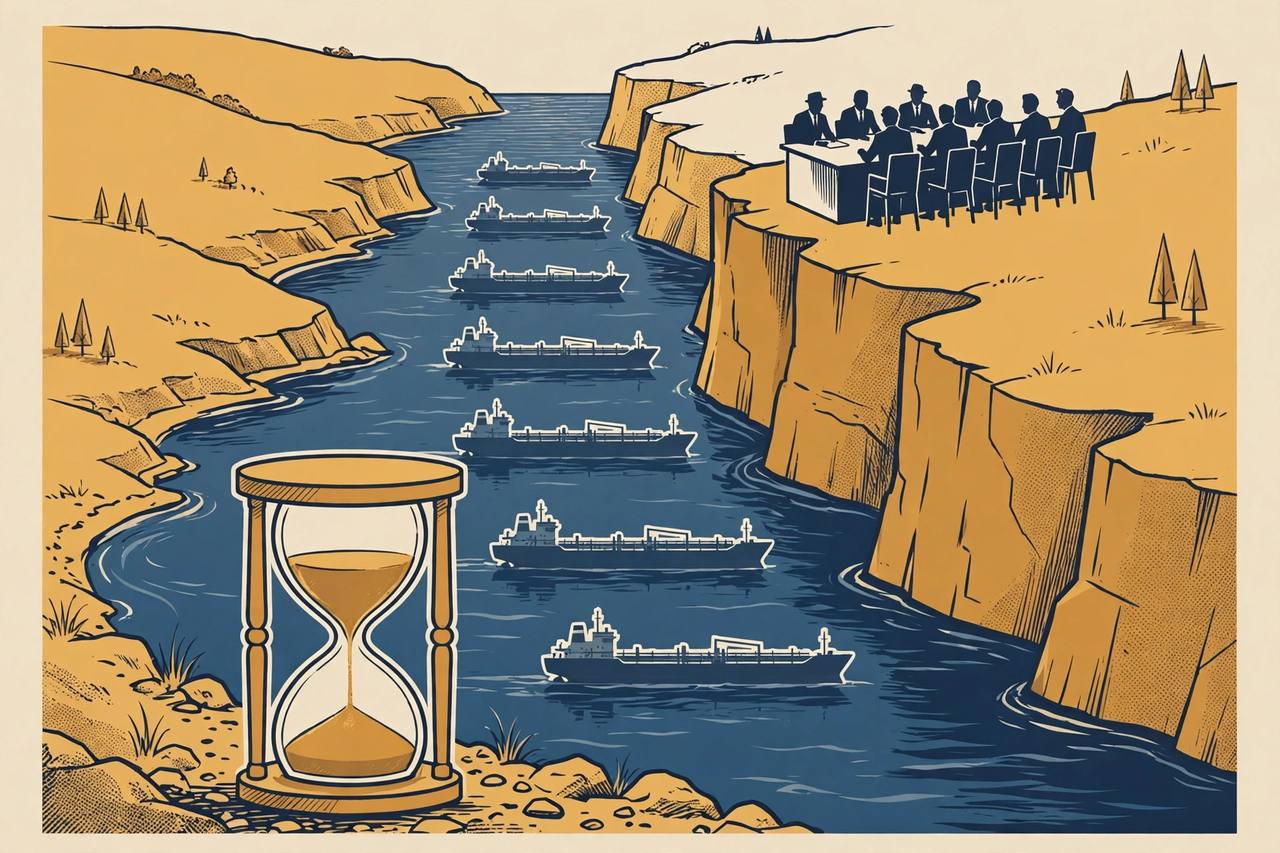
TEHRAN — Iran's Foreign Minister Abbas Araghchi answered US President Donald Trump directly on Sunday, November 8, telling the White House to accept Tehran's conditions for ending the US–Iran war or face a military response, Anadolu Agency reported. In a post on X written after the Republican Party's setbacks in the November 3 midterm elections, Araghchi said Tehran's two-day proposal to reopen the Strait of Hormuz remained on the table and warned of retaliation if Washington chose to resume fighting.
'American voters have made their choice. Time for the White House to make its own,' Araghchi wrote. 'Our 2-day proposal stands: meet the requirements, including end to war on all fronts, and you will see results. Or choose war, and see our alert and battle-hardened Warriors rain down hell.' The post, quoted in full by AzerNews and Eastora News from Araghchi's X account, is Tehran's first direct public response to Trump's Sunday CNN interview.
Source: AzerNews, Nov 8 2026 — Araghchi X post in full; Eastora News, Nov 8 2026 — 'rain down hell' warning
Araghchi was answering Trump's phone interview with CNN earlier on Sunday, in which the president said fresh US strikes on Iran were 'highly unlikely' to be necessary if negotiations progress toward a 'very strong agreement' — while warning that the US had 38 Iranian bridges in its sights. Read the earlier report: Trump tells CNN new Iran strikes are 'highly unlikely' if talks progress
What the '2-day proposal' actually is
The two-day reference is a timetable for implementing a deal, not a 48-hour deadline for Washington to reply. Under the plan Araghchi has described in his Al Jazeera interview and in statements since November 1, the implementation runs in two steps: on the first day, the United States carries out an agreed set of measures; on the second day, the Strait of Hormuz is reopened and transit traffic returns to its previous state. The conditions Tehran lists include an end to the war on all fronts — which in earlier versions of the plan covered Lebanon and Yemen as well as Iran itself — the lifting of the US naval blockade of Iranian ports, sanctions relief and oil-sale waivers, US acceptance of the new Hormuz shipping route agreed between Iran and Oman, and the release of frozen Iranian funds, foremost among them the $6 billion held in Qatar — yaani about 600 crore dollars.
The proposal grew out of an earlier seven-day roadmap Iran presented in New York in September, which Trump rejected at the time according to the Wall Street Journal reporting cited by Al Jazeera, and which Tehran later condensed — first in talks with Qatari mediators, where Qatar suggested five days and Iran settled on two. A senior Iranian official told Reuters on Thursday that Iran had also sent a nuclear proposal to Washington through Qatar, which the United States was reviewing, and that further discussion depended on Washington first meeting seven Iranian demands, including relief from sanctions, access to frozen Iranian money in foreign banks, and war reparations. Qatar, which is mediating, denied on Saturday reports that the US and Iran had failed to reach a deal.
Two messages on one Sunday
Sunday therefore carried both sides' positions within hours of each other. Trump told CNN he repeated five times in a 20-minute phone interview that renewed attacks were 'highly unlikely' if talks progressed, while also claiming Iran's air defences had been destroyed and that it held only about 10 percent of its missile capacity and 15 percent of its drone capability — figures CNN reported as the president's statements, which have not been independently confirmed. Araghchi, in his own remarks carried by Al Jazeera Arabic on Sunday, added a note of caution on timing: it could take time for mediators to resume their work after the US midterm elections. No agreement, no text and no date for a next round has been announced by either side.
What is solid
- Araghchi posted on X on Sunday, November 8, that Iran's 2-day proposal stands, listing an end to the war on all fronts among its requirements, and warning that if the US chooses war, Iran's forces will 'rain down hell' (his post, quoted by AzerNews, Eastora News and Anadolu).
- Trump told CNN the same day that new strikes were 'highly unlikely' if talks progress toward a strong agreement, and said 38 Iranian bridges were in US sights (CNN via Reuters).
- No agreement has been announced by either side, and Qatar denied on Saturday reports that the two sides had failed to reach a deal (Political.org).
What is only claimed
- Trump's figures for Iran's remaining missile (about 10 percent) and drone (about 15 percent) capacity are his own claims in the CNN interview and have not been independently verified.
- The two-day plan's conditions are Tehran's stated requirements; Washington has not confirmed accepting any of them, and a senior Iranian official's account of the parallel nuclear proposal rests on that official's briefing to Reuters.
Background: the war since February 28
The war began on February 28, 2026, when the United States and Israel launched strikes across Iran. A ceasefire took effect on April 8 and was extended by a US–Iran memorandum on June 17, but that arrangement collapsed in early July; no ceasefire has been in force since, the US naval blockade of Iranian ports continues, and Iran has kept the Strait of Hormuz effectively closed to shipping it does not authorise. In the past week the military pressure has continued alongside the diplomacy: Trump confirmed limited US strikes on an Iranian air defence system on Qeshm Island on November 6, US Central Command disabled the St Kitts-flagged cargo ship M/V Huda in the Gulf of Oman on November 7 for what it said was an attempt to breach the blockade, and on November 7 CENTCOM stood up Task Force Iron Gate to restrict Iran's land-based supply routes — the effort Iraq's foreign minister was discussing with Al Jazeera the same weekend.
What happens next
The next signals are dated: whether Washington responds publicly to Araghchi's post, whether the Qatari and Pakistani mediation channels produce a dated round now that the midterms are over, and whether any first-day measures — a blockade step or a funds release — are announced, since Tehran's whole timetable starts only when its conditions are met. For the Gulf's lakhs of Punjabi and Indian workers, and for families in Punjab whose remittances and fuel prices run through the Gulf, the difference between the two choices Araghchi named is direct: a reopened strait means normal shipping, flights and oil prices; a resumed war means the opposite. Oil markets, which knocked Brent down about 16 percent in a week on peace hopes alone, will price whichever signal comes first.