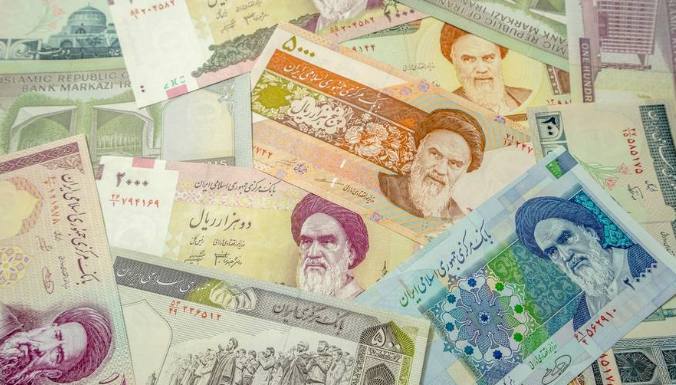
Iran's currency plunged to a fresh record low on Saturday, approaching the psychological threshold of 3 million rials to the US dollar, as rising inflation, hardening American sanctions and a widening embargo squeeze the country's war economy. The US dollar was sold at around 2.992 million rials on the free market, up from 2.938 million on Friday, according to tracking website bon-bast.com, while alanchand.com reported 2.999 million rials per dollar — yaani lagbhag 30 lakh rial per dollar.
Source: Reuters
On Tuesday the rial had already hit a record low of about 2.82 million to the dollar after fresh US sanctions. Saturday's rate is worse still — the currency has now lost about 45% of its value since early April, when the dollar fetched about 1.6 million rials. Read the earlier story
The currency collapse comes with one of Iran's worst inflation surges in decades. Consumer prices in October were 88.7% higher than a year earlier, while annual average inflation accelerated to 76.8%, according to the Statistical Centre of Iran. Food and beverage prices rose 112.6% year on year — more than doubling in twelve months.
Iran's president has admitted the scale of the crisis. 'We have no money,' he said, conceding that American economic warfare has proved far more difficult for Iran than the destruction caused by missiles. The US naval blockade of Iranian ports has now lasted 137 consecutive days, cutting off oil exports — Tehran's top source of revenue and foreign currency — while imports have also been kept out and Washington has begun cracking down on trade through land routes.
With cash running out, the government has slashed subsidies for food, fuel and electricity, while state workers and pensioners have gone unpaid. The state electricity company has begun rolling blackouts, due to start on November 29 as gas runs short, and Tehran has cut supplies of cheap flour and bread in seven of Iran's 31 provinces. Flour-shortage demonstrations have been reported in Zanjan and other cities, and parliament's economic commission has warned of fuel and heating shortages this winter.
Iran's central bank governor, Abdolnaser Hemmati, said on Saturday that Iran had sufficient hard currency to pay for basic goods and medicine for months to come, but added that the foreign exchange market was affected not only by economic fundamentals but also by psychological factors. 'Foreign exchange is affected by many factors such as the economy, expectations and politics... We are trying to stabilise the market as much as we can,' Hemmati told state television.
Sanctions, blockade and a widening embargo
Washington reimposed its naval blockade on Iranian ports in July, and earlier this month announced Task Force Iron Gate to restrict the movement of weapons and sanctioned materials across Iran's land borders and the Caspian Sea. US Treasury Secretary Scott Bessent said this week, after imposing new sanctions aimed at isolating Iran from the global economy and disrupting its shadow banking networks: 'Iran's economy is underwater, and its leaders are panicking.'
Many Iranians seeking safe havens for their savings have been buying dollars, other hard currencies or gold, adding to the pressure on the rial. The currency first crossed 2 million rials to the dollar in August, when annual inflation stood at 66% in July.
What it means for Gulf workers and oil
The squeeze reaches far beyond Iran. Lakhs of Punjabi and Indian workers live and work in the Gulf, sending money home and depending on steady oil income and flights through the region. Brent crude closed on Friday at $95.44 a barrel, up about 3% on the week, after attacks on shipping and on Saudi energy infrastructure kept supply fears alive. A weaker rial and costlier imports also mean more pressure on ordinary Iranian households, most of whom rely on black-market rates because the central bank's official rate is usually much lower.
What is solid
- The rial traded at about 2.99 million per dollar on Saturday, per free-market trackers cited by Reuters
- October consumer prices rose 88.7% year on year and food prices 112.6%, per the Statistical Centre of Iran
- Central bank governor Hemmati said on Saturday that Iran has enough hard currency for basic goods and medicine for months
What is only claimed
- Whether the rial crosses 3 million next week — trackers put it just below the mark and differ slightly
- The scale and spread of flour-shortage protests — reports vary and are hard to verify independently
What happens next turns on three dates: rolling blackouts begin on November 29; OPEC+ ministers meet on Sunday, November 29, to set output policy for 2027; and markets reopen on Monday, when oil prices will give the first verdict on the week. Diplomacy has not stopped — Iran's negotiators are in Qatar for talks — but Tehran has said it will not enter negotiations with the United States until its conditions are met.