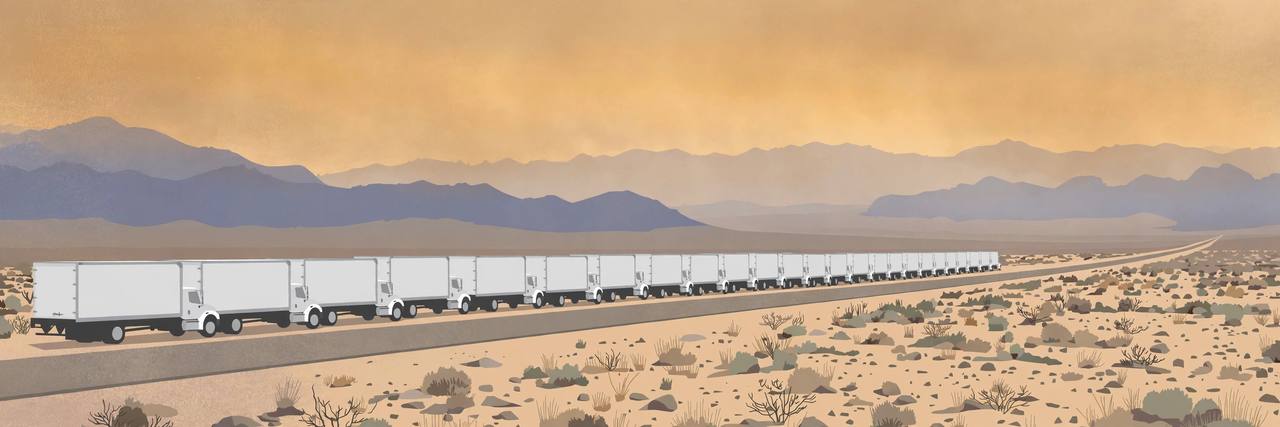
Iranian truck drivers entered an eighth day of strikes on Sunday, with their union saying drivers in at least 30 cities were now refusing to haul freight at rates that have stayed flat while the cost of keeping a truck on the road keeps climbing.
Source: Iran International
On Thursday the strike stood at 18 cities on its fifth day. Three days later it has reached at least 30 cities. Read our earlier report on how the stoppage grew. Read the earlier story
The Union of Truck Drivers and Trucking Associations Across Iran said drivers had parked their vehicles at freight terminals and along roadsides and were refusing to load cargo until their demands are met, according to the union's message reported on Sunday. Protest trackers named Tehran, Shiraz, Bandar Abbas and Isfahan among the cities where drivers have stopped work.
The stoppage began on Sunday, 22 November. It stood at 15 cities on its third day, 18 cities on its fifth day, and 22 cities across 14 provinces on its seventh day, on Saturday, before reaching at least 30 cities on Sunday, according to the union and monitoring reports.
Why drivers stopped
Drivers say freight rates have not moved while fuel is short and tyre, insurance and maintenance costs keep rising. One driver quoted in Iranian reports said the price of an oil change had risen more than 30% in a year, and the cost of new tyres by more than 30% — costs that now outpace what a load pays.
The strike is unfolding against a currency collapse. The rial topped 3 million to the US dollar on the open market on Sunday, with inflation reported near 89%. Yaani: one US dollar now costs about 3 million rials, so every dollar-priced tyre or spare part costs a driver millions of rials.
Source: Geopolitiki
The drivers are protesting their living conditions, rampant inflation and the authorities' failure to answer their demands. The US naval blockade of Iranian ports and the closure of the Strait of Hormuz since the war began in February have choked trade, and war-risk insurance premiums keep climbing as tankers are hit in the strait.
What it means
Trucks move most of Iran's food, fuel and goods between cities and ports. A stoppage across 30 cities, if it holds, would squeeze supplies and prices in a country already under a wartime blockade — and it is the most visible sign yet of economic distress inside Iran since the US-Iran war began in February.
For Punjab's own trucking community — thousands of Punjabi drivers work the roads of North America and the Gulf — the strike is a reminder of how quickly a driver's maths can break: when diesel, tyres and repairs rise and rates do not, the truck stops paying for itself.
What happens next
The union has not announced an end date, and there has been no public official response to the drivers' demands. The strike could widen to more cities — or face security pressure. Awaaz Punjab will follow the strike as it develops.
What is solid
- The strike began on Sunday, 22 November 2026
- Drivers in at least 30 cities are refusing to haul freight on the eighth day, the truckers' union said
- Drivers are protesting fuel shortages, low freight rates and rising operating costs
What is only claimed
- The exact number of cities and drivers on strike — the union says at least 30 cities; monitors counted 22 cities a day earlier
- Whether the authorities will negotiate — no official response to the drivers' demands has been reported