Awaaz Punjab reported on November 7 that Israel was preparing a possible new offensive in Lebanon as the Iran war reshapes the front. The road-building reported here is a separate, on-the-ground development: permanent-looking infrastructure going down in the south while that offensive planning continues. Read the earlier report on Israel's Lebanon offensive preparations
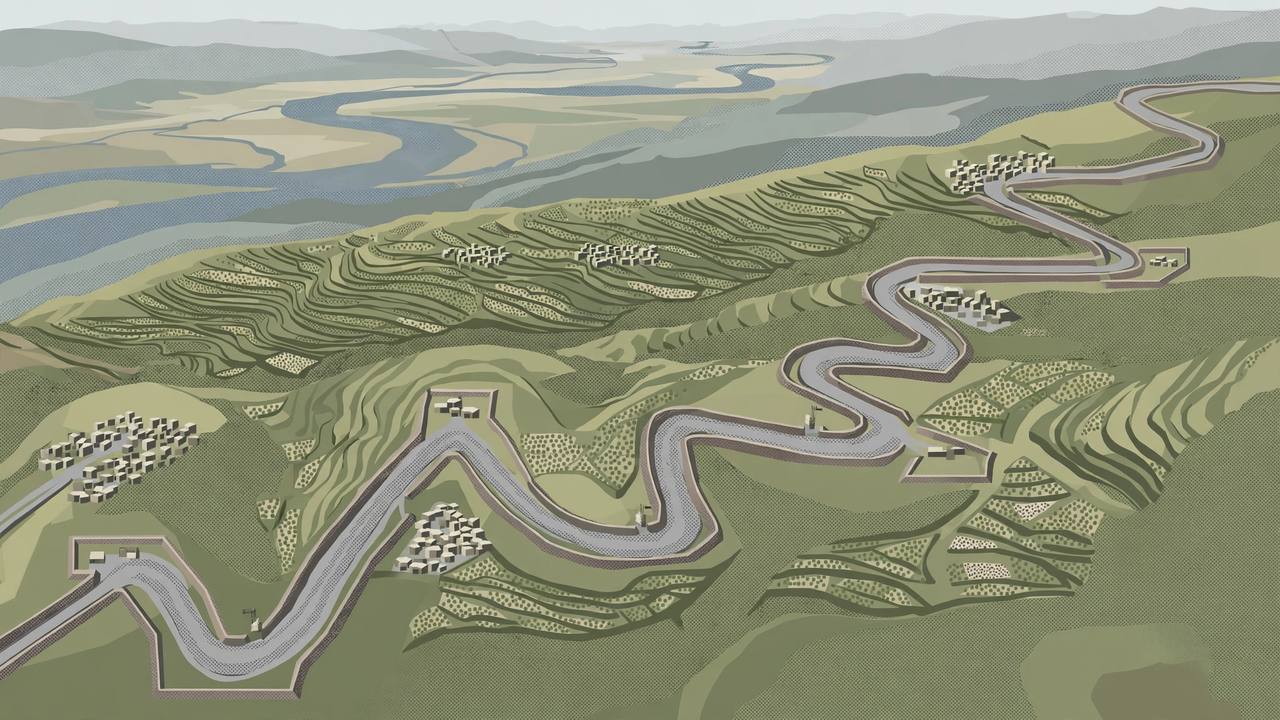
BARAACHIT, SOUTH LEBANON — Israel is building roads and military outposts across southern Lebanon, with satellite imagery showing a network spanning nearly 90 kilometres, Al Jazeera reported on Saturday, November 7, in reporting by its correspondent Zeina Khodr from Baraachit in the Bint Jbeil district. The scale of the construction is fuelling concerns that Israel is preparing for a prolonged military presence in the region, the report said.
Source: Al Jazeera
The Al Jazeera package is the first to put a single figure — nearly 90km — on the whole network. Its images show freshly cut military roads linking outposts across the south, rather than isolated positions, which is why residents and analysts quoted in regional coverage read the works as infrastructure for staying, not for a short operation.
What the satellite investigations found
A separate investigation by the Lebanese newspaper L'Orient-Le Jour, based on dozens of satellite images and multiple sources, documented new military infrastructure — roads, fortified positions, earth berms and checkpoints — increasingly connecting previously separate Israeli positions in the western and central sectors. The investigation estimates that Israel currently occupies more than 600 square kilometres of southern Lebanon. That figure is the newspaper's source-derived estimate, not an independent survey, and Awaaz Punjab reports it on that basis.
Lebanon's state National News Agency (NNA) first reported the road-building on November 1, via Anadolu Agency and Arab News: the Israeli army was cutting roads through mountainous and valley terrain to connect its military positions in the western and central sectors, alongside demolition operations in the same areas. In the central sector the works affect the towns of Aita al-Shaab, Maroun al-Ras, Bint Jbeil and Aitaroun — Maroun al-Ras overlooks the Israeli settlement of Avivim across the border. In the western sector, activity was reported around Naqoura, Yarine, Dhayra, Marwahin and Alma al-Shaab, where the Lebanese army and the UN peacekeeping force UNIFIL are also deployed.
Villages living alongside the works
The construction is not happening in empty country. NNA reported a large explosion carried out by Israeli forces in Baraachit itself on the Saturday evening before its November 1 dispatch, artillery shelling of Beit Yahoun in the same district, and shelling of the area between Zawtar al-Sharqiya and Maifadoun. For the Christian communities of Ain Ebel, Debel and Rmeish, regional reporting says, the prospect of a prolonged military presence adds to uncertainty about their future, while across the south the unresolved questions are the same: whether displaced residents can return, and whether farmers can reach their land.
Lebanese Health Ministry figures cited in regional reporting put the toll of Israel's operations in Lebanon since March 2 at at least 4,386 people killed, 12,407 injured and more than one million displaced. Those figures are the ministry's, reported here with attribution; Israel disputes aspects of Lebanese official tolls in this conflict, and the road-network reports themselves contain no Israeli military comment on the 90km figure.
A framework that pointed the other way
The building runs against the direction of the framework agreed in June, under which Israeli forces were to gradually redeploy out of Lebanese territory alongside the deployment of the Lebanese army and the disarming of armed groups. US-sponsored military and technical talks between Lebanon and Israel were held in Tampa, Florida, on October 20–21. A framework established in June — restated on June 26 in regional reporting — outlines that gradual withdrawal in exchange for Lebanese security commitments; the new roads, berms and checkpoints documented from space suggest positions being connected and hardened instead.
What is solid
- Lebanon's NNA reported Israeli road-building linking military posts in the western and central sectors on Nov 1, via Anadolu and Arab News
- Al Jazeera's Nov 7 satellite package put the network at nearly 90km, reported from Baraachit
- A June framework envisages gradual Israeli redeployment alongside a Lebanese army deployment
What is only claimed
- The 90km length and the 600+ km² occupation estimate come from media satellite investigations (Al Jazeera; L'Orient-Le Jour), not from an official survey by Lebanon, the UN or Israel
- That the network proves an intent to stay permanently is an inference drawn by reporters and residents in the coverage — Israel has announced no permanent-occupation plan in these reports
What happens next: watch whether the Lebanese army or UNIFIL publicly address the road network, whether Israel comments on the 90km figure, and whether the Tampa military channel takes the construction up. For the more than one million displaced Lebanese, the practical question is narrower and harder: roads built for an army's vehicles are being laid across the same hills their own return depends on. (Sources: Al Jazeera, Nov 7; L'Orient-Le Jour satellite investigation via VPP Lebanon; Lebanon NNA via Anadolu Agency and Arab News, Nov 1–2.)