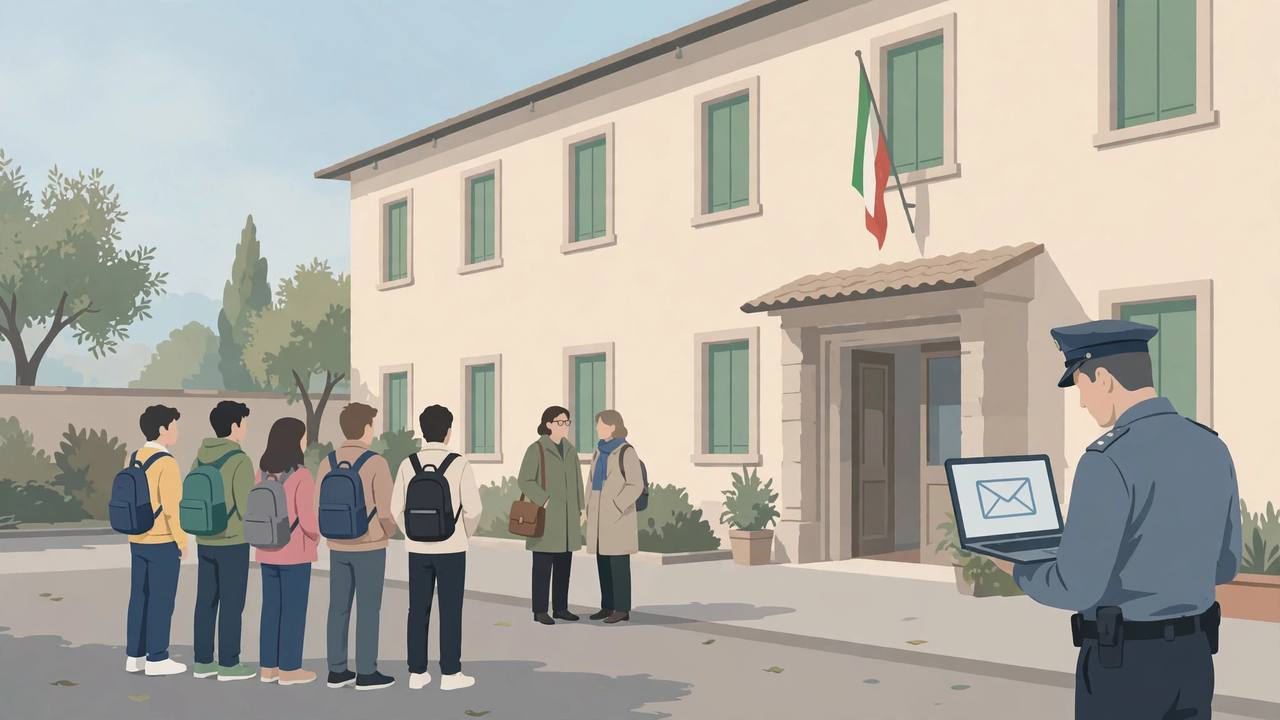
ROME — More than 1,800 Italian schools received hoax bomb warnings by email on Thursday, November 12, the second straight day of a mass threat campaign, but many schools stayed open or reopened quickly under new government guidance meant to curb the disruption, Reuters reported.
Source: Reuters, Nov 12, 2026
The government said 1,803 schools received the threats on Thursday and some were evacuated, although hundreds ignored the warnings or reopened fast once the new advice arrived. Wednesday's wave had been far bigger: about 6,300 schools received similar emails, at least 300 schools were evacuated, and panic spread among parents rushing to collect their children.
Prime Minister Giorgia Meloni's office said public buildings should be cleared only if there is concrete evidence of danger. "Buildings should not be evacuated in the absence of concrete elements beyond the mere receipt of a mass email that would suggest a genuine danger exists," the prime minister's office said, adding that schools would be instructed to act accordingly.
Source: Reuters, Nov 12, 2026
Thursday's alerts follow the first wave Awaaz Punjab reported on Wednesday, when one emailed threat forced at least 300 Italian schools to evacuate and Education Minister Giuseppe Valditara called the alerts presumed hoaxes. Read the first-day story
Same signature, second day
Like Wednesday's messages, Thursday's warnings were again signed "Mikhail Andropov", who presented himself as the "leader of the Vilayat of Misoginistan", according to Italy's ANSA news agency, and they again included a threat against the prime minister. The same purported author has claimed responsibility for email bomb threats sent last week to newsrooms in Ireland and Bulgaria. Police in Rome said "there was nothing to substantiate" the threats.
Source: Al Jazeera, Nov 12, 2026, citing ANSA
The campaign was not confined to Italy. Authorities in Scotland, Northern Ireland and the Republic of Ireland said many schools there received similar threatening emails from abroad on Wednesday, but classified them as hoaxes and allowed classes to continue.
Meloni summoned opposition leaders for talks on how to handle similar incidents. Nicola Fratoianni of the Green-Left Alliance asked the prime minister why, in Ireland, authorities had warned schools in advance and told them to remain open because the emails were not considered a threat — a contrast with Wednesday's evacuations across Italy.
Reuters noted the school emails are the latest in a series of hoaxes and cyberattacks that have recently targeted schools, supermarkets, blood banks, air traffic systems and broadcasters across Europe. What happens next: the government guidance takes effect for any further waves, and police investigations into the origin of the mass emails continue; no arrests were reported in the sources consulted.