This report follows Awaaz Punjab's earlier story on President Volodymyr Zelenskyy's extensive consultations with US envoys Steve Witkoff and Jared Kushner, after which Kyiv announced preparations for a trilateral meeting. The sequencing dispute reported on Sunday is a new development ahead of those talks. Read the earlier Witkoff–Kushner guarantees call report
BRUSSELS / WASHINGTON — Jared Kushner, the US special representative and son-in-law of President Donald Trump, is linking the achievement of a ceasefire in Ukraine to broader negotiations between Russia and European countries on the continent's postwar security, Washington Post columnist David Ignatius reported on Sunday, November 8, citing his own sources and officials familiar with the negotiations.
Source: The Washington Post via EuropeSays
According to the report, Kushner's model for that wider dialogue is the NATO-Russia Council — the consultation body set up after the Cold War in Rome on May 28, 2002, in a “29+1” format that let Russia sit with NATO members as an equal partner on security issues, arms control and counter-terrorism. NATO suspended practical cooperation with Russia in 2014 after Moscow's annexation of Crimea, keeping only political dialogue, and Poland's Foreign Minister Radoslaw Sikorski announced the Council's abolition in 2025, according to reporting of the column.
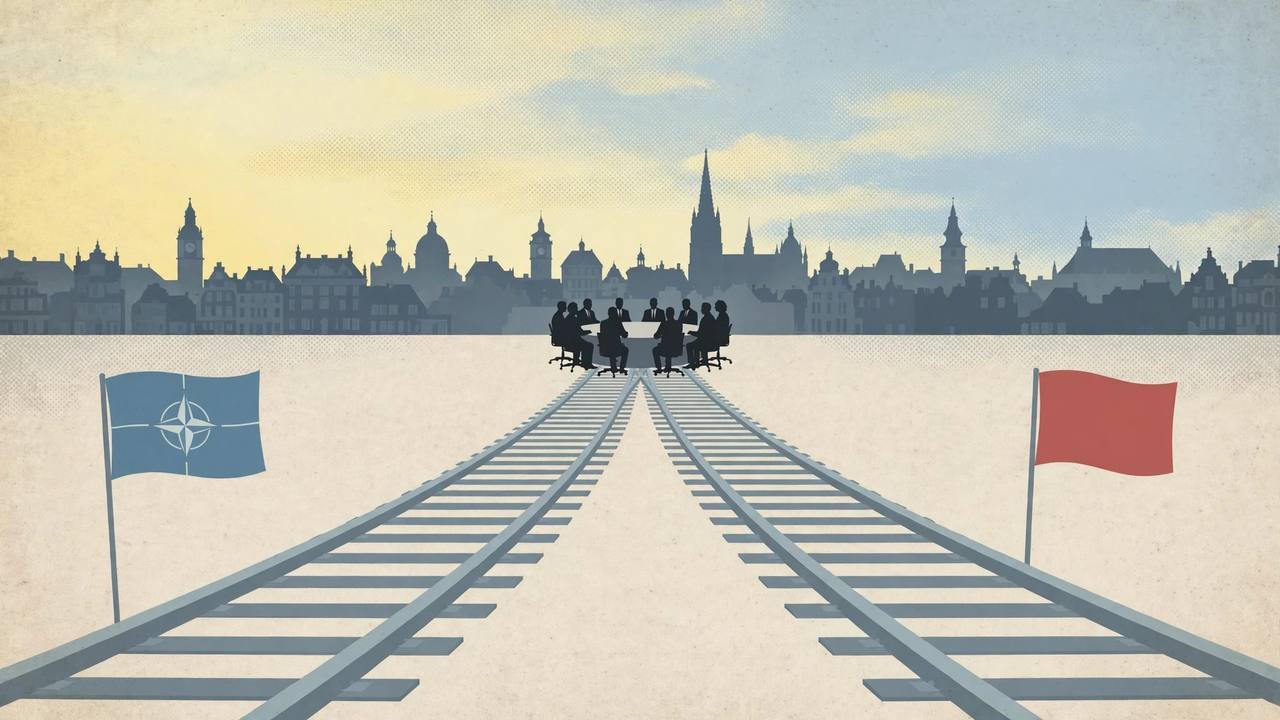
The fight is over sequencing: “both trains” or ceasefire first
European officials told Ignatius on Friday that they are ready for dialogue with Russia, but agree to discuss new security arrangements only after a ceasefire is reached in Ukraine. One official from a country that is a close US ally wrote that “both tracks are moving forward”, while cautioning that “a peace agreement on Ukraine must be concluded before an agreement on the security architecture is reached”.
A senior representative of another key European country put the position this way, as reported by Ignatius: “This approach carries significant risks for us, but it's better to participate than to sit on the sidelines. Our position remains unchanged: these issues can only be discussed after the war ends… The negotiations will not be easy.” The column says there is “broad consensus” in Europe behind that sequencing, even though leading European leaders support Kushner's efforts.
Ignatius summarised the divide in one line: “Kushner wants the process to proceed simultaneously — so that, so to speak, both trains arrive at the same time. Europe, which supports Ukraine, insists that the issue of a ceasefire come first.”
Putin “positive”, a White House meeting — and a caution
According to the column, Russian President Vladimir Putin responded positively to the idea of a pan-European security plan during his October 21 meeting in St. Petersburg with US Special Envoy Steve Witkoff, a conversation Kushner joined by videoconference. On Thursday, President Trump met Putin's envoy Kirill Dmitriev at the White House and said afterwards that he was close to concluding a “big, beautiful deal” that would encompass Ukraine and “all of Europe”, the report said.
Ignatius himself cautioned against reading too much into that: “This is extremely premature, given what I heard from European officials on Friday,” he wrote. Awaaz Punjab notes that the Council proposal itself rests on a single columnist's unnamed sourcing — no US, European or Russian government has publicly confirmed that a NATO-Russia Council revival is on the table — and it is reported here on that basis.
Why it matters this week
Delegations from the United States, Russia and Ukraine are scheduled to meet in Abu Dhabi on Tuesday and Wednesday, November 10–11. US envoy Steve Witkoff has said the parties intend to discuss security guarantees, de-escalation, humanitarian issues and further steps toward a settlement, and the Kremlin has confirmed a Russian delegation led by Kremlin aide Vladimir Medinsky. Zelenskyy has named an energy ceasefire — an end to strikes on energy and critical infrastructure — as his first priority for the talks, according to his November 6 address as reported in Ukrainian media.
The diplomacy is running alongside the war, not instead of it: overnight on November 7, Russia fired 36 ballistic missiles and 172 drones at Kyiv and other regions, hitting energy infrastructure days before the talks. Read Awaaz Punjab's report on the overnight strikes on Kyiv
What is solid
- The Abu Dhabi trilateral talks on Nov 10–11 have been confirmed in Kremlin and envoy reporting, with Vladimir Medinsky leading Russia's delegation
- The NATO-Russia Council was created in 2002 and NATO suspended practical cooperation in 2014 after the annexation of Crimea
What is only claimed
- Kushner's wish to run ceasefire and Europe-security tracks in parallel, modelled on the Council, is reported by one Washington Post columnist citing unnamed officials — it has not been officially confirmed by Washington, Brussels or Moscow
- European officials' 'ceasefire first' position is as reported to that columnist on Friday, not a published EU or NATO statement
What happens next: the Abu Dhabi meetings on November 10–11 are the first test of whether the two “trains” — a ceasefire track and a security-architecture track — move together or whether Europe's insistence on a ceasefire first holds. Watch for any official readouts naming the NATO-Russia Council format; until one appears, the revival remains a reported idea, not an agreed plan. (Sources: The Washington Post reporting via EuropeSays and Sputnik-wire summaries, Nov 8; Kremlin and envoy statements on the Abu Dhabi talks.)