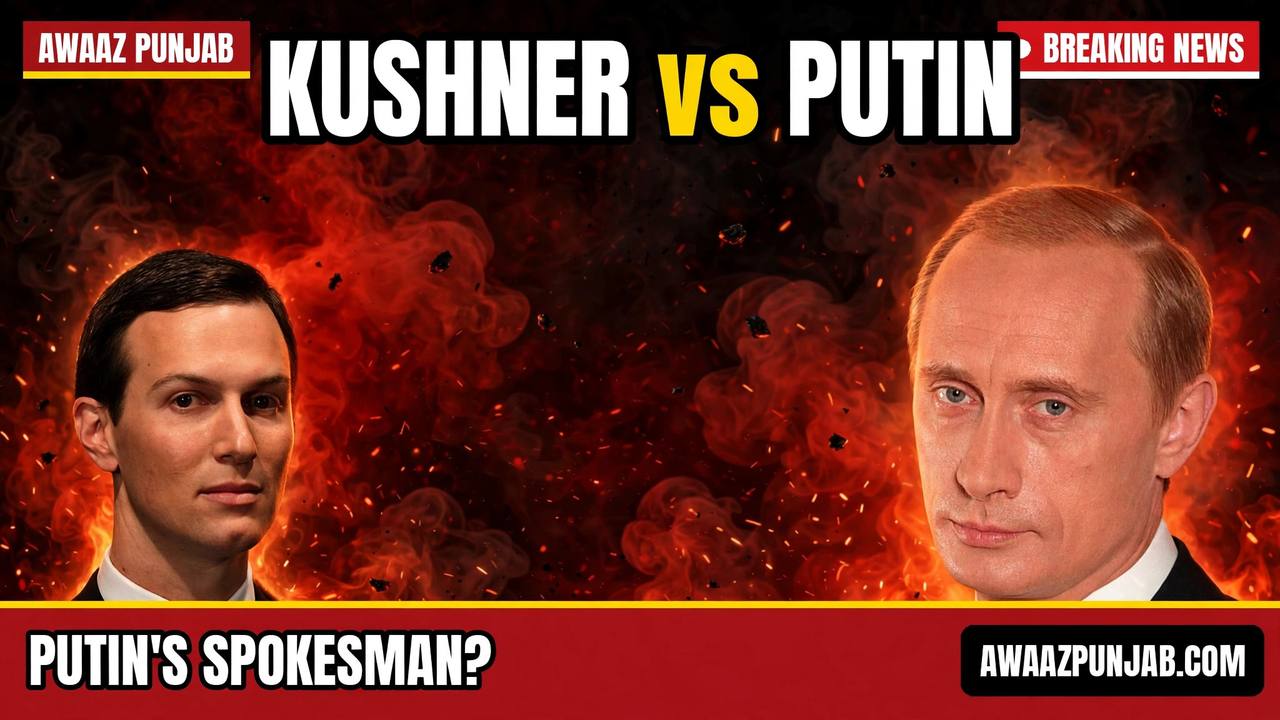
European and Ukrainian lawmakers have accused US peace envoy Jared Kushner of echoing Kremlin narratives and called for him and fellow envoy Steve Witkoff to be replaced, after Kushner praised Russian President Vladimir Putin as a "grandmaster of politics" and described the war in Ukraine as a proxy war. The criticism followed an interview Kushner gave to Axel Springer chief executive Mathias Döpfner on the "MD Meets" podcast, released on Wednesday, November 25.
In the interview, Kushner said Putin was "very organized" and "a historic figure", and credited him with showing restraint by not using nuclear weapons. He said the conflict had "effectively become a proxy war where Europe is funding and arming Ukraine against Russia", and said Washington's negotiators had concluded that Putin was not interested in a ceasefire as a first step toward ending the war. Kushner also said Ukraine and Russia could hold the largest prisoner exchange of the war before the winter holidays, and argued that negotiations should focus on ending the killing rather than on who was right, saying: "This isn't about fairness or who's right or wrong."
Marie-Agnes Strack-Zimmermann, who chairs the European Parliament's security and defence committee, dismissed Kushner's framing as "pure Kremlin propaganda" and said he could "hardly be taken seriously as a neutral mediator" after the remarks, according to POLITICO.
Oleksandr Merezhko, chair of the Ukrainian parliament's foreign affairs committee, went further and called for both Kushner and Witkoff to be replaced. "I have long argued that Witkoff and Kushner need to be replaced," Merezhko told POLITICO. "They view Ukraine not even as businessmen seeking deals with Russia, but through the eyes of Putin himself." He called Kushner's framing "extremely dangerous — not only for Ukraine but also for the security and national interests of the United States."
Halyna Yanchenko, a lawmaker from President Volodymyr Zelenskyy's Servant of the People party, said Kushner's description was "a complete misrepresentation of reality that, among other things, denies Ukraine's status as an independent actor", adding: "It seems that in this interview, Jared Kushner has in some way acted as an advocate for Russia." Roderich Kiesewetter, a German lawmaker from Chancellor Friedrich Merz's Christian Democratic Union, told POLITICO that Washington was "not acting as an honest broker" but putting one-sided pressure on Ukraine.
Former US ambassador to Russia Michael McFaul pushed back on Kushner's praise, writing that Putin was not a "grandmaster of global politics" and that Putin had destroyed Russia's chance of becoming a great power through peaceful integration. Scholar Maria Popova wrote that Kushner "speaks as if he's Putin's spokesman rather than a mediator or a U.S. envoy."
Kushner also revived a disputed Russian allegation in the interview, blaming a setback in peace talks on an alleged Ukrainian attack on a residence used by Putin at the end of December 2025. President Donald Trump had publicly questioned that account in January, telling reporters aboard Air Force One: "I don't believe that strike happened." The CIA had separately concluded that Ukraine had not targeted Putin's residence, a US official told PBS NewsHour. Zelenskyy has denied the accusation, saying Moscow was seeking to undermine the negotiations.
Why it matters
The row comes at a fragile moment for Kyiv's relations with the White House. US-mediated peace talks in Abu Dhabi failed to produce a breakthrough this month, Kyiv is seeking additional American-made Patriot interceptors, and Kushner and Witkoff are the two envoys leading Washington's negotiating effort. Kushner met Putin in Moscow on November 12 and has met Zelenskyy with Witkoff, including in Ireland. The criticism also follows Zelenskyy's BBC interview in which he called Trump's description of Putin as "my friend" strange — a sign of how strained the triangle between Washington, Kyiv and Moscow has become.
Kushner made the remarks in a podcast interview released on November 25, in which he also said Putin was not interested in a ceasefire as a first step. Read what Kushner said
The White House did not respond to a request for comment about the criticism of Kushner. What happens next turns on two tests: whether the prisoner exchange Kushner promised materialises before the holidays, and whether the criticism from US lawmakers and European governments changes how the envoys approach the talks. For now, Kushner remains in his post — but the lawmakers calling for his removal have made clear they do not regard him as a neutral broker.
What is solid
- Kushner made the remarks in the November 25 podcast interview
- Named European and Ukrainian lawmakers called for Kushner and Witkoff to be replaced
- The White House did not respond to a request for comment about the criticism
What is only claimed
- Whether Kushner's framing reflects US policy or only his own negotiating approach
- Whether the alleged December 2025 attack on Putin's residence happened — Trump and the CIA disputed it, and Zelenskyy denied it
- Whether the criticism will change the envoys' approach or cost them their roles