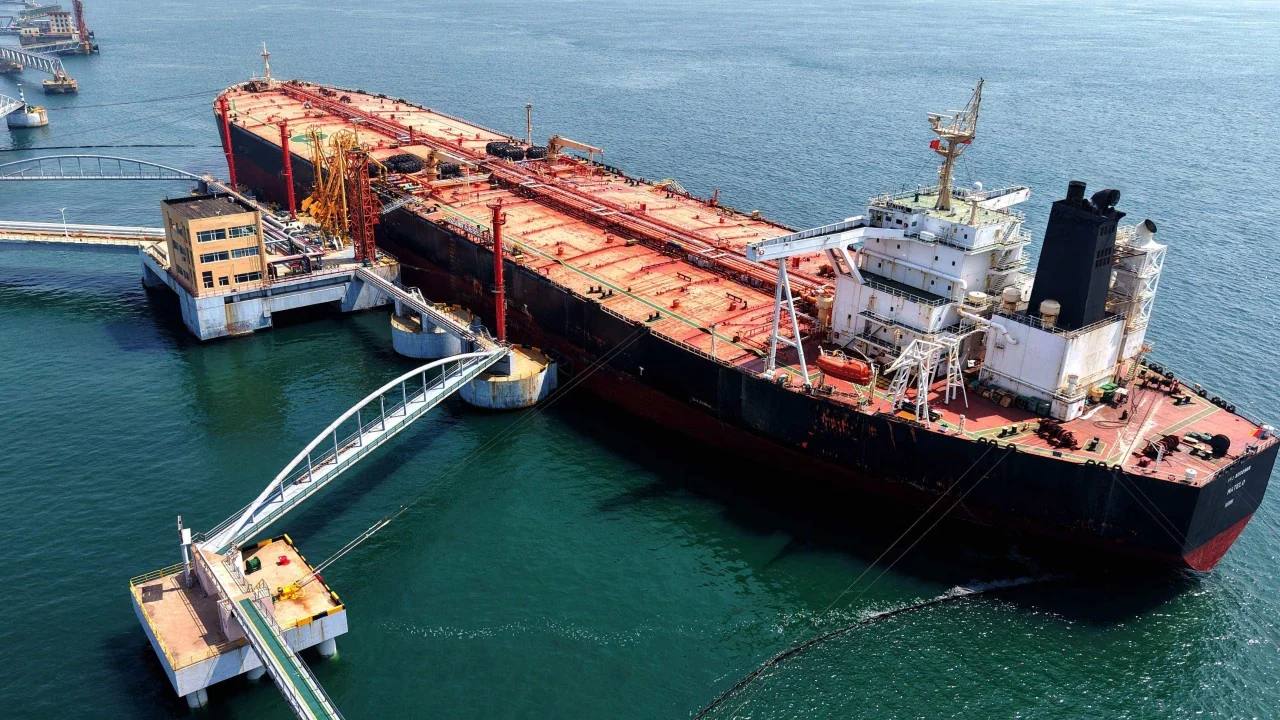
OPEC's crude production rose toward pre-war levels in October as Saudi Arabia led a further recovery in Persian Gulf supplies, according to a Bloomberg survey published on Saturday, November 7. Output from the Organization of the Petroleum Exporting Countries increased by 930,000 barrels a day in October to 22.8 million barrels a day, or roughly 88% of the volume the same members pumped in February, before the United States' war with Iran disrupted Gulf exports.
Source: Bloomberg survey, via Rigzone, Nov 7, 2026
Saudi Arabia accounted for most of the increase, raising production by 970,000 barrels a day to 9.2 million barrels a day — still about 800,000 barrels a day below the rates it pumped at the start of the year. The kingdom increasingly manages to shuttle tankers through the Strait of Hormuz and load cargoes on its Red Sea coast despite the ongoing hostilities, the survey said, and its oil exports averaged 7 million barrels a day in October, approaching pre-war levels, according to tanker-tracking data compiled by Bloomberg. Saudi Aramco chief executive Amin Nasser told an industry conference in Abu Dhabi earlier this week that the company aims to “maximize production going forward in the fourth quarter.”
Iran squeezed to a three-decade low
Gains in Iraq and Kuwait were offset by losses in Nigeria and Iran, where production was squeezed to the lowest in at least three decades by a US naval blockade, Bloomberg reported. Iranian output declined by 120,000 barrels a day to 1.9 million barrels a day. No tankers have been observed in satellite images of the country's main oil-loading terminals, such as Kharg Island, since late August, as the US continues to impose a blockade of the country's ports.
Independent tanker-tracking compilations point the same way on exports. Combined October crude exports from Saudi Arabia, the United Arab Emirates, Iraq and Kuwait rose about 10% from September to 15.53 million barrels a day, roughly back to start-of-year levels, according to data compiled from Kpler and Vortexa tracking and satellite imagery — with Saudi exports at 7 million barrels a day, up 13%, and loadings from the Red Sea port of Yanbu jumping 35% to 3.07 million barrels a day. The same compilation recorded no Iranian loadings for a second straight month, and European Sentinel satellite imagery showed no loading activity in October at Iran's Kharg Island, Soroush or Jask terminals.
Source: Tanker-tracking compilation (Kpler/Vortexa/Sentinel), Nov 3, 2026
The recovery in OPEC supplies has helped cool oil prices from the highs reached last month, offering the global economy the prospect of relief from elevated fuel costs. Brent futures slumped this week to trade near $98 a barrel, Bloomberg reported, as President Donald Trump signaled potential de-escalation after his party's defeat in the midterm elections, and the cost of physical cargoes has tumbled in markets from the Middle East to the North Sea and Africa. For India and Punjab, cheaper crude means relief at the petrol pump and on freight costs, and for the lakhs of Punjabi and Indian workers in the Gulf, a producing region that is pumping again is also a region whose employers, remittances and jobs are steadier than they were at the war's height.
What is solid
- Bloomberg's monthly survey: OPEC output rose 930,000 b/d in October to 22.8m b/d, about 88% of February's volume; Saudi Arabia +970,000 to 9.2m b/d and exports averaging 7m b/d; Iraq 4.15m b/d; Kuwait 2.0m b/d; Iran down 120,000 to 1.9m b/d, the lowest in Bloomberg data back to 1989; no tankers observed at Iran's main loading terminals since late August
- A separate tanker-tracking compilation (Kpler/Vortexa data and Sentinel satellite imagery) independently recorded Saudi October exports at the same 7m b/d, four Gulf producers' combined exports up about 10% to 15.53m b/d, and a second straight month of zero observed Iranian loadings
What is only claimed
- Survey figures are estimates built from ship-tracking data, officials' information and consultants' estimates (Rapidan Energy Group, FGE NexantECA, Kpler, Rystad Energy), not official OPEC production reports — individual country numbers differ slightly between trackers (Reuters, for example, reported Kuwait's October production at 2.1m b/d against Bloomberg's 2.0m b/d)
- Many tankers sail with tracking signals off to avoid being tracked or attacked, so observed export volumes may understate actual flows, the tanker compilation noted
What happens next turns on the calendar as much as the battlefield. OPEC and its allies are reviewing how much each member is technically able to pump, with a view to setting output targets for 2027 when ministers meet on November 29 — which gives producers an institutional reason to demonstrate capacity now. Whether the recovery holds depends on tanker traffic through Hormuz surviving the war, and on whether Washington and Tehran move toward the deal mediators say is still possible.