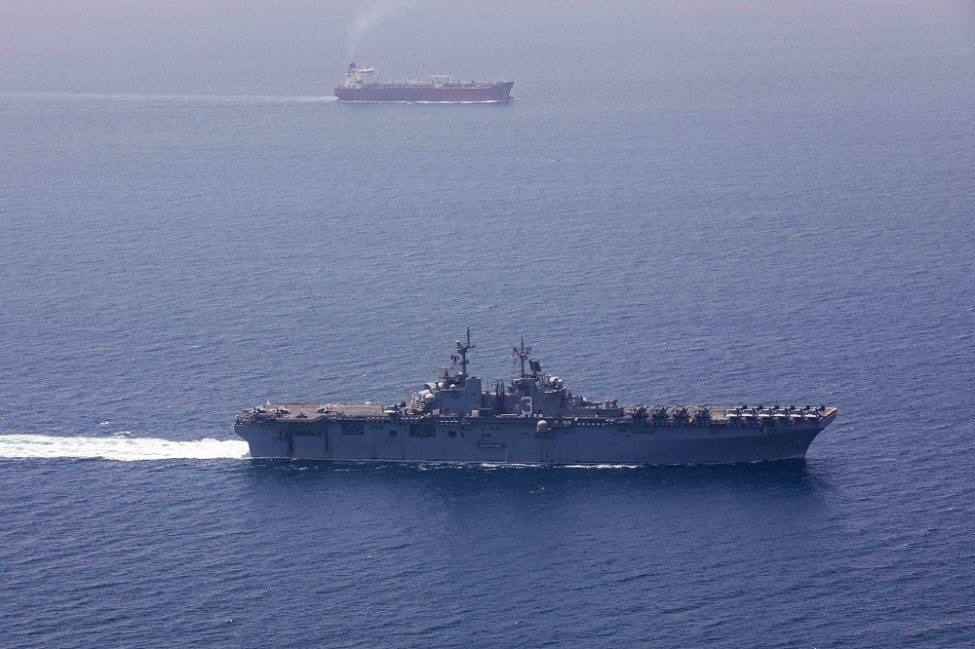
PARIS: US Secretary of State Marco Rubio said on Tuesday (November 10) that he had told Group of Seven (G7) allies in Paris that US economic sanctions and the naval blockade are working so well that President Donald Trump does not need to conduct major combat operations in Iran. Rubio spoke to reporters in Paris after two days of meetings with G7 foreign ministers, and repeatedly pushed back on the suggestion that not returning to military action would amount to a stalemate or a status quo, Reuters reported.
Source: Reuters via BOE Report
"The economic pain that is being inflicted on Iran right now is extraordinary and it compounds. It's growing every day," Rubio said. "We don't need to conduct military strikes if we're achieving the same objective through economic means and economic pressure. That's not stalemate," he said, adding: "Never has Iran ever faced the inability to sell energy in the global market like they are today." In a separate wire account of the same briefing, Rubio put it this way: "The economic campaign (against Iran) is so devastating that right now there is no need for major combat operations. That's what I told our allies here today."
Source: Reuters via BOE Report
What Rubio told the G7 behind closed doors
Rubio's message inside the meeting was harder-edged, according to four G7 diplomats briefed on it: the US would keep imposing "devastating" economic costs on Iran, and Washington had options beyond resuming the war or agreeing to unacceptable Iranian demands. The diplomats said Rubio argued that tough sanctions are working and are limiting Tehran's ability to fund its regional activities and proxies. The G7 comprises Britain, Canada, France, Germany, Italy, Japan and the United States, as well as the European Union. Rubio also said Trump had received input from regional allies in the Middle East confirming the assessment that economic pressure is working.
Source: Reuters via Business Day
A follow-up to Trump's Monday decision to hold off strikes
Tuesday's statement is the diplomatic follow-up to the development reported on Monday, when Trump said he plans to hold off on new military strikes against Iran for the time being, after appeals from countries in the region, including Qatar's prime minister in White House talks. Trump, in a Reuters interview and a later appearance in the White House press briefing room, said he plans to keep up the naval blockade in the Strait of Hormuz for now, and US officials have said forces remain on standby if the situation changes. Rubio's Paris remarks are the administration's first full public explanation to its closest allies of why it believes restraint is working.
Source: Reuters via BOE Report
The earlier development — Trump's decision to hold off new strikes and its first market reaction — was reported here: Oil and Trump holds off Iran strikes report
Iran's position, as Rubio described it — and Tehran's stated conditions
Rubio said Washington remains open to diplomacy but described Iran's demands as totally unrealistic, adding that Tehran was apparently not ready to make a deal. Iran has said it could reopen the Strait of Hormuz within two days if Washington agrees to a series of conditions, including an end to the war, the unfreezing of Iranian assets, the lifting of oil sanctions and an end to the American counter-blockade of Iranian ports. Those are Iran's stated conditions, reported as such; no agreement on them has been announced. Rubio said oil shipments through the strait had recovered to more than four-fifths of their level before the war on some nights, with Iranian oil the only cargo consistently held back, and warned: "The economic pressure on Iran is going to get even worse."
Source: QNC News
Background: the war, the blockade and Hormuz
The United States and Israel began attacking Iran in February, and before that war about 20 per cent of the world's oil supplies passed through the Strait of Hormuz. The US naval blockade has held Iranian crude exports down since September, according to market reporting, while mutual attacks have continued even during the pause in major strikes: the US struck Iran's Qeshm Island overnight, according to Iranian state media, and Iran has attacked tankers in the Gulf and the Strait of Hormuz this month, while its Yemeni Houthi allies have hit Saudi Arabia, Reuters reported. None of those overnight reports has been independently confirmed by Awaaz Punjab, and they are attributed here to the sources that carried them.
Source: Reuters via Euronext Live
Oil markets: two-month lows as escalation fears ease
Oil prices slid about 2 per cent to fresh two-month lows on Tuesday after US officials downplayed the need for additional military action against Iran, easing fears of further Middle East supply disruptions. Brent futures fell $1.93, or 2.1 per cent, to $90.64 a barrel at 10:28 a.m. ET (1528 GMT), while US West Texas Intermediate (WTI) crude fell $1.44, or 1.7 per cent, to $85.41 — putting both benchmarks on track for their lowest closes since August 28, after both had closed on Monday at their lowest since August 31. Brent has retreated about 22 per cent from the six-month high of $118 it touched on October 30, when fears were rising that Trump might step up attacks on Iran after the US midterms. For Punjabi and Indian workers and businesses across the Gulf, a calmer oil market and a blockade that holds Iranian cargo but lets other shipping through mean the immediate risk of a wider regional shutdown has eased — though no side has announced an end to the confrontation, and tanker attacks around Hormuz are still being reported.
Source: Reuters via Euronext Live
The politics at home, and what happens next
Trump has acknowledged that the war with Iran played a part in the Republicans' defeat in last week's midterm congressional elections, while Vice President JD Vance was more direct, saying: "The reason we lost is the war." Rubio also used the Paris briefing to comment on separate US-Russia-Ukraine talks in Abu Dhabi, saying Washington wanted to ensure Ukraine never feels threatened once that war is over. What happens next on Iran turns on whether economic pressure produces a negotiated settlement: Rubio's position on Tuesday was that pressure will keep compounding until Tehran accepts terms Washington can live with, while Iran's stated price for reopening Hormuz — an end to the war, unfrozen assets, lifted oil sanctions and an end to the counter-blockade — remains, on his account, unacceptable. No new round of talks, and no lifting of the blockade, was announced in Paris. Sources: Reuters (via BOE Report, Business Day and Euronext Live); QNC News; AFP/Al-Monitor account of the same briefing.
Source: Reuters via BOE Report