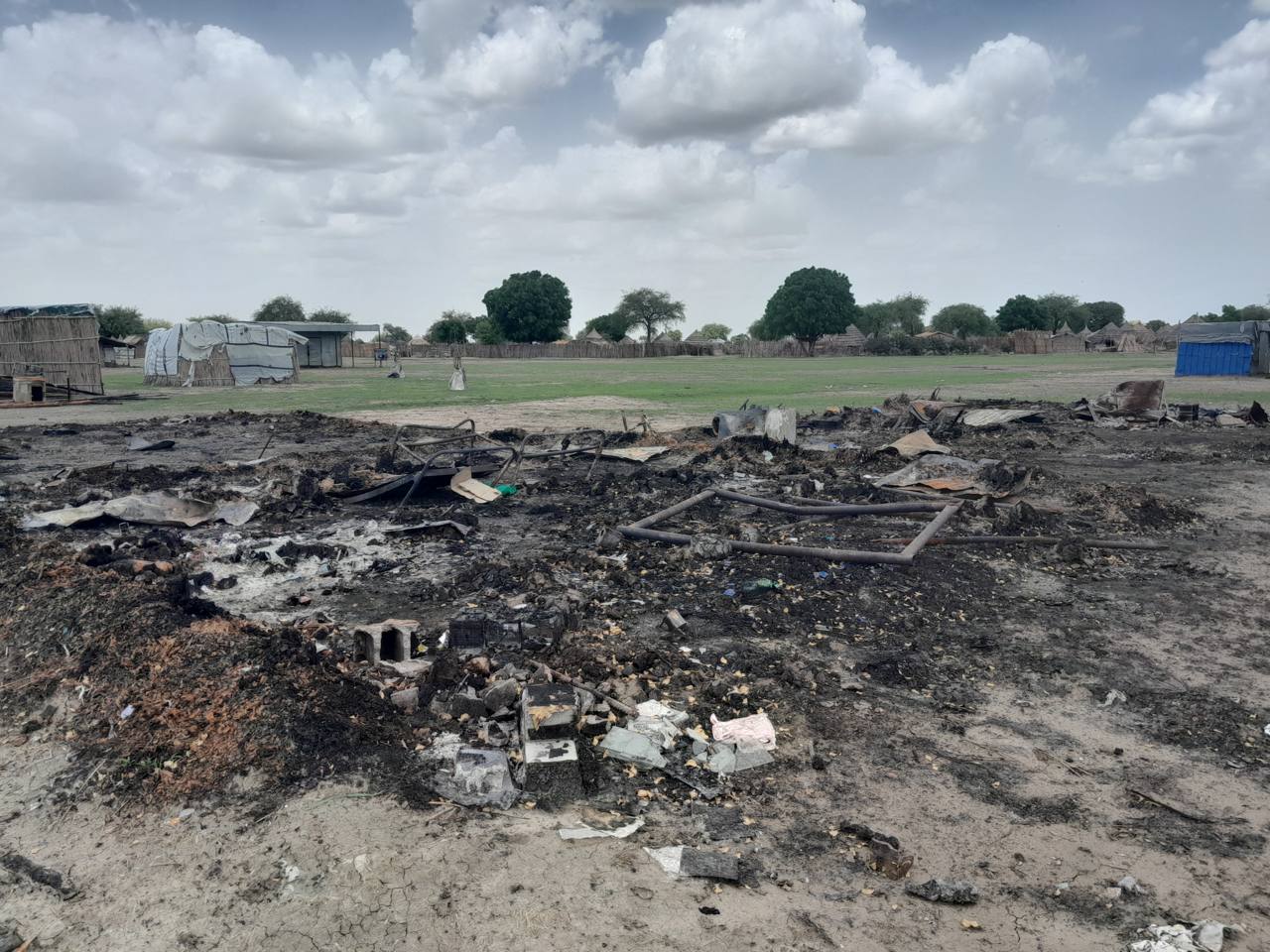
Juba — South Sudanese authorities and United Nations peacekeepers knew an attack on the town of Abiemnom was likely about two weeks before it happened, but failed to take stronger preventive action, and more than 200 people were killed when the assault came on March 1, Amnesty International said in a report published on Thursday, November 12.
Source: Amnesty International
The report, titled “The Abiemnom Massacre: Inaction and Impunity in South Sudan”, documents how between 1,000 and 1,500 armed Nuer men from Mayom County in Unity State carried out a four-hour assault on Abiemnom town, close to Sudan's southern border, in the early morning of March 1. The attackers shot residents in their homes, courtyards and as they fled, burned homes and the market, looted property and ransacked part of the local hospital, Amnesty said.
South Sudanese authorities reported a death toll of at least 213 people, including 130 town residents, 76 members of the security forces and seven foreign nationals. Children were among those killed. Satellite imagery reviewed by Amnesty showed more than 230 structures razed by fire, and most of the dead were buried in two mass graves on the outskirts of the town. The entire population of Abiemnom fled after the attack, the report said.
Warnings two weeks in advance
Amnesty said both the South Sudan authorities and the United Nations Mission in South Sudan, known as UNMISS, knew two weeks in advance that an attack was likely. Community members and survivors told researchers there had been warnings that men from Mayom County were mobilising weapons and fighters, and media reports quoted Unity State's Minister of Information acknowledging that state authorities were aware of the potential threat. UNMISS acknowledged tensions had been high since mid-February, and that when violence escalated 48 hours before the attack, around 1,000 people sought protection at its Temporary Operation Base on the edge of the town.
“This is one of South Sudan's largest documented massacres since 2020. The attackers overran Abiemnom and within hours, more than 200 people were killed. The community was left insufficiently protected despite prior intelligence that an attack was imminent,” said Tigere Chagutah, Amnesty International's Regional Director for East and Southern Africa. Amnesty said UNMISS sent an additional 40 personnel from its Formed Police Unit to Abiemnom only after the attack, raising questions about why reinforcements were not sent before it. Seven of the killings documented by the group took place outside the rear gates of the UNMISS base, where residents had run hoping peacekeepers would protect them.
Source: Amnesty International
What UNMISS says in response
UNMISS spokesperson Priyanka Chowdhury said the mission did its best with limited resources, had known tensions were high since mid-February and had repeatedly asked the national army to send more forces after the early warnings. She said the mission protected and treated about 2,500 people in a protected area it set up in anticipation of the attack, and concentrated its available capacity on civilians seeking refuge within its base, while facing budget cuts. The UN Security Council renewed UNMISS's mandate in April but lowered its authorised troop ceiling from 17,000 to 12,000. Amnesty said its findings about the mission's performance were put to UNMISS, whose response is reflected in the report; South Sudanese authorities did not respond to two letters from Amnesty seeking their response before publication.
Source: Al Jazeera
What is solid
- Amnesty published its Abiemnom report on Thursday, November 12, based on 82 interviews and satellite imagery
- South Sudanese authorities reported at least 213 dead, including 130 residents, 76 security personnel and seven foreign nationals
- UNMISS sent 40 additional police personnel to Abiemnom after the March 1 attack
- The UN Security Council renewed UNMISS's mandate in April and cut its troop ceiling from 17,000 to 12,000
What is only claimed
- Whether UNMISS failed to take all preventive measures available to it — Amnesty says it did; UNMISS says it did its best with limited resources, protected about 2,500 people and repeatedly asked the national army for more forces
- Whether the South Sudanese authorities could have prevented the massacre with the warnings they had — Amnesty says stronger action was possible; the authorities have not publicly responded to the report
What Amnesty is demanding, and what happens next
Amnesty called on South Sudanese authorities to conduct a prompt, independent, impartial and effective investigation into the massacre and make its findings public, to bring those suspected of criminal responsibility to justice in fair trials, to establish a credible parliamentary inquiry, and to guarantee survivors and victims' families reparations including medical, psychosocial and livelihood support. It also urged UNMISS to conduct an independent review of its response before, during and after the attack and publish its findings. Amnesty said the attack may have been triggered by the unresolved killings of several young men from Mayom County and fuelled by impunity for a similar deadly attack on Abiemnom in April 2025.
The report lands weeks before South Sudan's elections scheduled for December 22, a vote many observers fear could strain the 2018 peace agreement that ended a five-year civil war. “Abiemnom's survivors deserve truth, justice and assurances that such a tragedy will never happen again,” Chagutah said. What happens next depends on whether the government agrees to the independent inquiry Amnesty is demanding and whether the United Nations carries out the separate review of its mission's response.