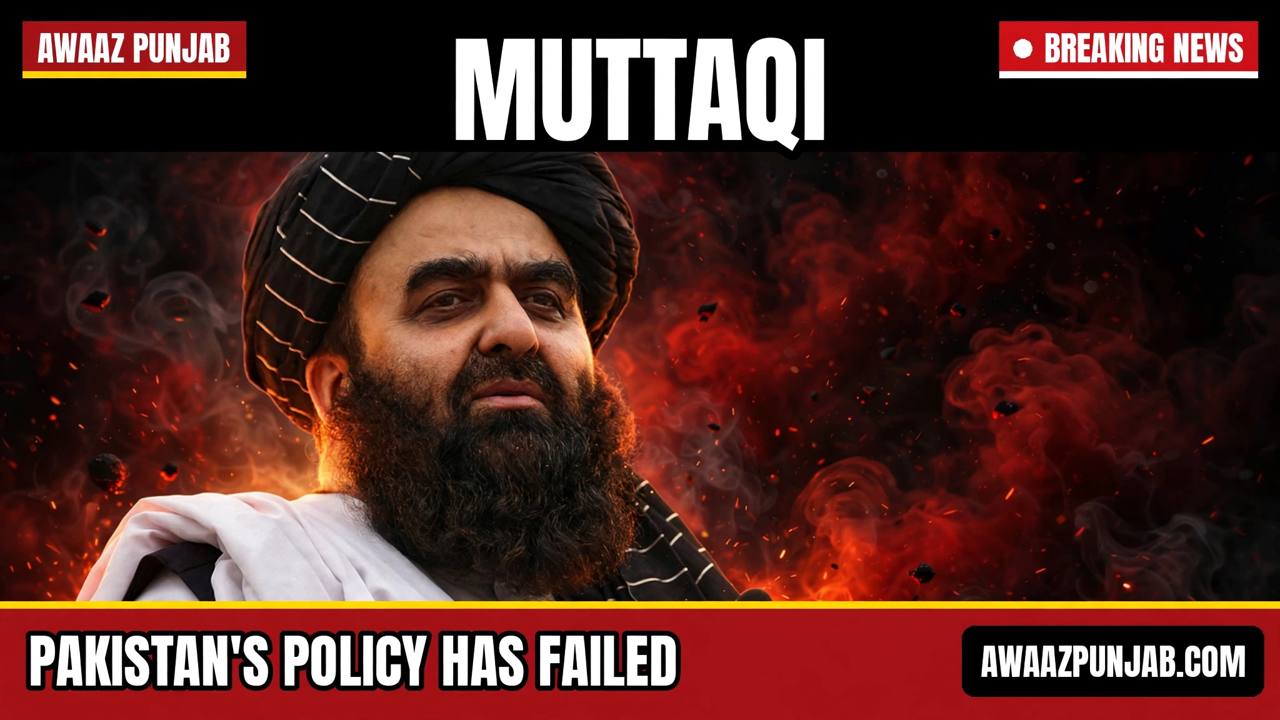
Taliban Foreign Minister Amir Khan Muttaqi has publicly described Pakistan's policy towards Afghanistan as unsuccessful and a failed approach, accusing Islamabad of obstructing efforts to negotiate an end to tensions between the two countries.
"I believe Pakistan's policy towards Afghanistan has been unsuccessful. It has been a failed approach," Muttaqi said during a special debate on Ariana News. He added that Afghanistan's history showed no country had been able to "impose its will on the country by force."
Muttaqi said the Taliban administration wanted negotiations and an end to the tensions, but claimed Pakistan was preventing progress in the process. He rejected statements by Pakistani officials that the Tehrik-e-Taliban Pakistan (TTP) operates from Afghan territory, and urged Islamabad to reconsider its approach towards Afghanistan.
Qatar mediation expected
The comments come as a Qatari delegation is expected to visit Afghanistan and Pakistan in the coming days to mediate tensions between Islamabad and the Taliban authorities, according to the report. Qatar has mediated between the two sides before, and Doha was also the venue for the 2020 agreement between the United States and the Taliban.
Pakistan has repeatedly accused the Taliban of allowing the TTP and the Balochistan Liberation Army (BLA) to operate from Afghan territory and carry out attacks against Pakistani security forces and military installations. The Taliban authorities have rejected the allegations that Afghan territory is being used to launch attacks against neighbouring countries.
Strikes, then words
Muttaqi's remarks follow a week of open fighting. Pakistan launched a second wave of airstrikes inside Afghanistan overnight on 26-27 November, killing four civilians, the Taliban government said. Taliban spokesman Zabihullah Mujahid said the strikes hit Kandahar, Paktia and Khost provinces. Pakistan's information minister said its forces had struck 10 targets inside Afghanistan that were used to store and launch drones, and that the strikes were strictly limited to identified military objectives. The Taliban denies launching any drones into Pakistan. It was the second Pakistani bombing wave inside Afghanistan within a week, after a first round on Monday, 23 November.
Pakistan bombed Afghanistan only three days earlier, on Monday, 23 November — that first wave is covered in our earlier report. Read the earlier report
Cross-border trade has been at a standstill during the shutdown of the crossings, leaving tens of thousands of people on both sides without work, according to reports from the region. A United Nations report earlier this year documented civilian casualties, displacement and damage to critical infrastructure linked to the cross-border hostilities.
What Muttaqi said about the United States
On relations with the United States, Muttaqi said Washington's actions following the 2020 Doha agreement had not created serious problems for the Taliban administration, and that the group wanted to establish positive relations with the United States. "The 20-year war was a very bitter experience," he said, adding that the Taliban had maintained a positive position towards establishing relations with Washington.
He also said military equipment left behind by US forces belonged to Afghanistan and was being used for the country's defence. And he pointed to what he described as the Taliban administration's diplomatic achievements over the past five years, saying its relations with other countries had expanded and that it now had more than 40 diplomatic missions, including embassies and consulates, around the world.
Muttaqi further maintained that the Taliban's general amnesty remained in effect, that the administration's doors were open to everyone and that the entire country was under its control. He claimed armed opposition groups' activities were limited to social media and that no such groups had a physical presence in Afghanistan. He also dismissed concerns raised by some regional countries, including Tajikistan, about the presence of the Islamic State group in Afghanistan, saying efforts to combat the group required serious cooperation among countries across the region.
Addressing women's rights, the Taliban foreign minister said women's education was not a crime, but described the absence of women from the Taliban cabinet as a matter of government policy. He said this did not mean women's voices were not heard or that they were denied access to health care and other services.
Kabul has also raised concern over reports that the United States plans to deport dozens of Afghans via Pakistan, possibly in the coming days, and has asked Washington to "act responsibly", according to regional reports. The deportation question adds another strand to a relationship already strained by the fighting and the border shutdown.
What is solid
- Muttaqi made the remarks in a debate on Ariana News.
- A Qatari delegation is expected to visit Afghanistan and Pakistan to mediate.
- Pakistan carried out two waves of airstrikes inside Afghanistan within a week.
What is only claimed
- Whether the TTP operates from Afghan soil — Pakistan says it does; the Taliban denies it.
- Casualty and damage figures from the airstrikes, which the two sides report differently.
What happens next
The test now is whether the expected Qatari visit produces a pause. The two sides have fought, traded accusations and shut their border within the same week — and each side says it wants talks while blaming the other for blocking them. If Doha can get both to the table, the first questions will be the border crossings, the TTP accusation and the airstrikes. If it cannot, the pattern of the past week — strikes answered by statements, statements answered by strikes — is likely to continue.