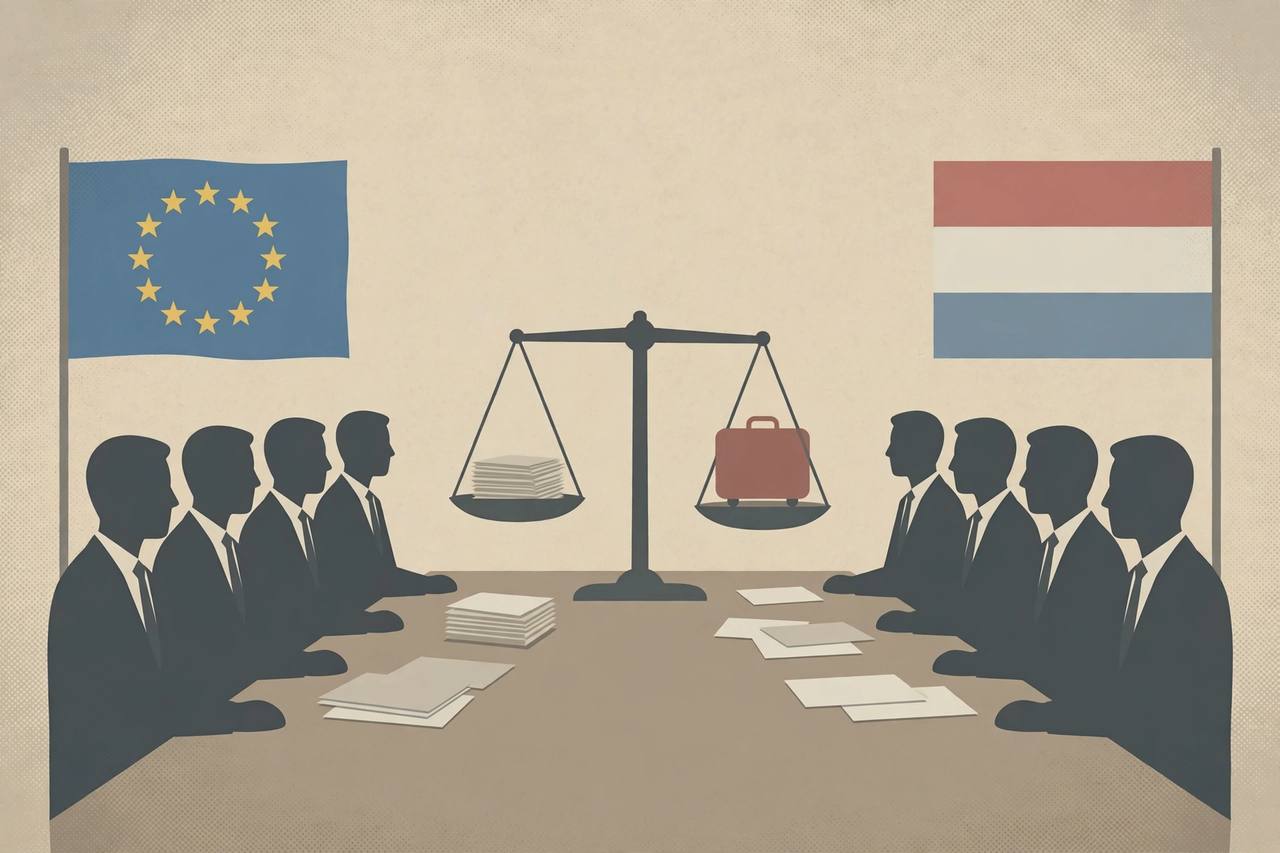
Culture Secretary Lisa Nandy has acknowledged there will be 'trade-offs' for Britain as it seeks to get closer to the EU again. Speaking to the BBC's Sunday With Laura Kuenssberg on Sunday, November 8, the senior minister also appeared to suggest she was not in favour of seeing the UK rejoin the trade bloc, but that it should still pursue closer ties to fulfil the promises of Brexit, the Press Association reported.
Ms Nandy, who represents the Leave-voting Wigan constituency and supported Remain in the referendum, was asked about the terms of a youth mobility scheme which Prime Minister Andy Burnham is due to sign when he meets EU leaders at a summit on November 20 — including whether it was true there would be a cap on the number of Europeans who could come to Britain under the scheme, and whether the 150,000 limit being floated by Brussels would be acceptable to her constituents. She replied: 'Well, we'll have those conversations with our European counterparts, but we'll also have those conversations too with the British people, because it is right to say that there are costs as well as benefits to a closer relationship with the European Union. There are trade-offs to be made, and we can't cut people out of that conversation.'
Source: Press Association via The Oldham Times, Nov 8 2026 — Nandy on the youth mobility cap question
Nandy signalled she continues in her stated position that Britain should not rejoin the EU, telling the BBC: 'The only thing that I think the British people are absolutely united on right now is that we left the European Union a decade ago with the promise of a close Brexit deal and the promise of benefits from that deal, and most of those have not been realised. It's not working for people across this country, and we've got to do better.' She insisted she and Mr Burnham are not divided: 'I really don't think you can put a piece of paper between me and Andy Burnham.' The Prime Minister has reminded Cabinet they need to speak with one voice on the future of Britain's relationship with the EU, after several ministers gave differing opinions, PA reported.
Source: Press Association via The Oldham Times, Nov 8 2026 — Nandy on rejoining and Cabinet unity
Barnier: no cherry-picking
Her comments came after Michel Barnier, the EU's former chief Brexit negotiator, warned of trade-offs for even deeper ties. Mr Barnier said: 'There is no cherry picking. There will be no possibility to have one freedom and not the other. The four freedoms (of goods, movement of people, services and capital) are clearly the four conditions to be inside the single market.' In a BBC interview reported on Sunday, Barnier also told Laura Kuenssberg that if Britain wanted to go back in, it could forget its famous budget rebate, and that there is no way to be in the single market without accepting freedom of movement.
Reform UK leader Nigel Farage attacked the youth mobility scheme the Government is about to sign. Though the scheme itself is likely to be capped, Mr Farage told the BBC: 'It is opening the door to uncontrolled immigration, to immigration over which we have no control. That is what that scheme is all about.' Immigration is the most politically sensitive part of the reset — and the issue watched most closely by Britain's diaspora communities, including its large Punjabi population, whenever London and Brussels renegotiate who can live and work where.
Source: Press Association via The Oldham Times, Nov 8 2026 — Farage criticises youth mobility scheme
The deal taking shape for November 20
Burnham heads to Brussels on November 20 for the second annual UK-EU summit with negotiations on a new bilateral agreement reported to be 90 percent complete, according to BBC reporting summarised on Sunday. A source familiar with the talks said agreements are ready to ease trade for food producers, link emissions trading systems to help manufacturers, and create new youth visa arrangements, though a cap on numbers remains unresolved. An EU source close to the process put the split plainly: 'The bone of contention is a cap – we proposed 150,000, the UK proposed 50,000 – but we would expect to reach a compromise,' describing the discussions as 'very tense' on both sides. A last-minute EU demand to cut tuition fees for its students in the UK is expected to be deferred for further talks. These are attributed accounts of private negotiations, not an agreed text — no final deal has been announced.
Source: BBC reporting via DomainFork, Nov 8 2026 — Burnham wants to get closer to the EU
The prime minister has cited government figures suggesting closer ties without rejoining could add 0.4 percent to GDP, but acknowledged in an interview with the BBC's business editor that the UK would have to follow more EU rules as a result. That is the trade-off Nandy was describing in political form: more market access, in exchange for more alignment — with the youth mobility cap the most visible number still to be settled.
Source: BBC reporting via DomainFork, Nov 8 2026 — 0.4 percent GDP figure and EU rules
Burnham first reopened this debate last month, saying Britain should have an honest discussion about a return to EU freedom of movement. Awaaz Punjab reported that step here: UK PM Burnham Opens Door to 'Honest Discussion' on Return to EU Free Movement
What is solid
- Nandy said on the BBC on Sunday, November 8, that a closer EU relationship has 'costs as well as benefits' and 'trade-offs', and that the public must be part of the conversation — reported by the Press Association.
- Barnier said there is 'no cherry picking' and that the four freedoms are the conditions for being inside the single market — reported by PA and the BBC.
- Burnham is due to meet EU leaders at a summit on November 20 where a youth mobility scheme is expected to be signed — reported by PA.
What is only claimed
- The youth mobility cap numbers — Brussels proposing 150,000 and the UK 50,000, with a compromise expected — come from an unnamed EU source in BBC reporting, not from any published negotiating text; the final cap is not agreed.
- The claim that the wider UK-EU package is '90 percent complete' is attributed to sources familiar with the talks; the tuition-fee demand being deferred is likewise an expectation reported by insiders, not an announcement.
What happens next: the November 20 Brussels summit is the deadline that matters. If the two sides split the difference on the youth mobility cap and sign the food-trade and emissions package, Burnham gets his reset's first concrete deliverable — and Farage gets his 'uncontrolled immigration' argument tested against an actual capped number. If the cap row spills into the summit itself, Nandy's 'trade-offs' warning will read less like candour and more like preparation for a delay.