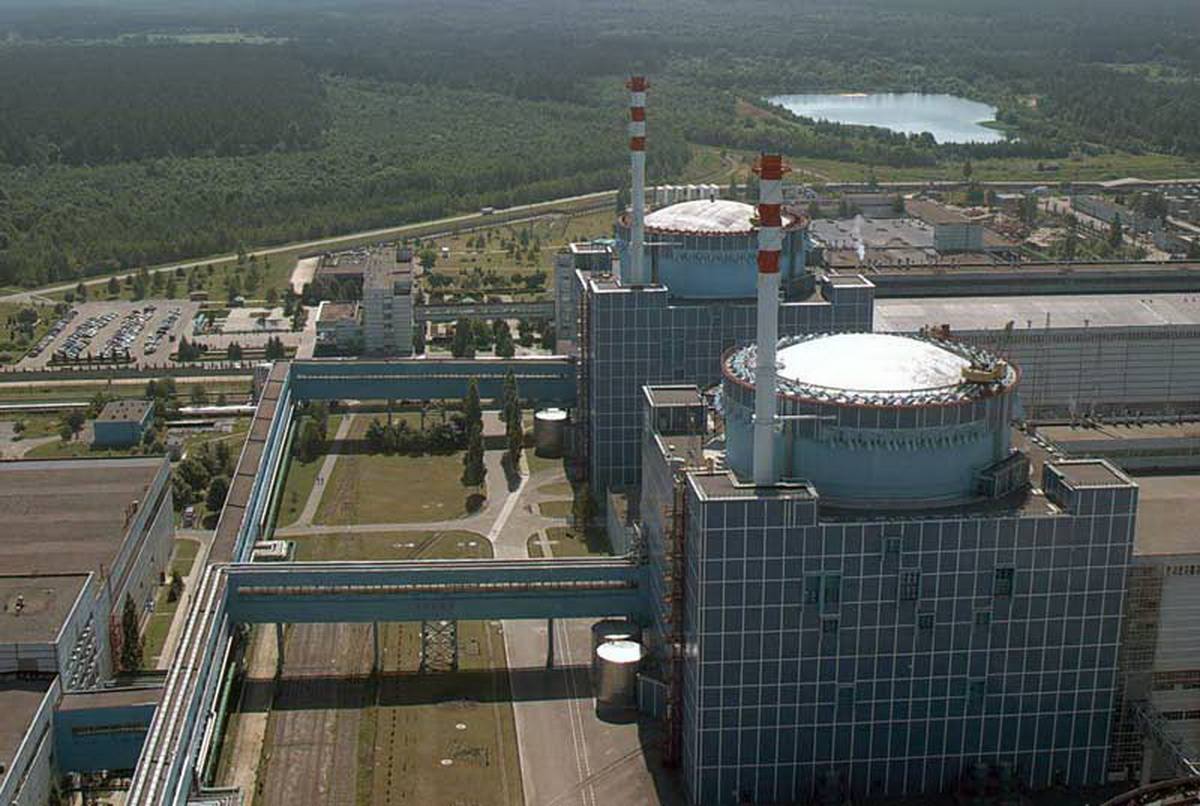
Ukraine's nuclear power plants have been forced to reduce their electricity generation because Russian attacks have damaged the substations and transmission network that carry their power to the country, the Energy Ministry said on Wednesday (November 4). First Deputy Energy Minister Artem Nekrasov, in the ministry's operational briefing, said the return to nominal output would be gradual and would happen 'as soon as energy workers restore the networks damaged by the shelling'. The ministry did not say that any reactor had been hit, did not name the plants affected, and gave no figure for how far output had fallen.
The distinction matters: Ukraine's reactors can still generate, but with hub substations knocked out there is nowhere for much of that electricity to go, so operators throttle the plants back. Nuclear stations supply roughly half of Ukraine's electricity, which is why Kyiv frames attacks on the substations around them as a nuclear-safety issue for the whole of Europe, not only a power-supply problem.
Source: Crisis Zone (reporting the Energy Ministry statement)
The attack that broke the grid's back
The cutbacks follow the overnight attack of November 2-3, which the grid operator Ukrenergo described as one of the most extensive on Ukraine's energy infrastructure and the Kyiv Independent called the biggest mass attack on the energy system this year. Energy Minister Denys Shmyhal, after meeting G7, EU and Nordic-Baltic ambassadors on November 3, said Russia used 289 drones, 17 ballistic missiles and 59 cruise missiles, and that three drones were directed at a substation critical to the stable operation of the Khmelnytskyi Nuclear Power Plant; he said the International Atomic Energy Agency had been informed. Russia's Defence Ministry, for its part, claimed its forces hit four power plants and two substations — a claim reported by the Institute for the Study of War (ISW), which neither side's battlefield account could be independently verified in full.
Source: ISW Russian Offensive Campaign Assessment, November 4, 2026
Outages ease in Kyiv, stay emergency in Kharkiv
By late morning on Wednesday, Ukrenergo said emergency outages had been cancelled in Kyiv and most regions, allowing a return to scheduled hourly cuts — but emergency cuts stayed in force in the Kharkiv region, and consumers in the Vinnytsia, Zhytomyr, Zaporizhzhia, Kirovohrad, Kharkiv and Kherson regions were still without power because of the attacks, the ministry said. President Volodymyr Zelenskyy reported on November 4 that Kyiv city and nine oblasts — Zhytomyr, Chernihiv, Sumy, Poltava, Kharkiv, Cherkasy, Vinnytsia and Donetsk among them — were experiencing emergency outages, and emphasised that repairs are being delayed by repeated Russian strikes, ISW reported. On Thursday the plants were still operating below nominal output, with scheduled hourly outages across most regions and emergency blackouts in Kyiv, the Kyiv region and Kharkiv to protect the weakened system.
Source: Particle News summary, November 5, 2026
What is solid
- Ukraine's Energy Ministry said on November 4 that nuclear plants had to cut generation because substation and network damage limits distribution
- The ministry did not report any reactor being struck, and named neither the affected plants nor the size of the cut
- Ukrenergo cancelled emergency outages in Kyiv and most regions on November 4; Kharkiv region stayed on emergency cuts
What is only claimed
- How far nuclear output has actually fallen — the ministry gave no figure, and claims of reactors being shut down go beyond what it said
- What Russia hit — Moscow says four power plants and two substations; Kyiv says over 20 energy facilities were struck in 24 hours in the November 2-3 attack
A winter campaign aimed at the wires, not just the plants
ISW assessed that Russia's long-range drone campaign on the night of November 3-4 again heavily targeted central and western Ukraine and caused significant outages, and that Moscow's winter 2026-27 strike campaign is systematically targeting system-critical substations and smaller facilities that directly control electricity flows — a pattern it says mimics last winter's campaign, which reportedly damaged or destroyed a large share of Ukraine's generation. What happens next turns on repair speed: every restored substation lets the nuclear fleet raise output again, while each new strike wave pushes full generation further away — with heating, water and metro services in Ukraine's cities exposed until the grid stabilises.